











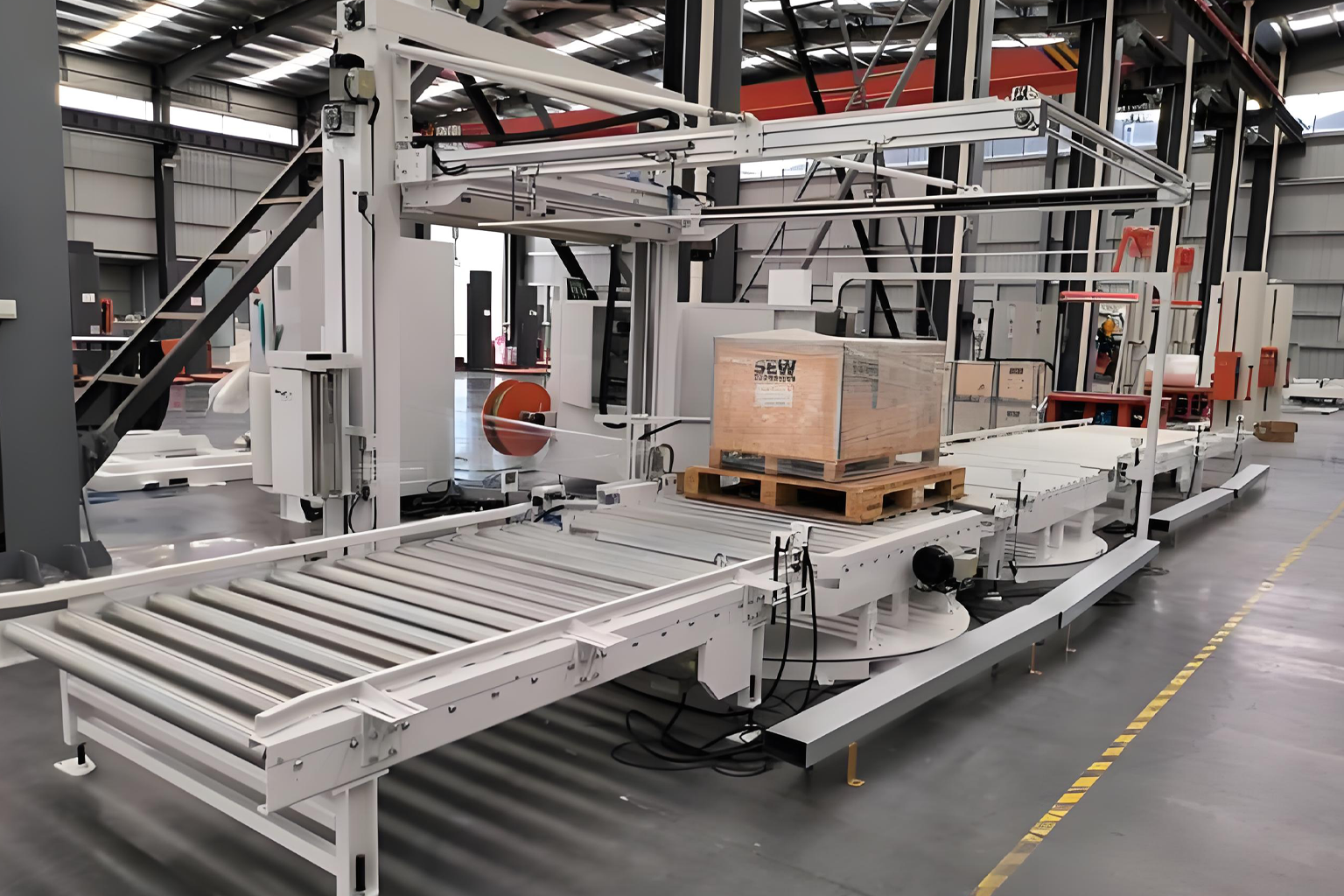
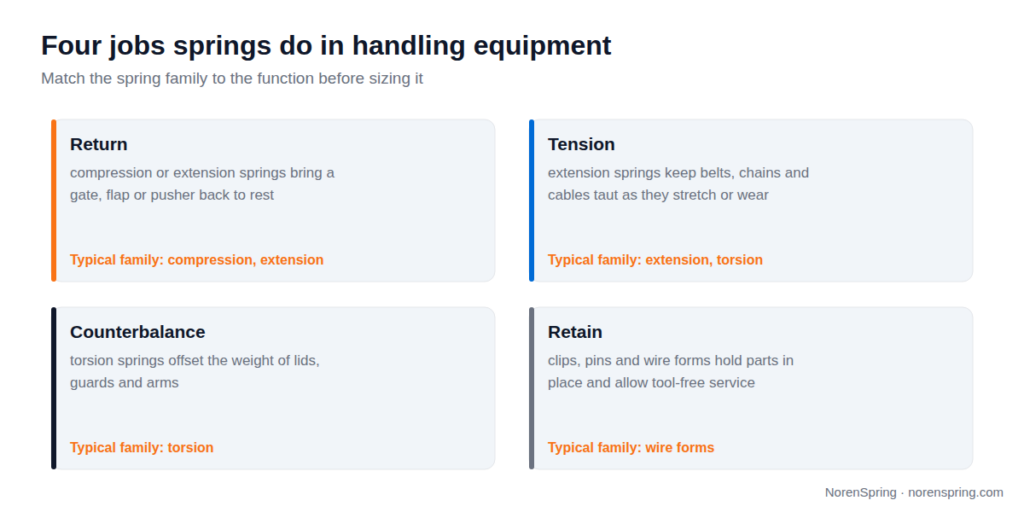
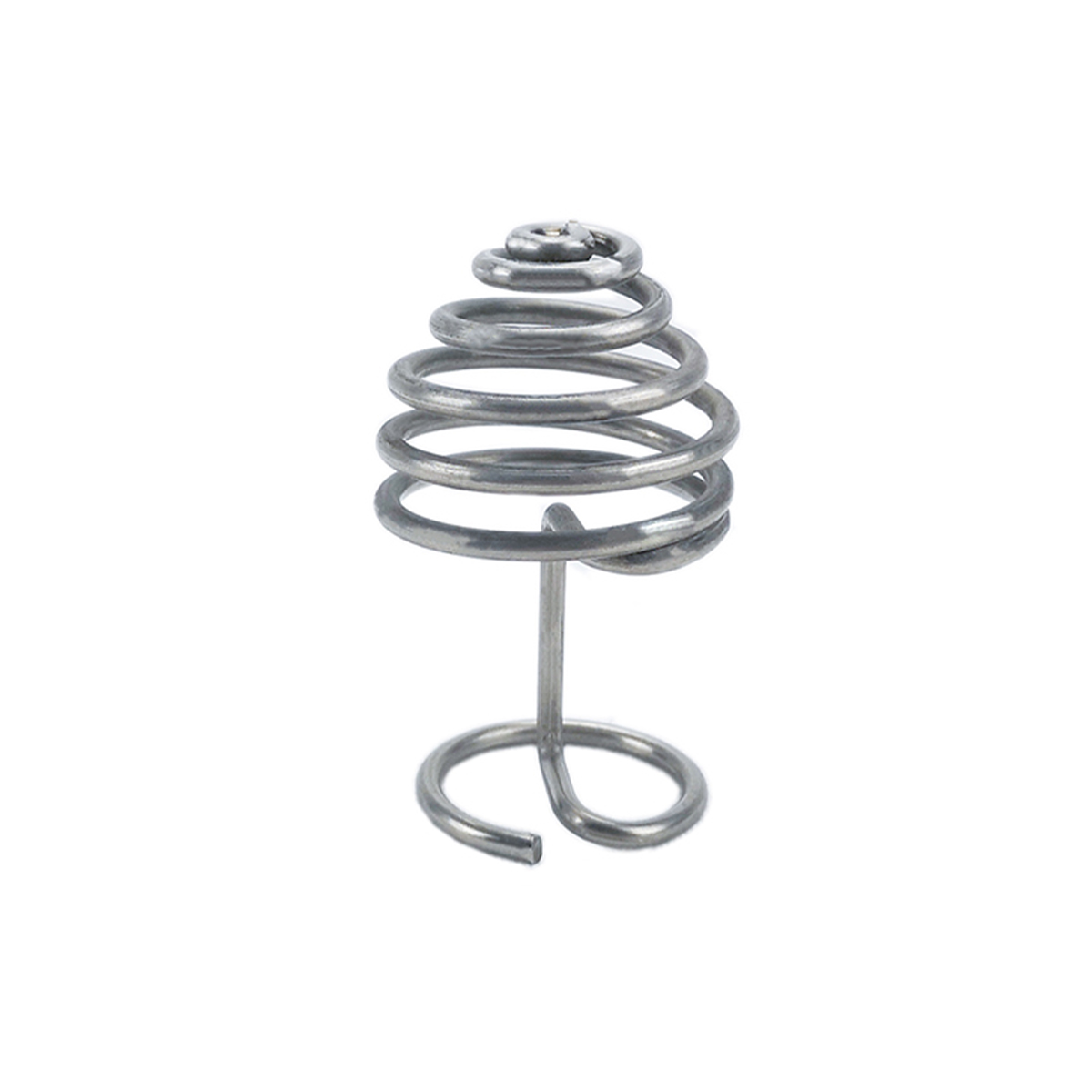
Packaging machines and material handling equipment use springs in three main jobs: keeping chains, belts and cables under tension, pulling mechanisms back after each machine cycle, and holding parts in place. We have supplied compression and extension springs for automatic packaging machines, and we make compression, extension, torsion and wire-form springs for these jobs to your drawing or sample. Our published portfolio includes two related parts: a cable reeling drum light reel extension spring and a stainless steel chain tensioner spiral spring.
Key Takeaways
- Spring stress in a cam-driven mechanism should be set from the machine’s cycle rate and running hours, not from static load alone.
- Near food or open product, stainless 304 or 316 without a flaking coating is the usual starting point.
- Our portfolio includes a cable reel extension spring and a stainless chain tensioner spiral spring.
- Spare springs can be made from a worn sample, with no fixed MOQ.

Which springs packaging and handling equipment uses and why
Tensioners for chains and belts
Conveyor chains and drive belts lengthen as they wear. A tensioner arm loaded by a torsion spring, a spiral spring or a compression spring takes up that slack. The key design point is how much force changes between a new chain and a worn one: a lower rate over a longer travel keeps tension more even.
Reels for cables and hoses
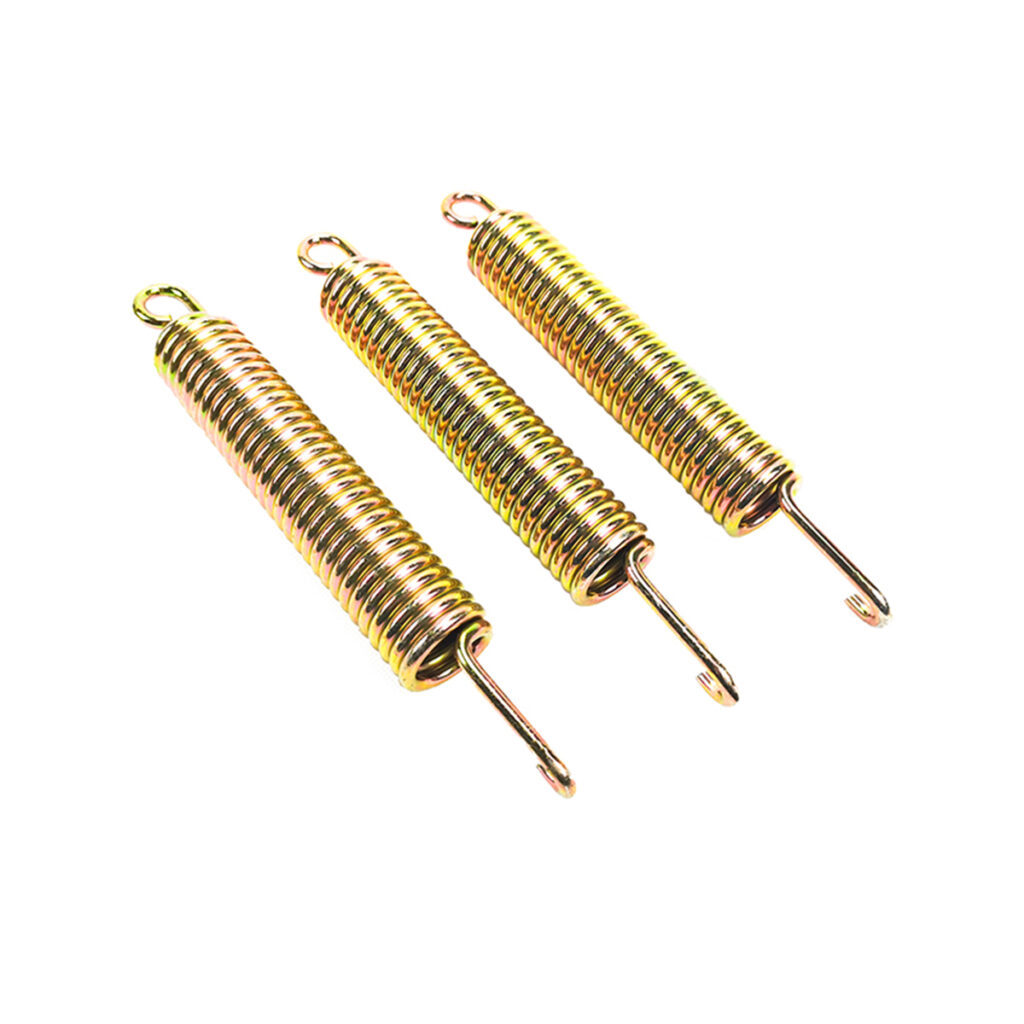
Spring-driven cable and hose reels normally rewind with a spiral (power) spring, while extension springs handle latches, brakes and ratchet pawls. Our portfolio includes a cable reeling drum light reel extension spring; for any extension spring in a reel, hook design and the maximum working extension decide life.
Return springs in machine mechanisms
Cam followers, grippers, sealing jaws, cutters and flap folders are usually driven one way and returned by a spring. At high speed the spring must keep the follower on the cam; too little force and it lifts off, too much and wear rises. Grippers and guides often use wire forms shaped to the part.
Choosing material and finish for food lines, wash-down and warehouses
| Option | Where it fits | What to weigh |
|---|---|---|
| Stainless steel 304 | Food and pharma packaging machines | Corrosion resistance, no plating to flake |
| Stainless steel 316 | Wash-down with cleaning chemicals | Higher corrosion resistance than 304 |
| Music wire | Small high-cycle return springs in dry areas | High strength; needs protection from moisture |
| Oil-tempered wire | Heavier tensioner springs | Good fatigue strength in larger sizes |
| Carbon spring wire | Warehouse conveyors and general handling | Economical; zinc or coating for protection |
| Zinc or black coating | Springs away from product | Rust protection for dry, indoor areas |
Where a spring could contact food, confirm with your own compliance team which grades and finishes are acceptable; we can supply a material certificate for the grade used, as agreed at project setup.
What to send for an engineering review
- A drawing or the worn spring. Without a drawing, wire diameter d, outside diameter D0 and free length L0 are enough to start.
- Machine cycle rate, shift pattern and stroke or angle of movement.
- Force or torque at the working positions, including the worn-chain position for tensioners.
- Whether the spring sits near product or is washed down.
- Quantity for spares or production, and records needed.
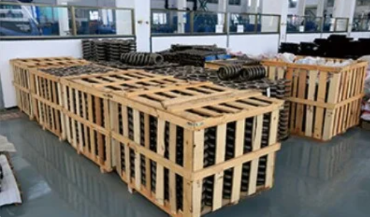
Finished springs are packed so they arrive protected and identified, with export documentation. See our capabilities for the full six-stage process.
Frequently asked questions
Can you make replacement springs for an older machine?
Yes. We can work from a worn sample, confirm manufacturability before quoting and make prototype samples for approval; there is no fixed MOQ for spares.
What records come with food-area springs?
As agreed at project setup: material certificates, inspection reports and traceability.
How is lead time set?
Samples typically take 7 to 15 working days and production 15 to 30 working days. The exact lead time is confirmed at quotation, based on spring type, material, tooling, quantity and approvals. Engineering feedback or a quotation is sent within 24 hours.
Send your drawing or worn spring details through our contact page to start a review.


 Upload a Drawing