Upload a Drawing
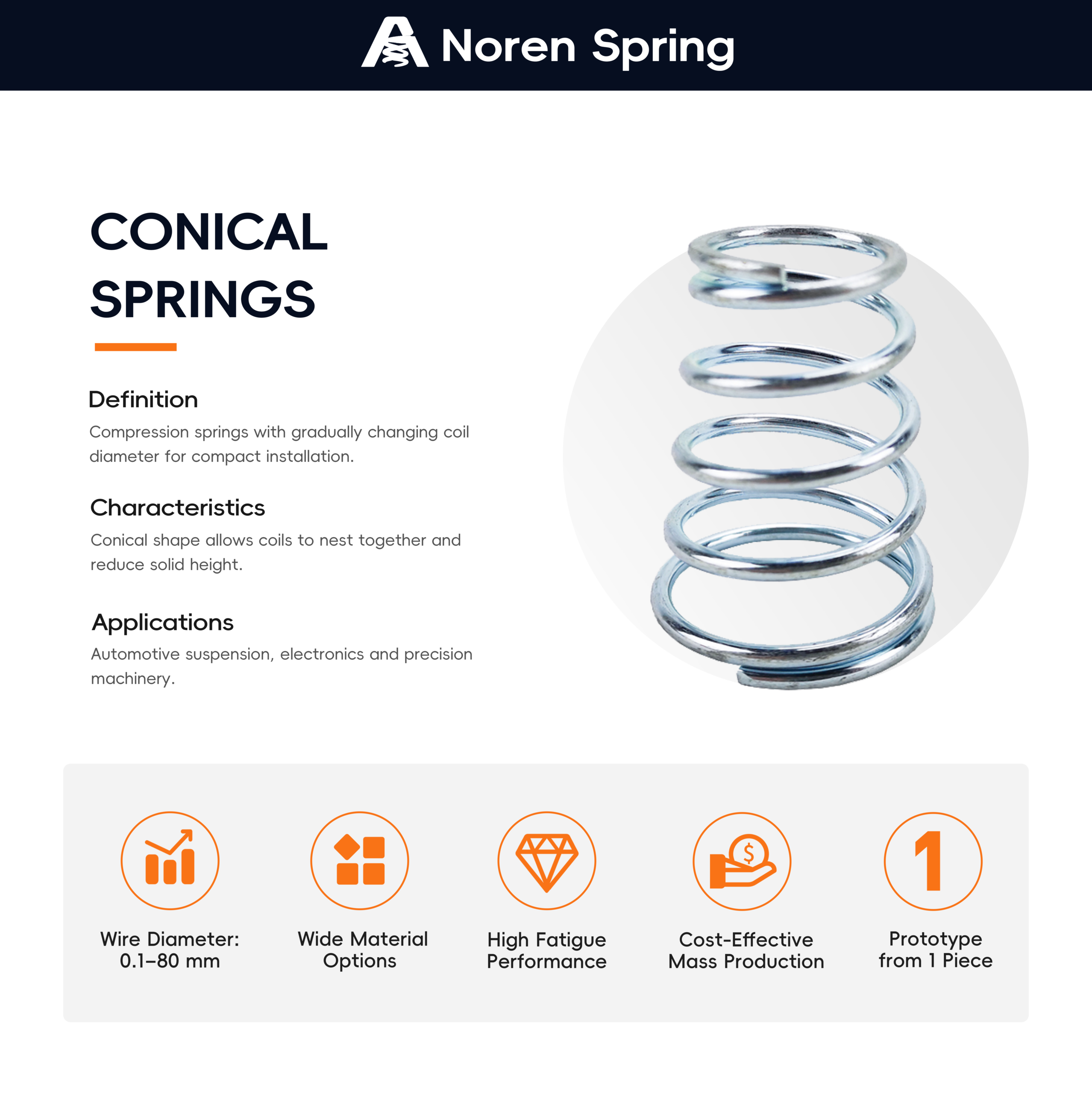
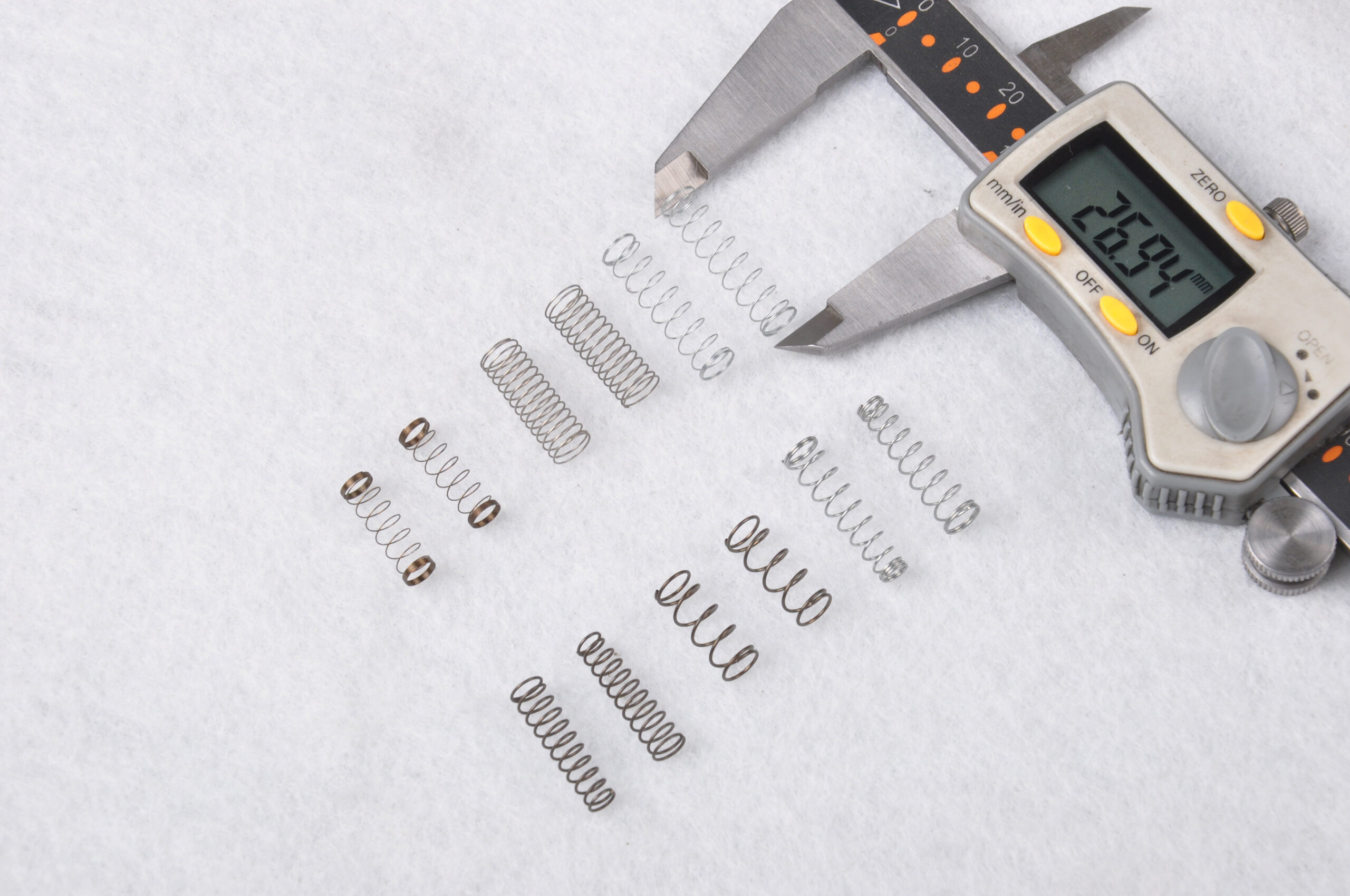
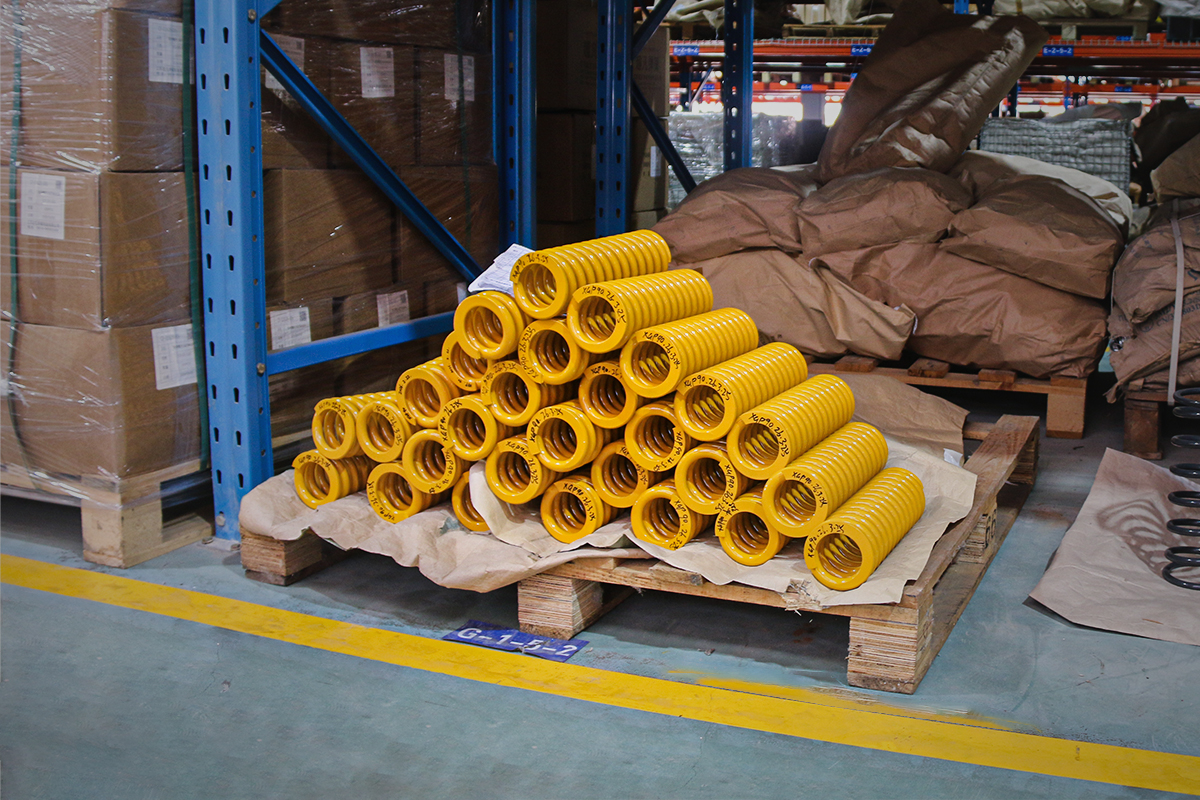
Conical springs are tapered compression springs designed to provide reliable force in applications with limited installation space. Their conical shape allows the coils to nest together during compression, helping reduce solid height and providing stable performance in compact assemblies.
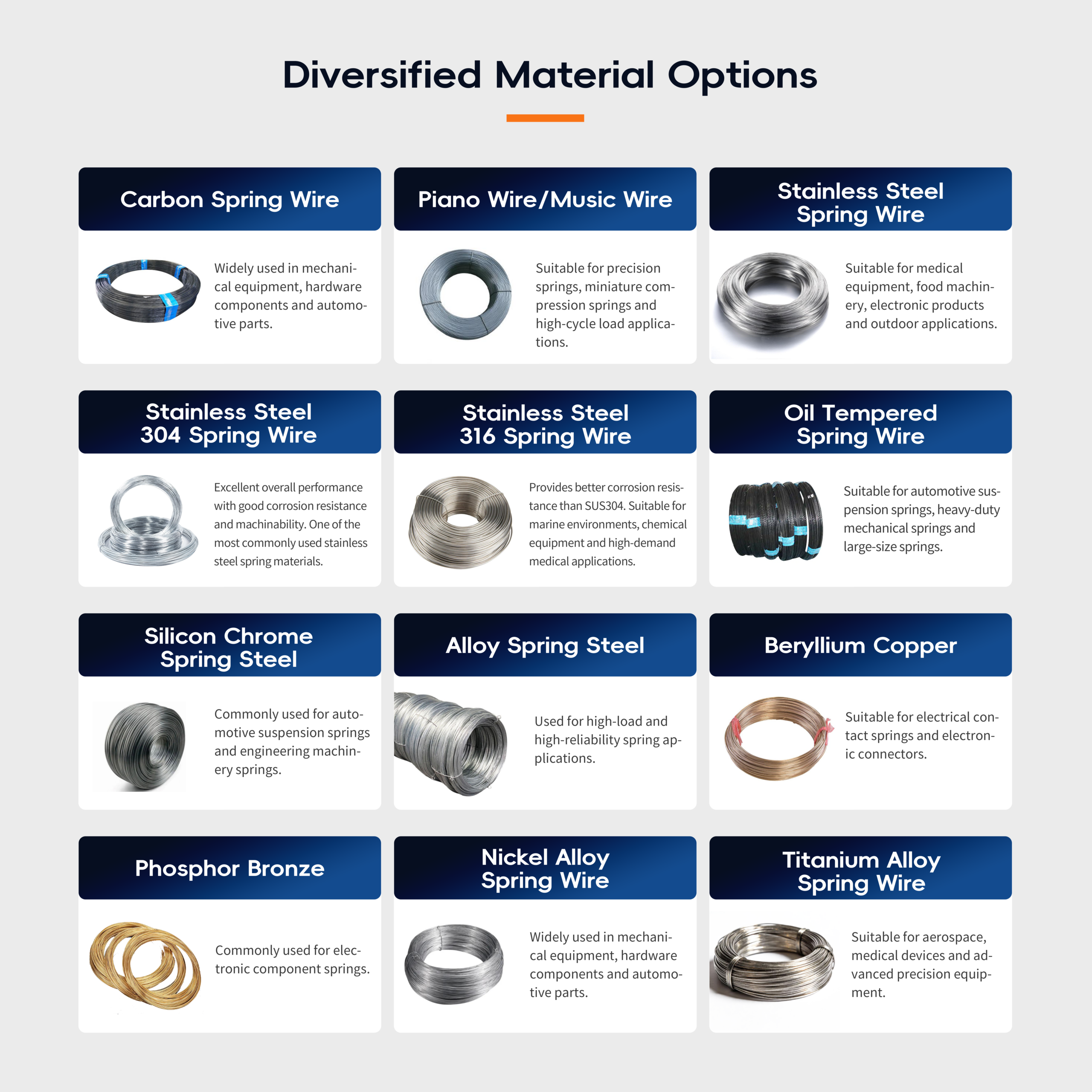
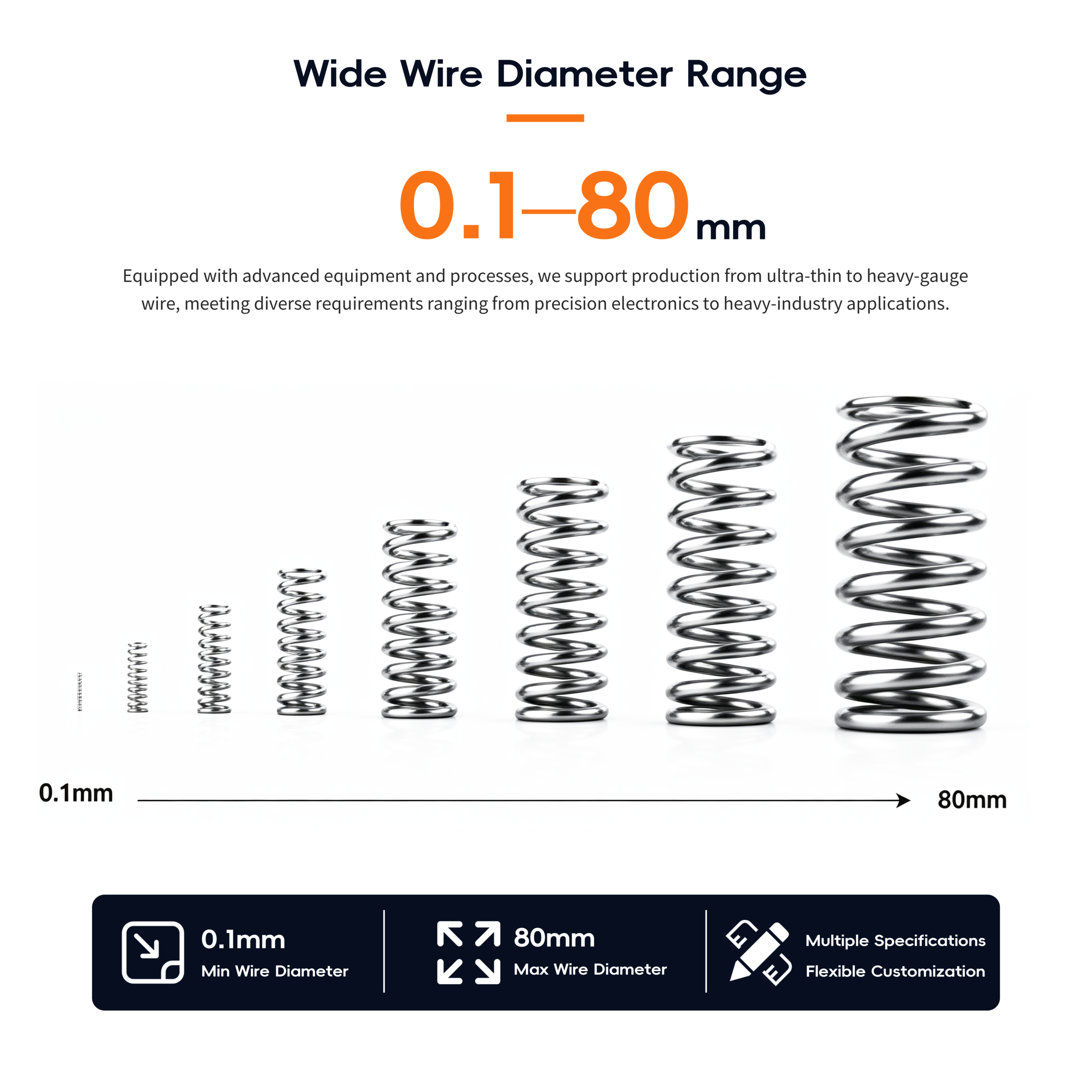
Conical springs can be manufactured with different wire diameters, outer diameters, free lengths, spring rates, end configurations, and material options. Depending on the design, they can also provide progressive load characteristics and improved stability during repeated compression cycles.
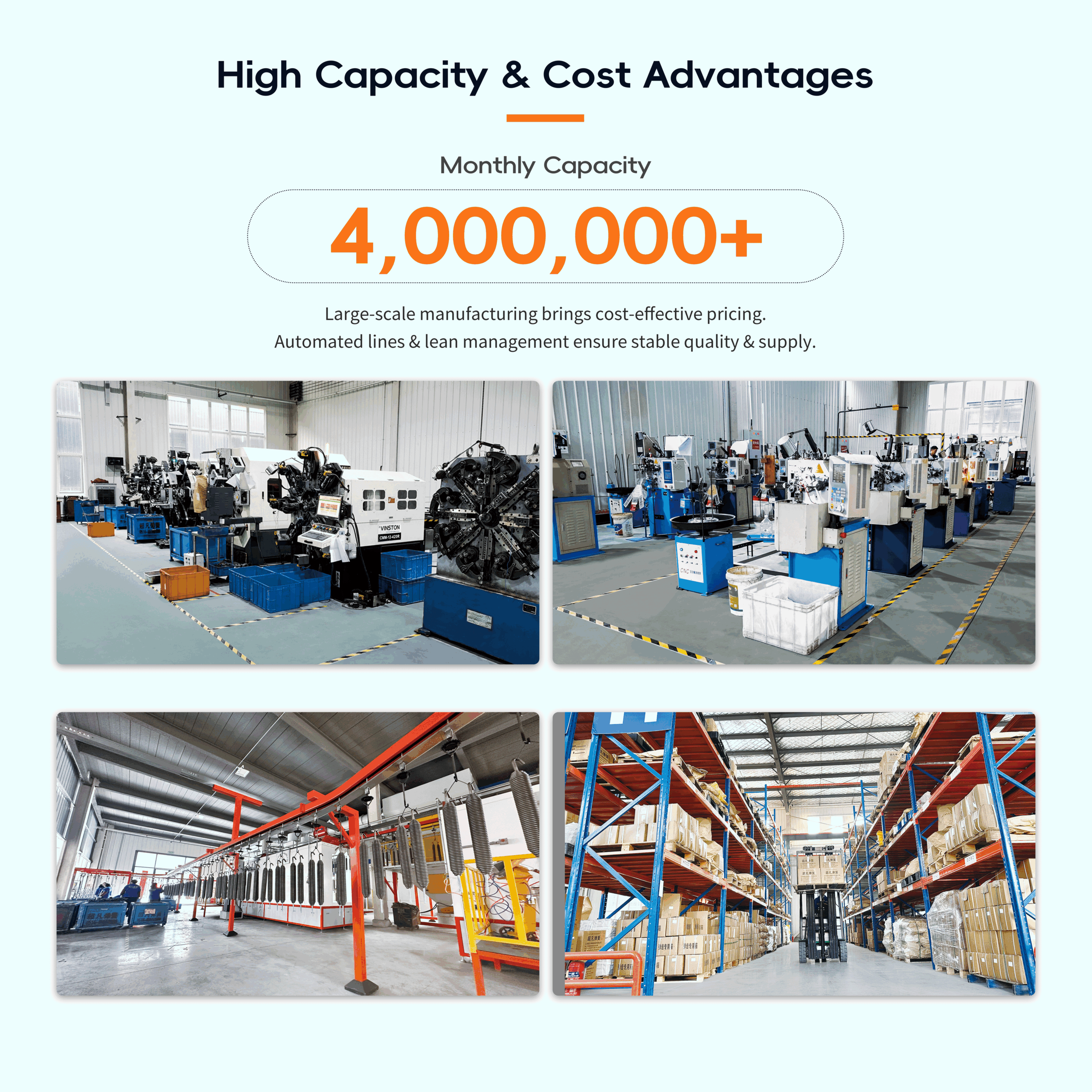
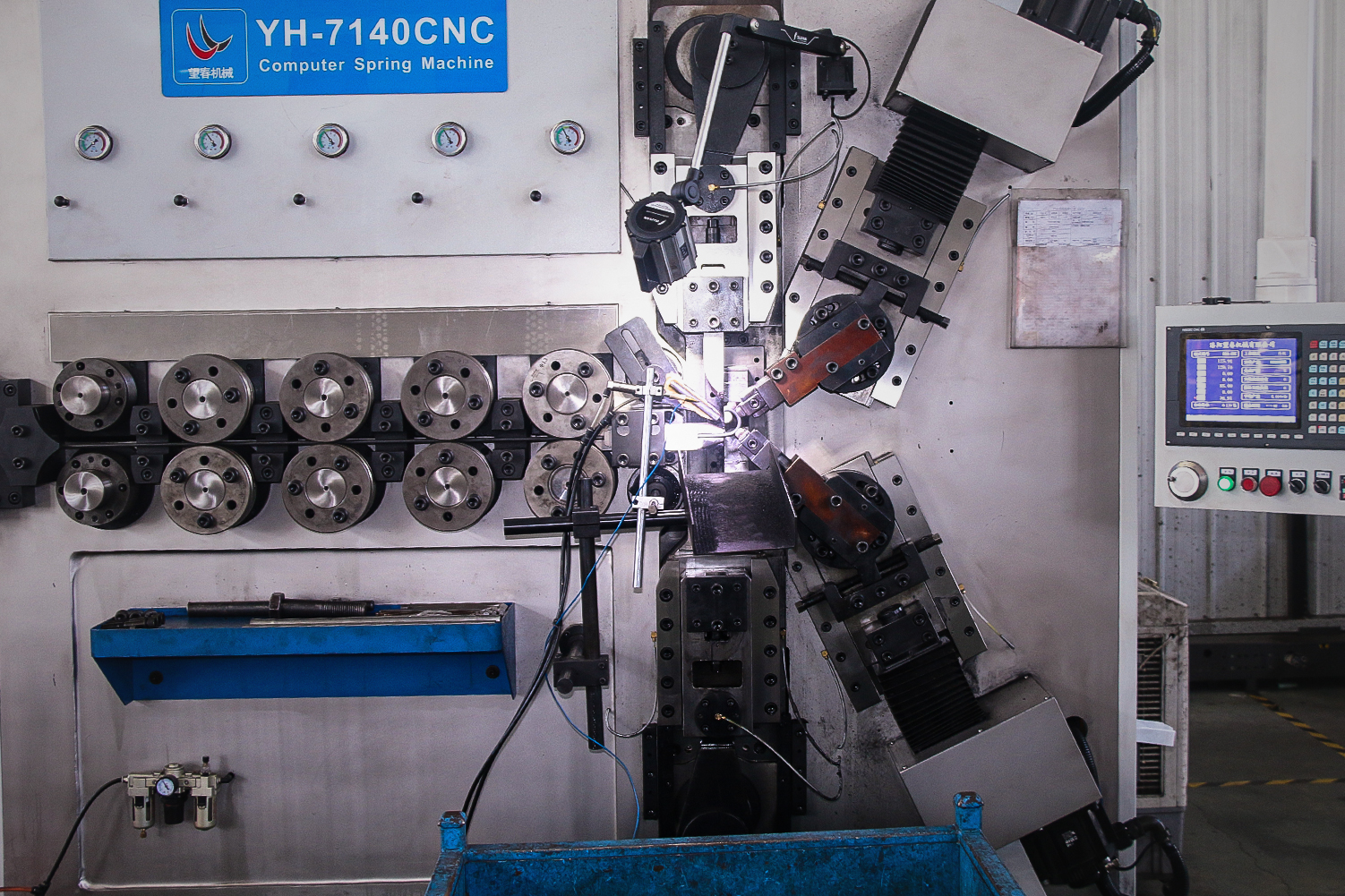
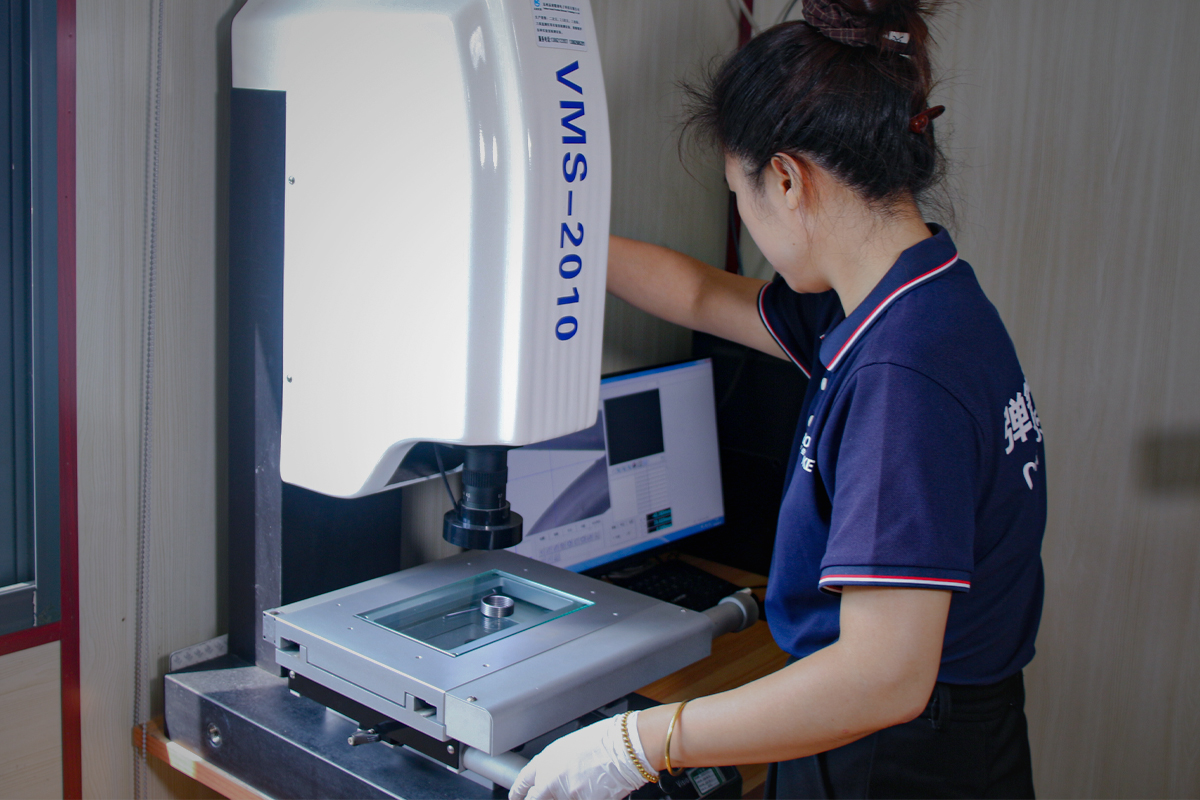
These springs are suitable for molds, dies, stamping tools, precision machinery, automotive components, electrical devices, and other industrial applications. Each spring is produced according to approved drawings, samples, or technical requirements, with quality control covering material preparation, forming, heat treatment, inspection, and packaging.
For a customized conical spring quotation, please provide your drawing, sample, dimensions, required load, working stroke, installation space, operating conditions, and expected quantity. Our team will recommend a suitable spring solution for your application.
How conical spring geometry works
A conical spring is wound from a large diameter at one end to a small diameter at the other. If each coil’s outside diameter is smaller than the inside diameter of the next larger coil, so the diameter steps down by at least two wire diameters plus clearance per turn, each coil can slide inside the next one. Fully telescoped, the spring can close to a solid height of about one to two wire diameters, far lower than a straight spring of the same wire and coil count. That is why conical springs are used behind battery cells, in push buttons and under valve plates where height is tight. The wide end also gives a stable seat, so the spring is less likely to buckle sideways.
Linear or progressive force
With an even pitch, the large coils are the softest and bottom out first. As they stop working, fewer active coils remain and the force rises faster, giving a progressive curve. If the application needs a straight-line force, the pitch can be varied along the length so the coils close at about the same time and the force stays close to linear until solid. Tell us which behaviour you need, or give two load points and we will design to them within agreed tolerances.
What to send us
- Large end outside diameter and small end outside diameter
- Free length and the lowest height the spring may reach
- Whether the coils must nest fully or only partly
- Load at one or two working heights
- Which end seats on which part, and the end type
For how the coils telescope, how the load curve rises and a free calculator, see our conical spring guide.
For straight helical designs, see our compression springs. Battery contact uses are covered on the electronics industry page.