












Robots and automated machines ask springs to repeat the same motion over a very large number of cycles in very little space. The right choice usually comes down to three questions: how much room is there, how many cycles will the spring see, and does it push, pull, rotate or preload? We make wave, torsion, compression, disc and die springs to drawing; this page describes that capability, not past robotics projects.
Key Takeaways
- Wave springs and disc springs can save axial height where a coil spring will not fit.
- Torsion springs are specified by torque at the working angle, leg shape and winding direction.
- Samples are supplied for fit and load approval before production, with no fixed MOQ.
- Load or torque is checked at defined positions under a quality system certified to ISO 9001 and IATF 16949.

Which springs robots and automated equipment use and why
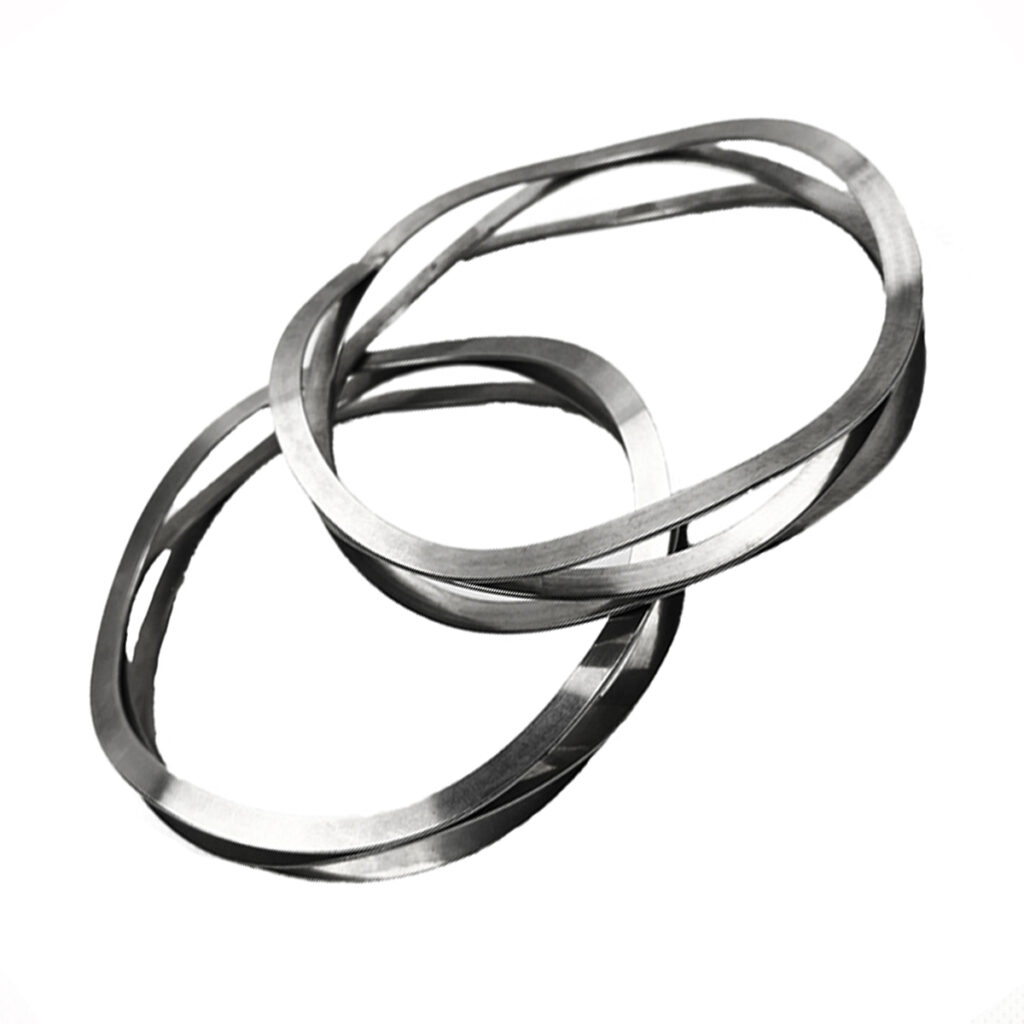
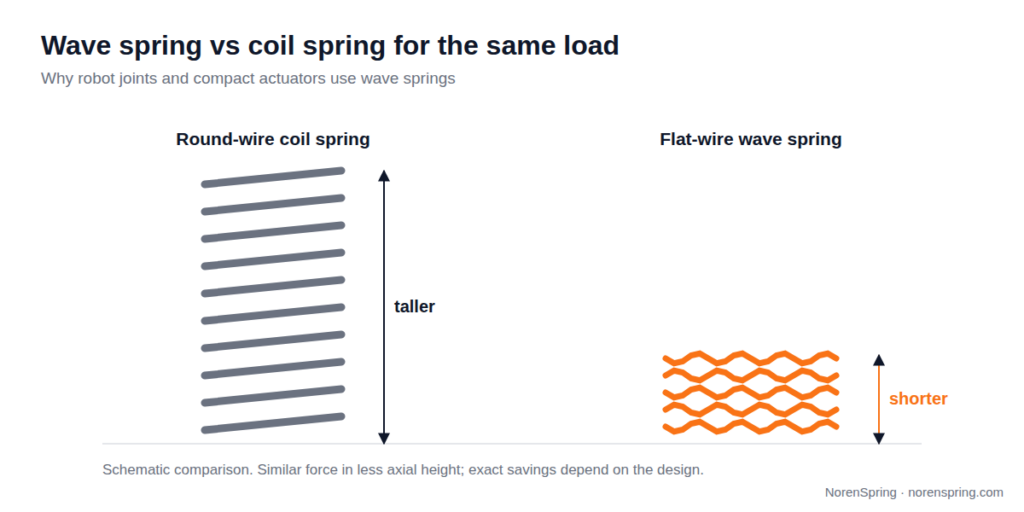
Wave springs are made from flat wire formed into waves. Compared with a round-wire coil, they can often deliver a similar load in less axial height, which is why they are used to preload bearings in joints and gearboxes. See our wave springs.
Torsion springs return gripper fingers, access doors and pivoting arms. Torque depends on the angle the legs are wound through, so the drawing should state the free angle, the working angle and the winding direction. As a torsion spring winds up, its inside diameter shrinks and its body gets longer, so the support pin and the space beside the coils must allow for both. See torsion springs.
Compression and die springs provide compliance in tool mounts, return pneumatic valves and load clamps in fixtures. Die springs suit heavy, repeated loads in compact tooling.
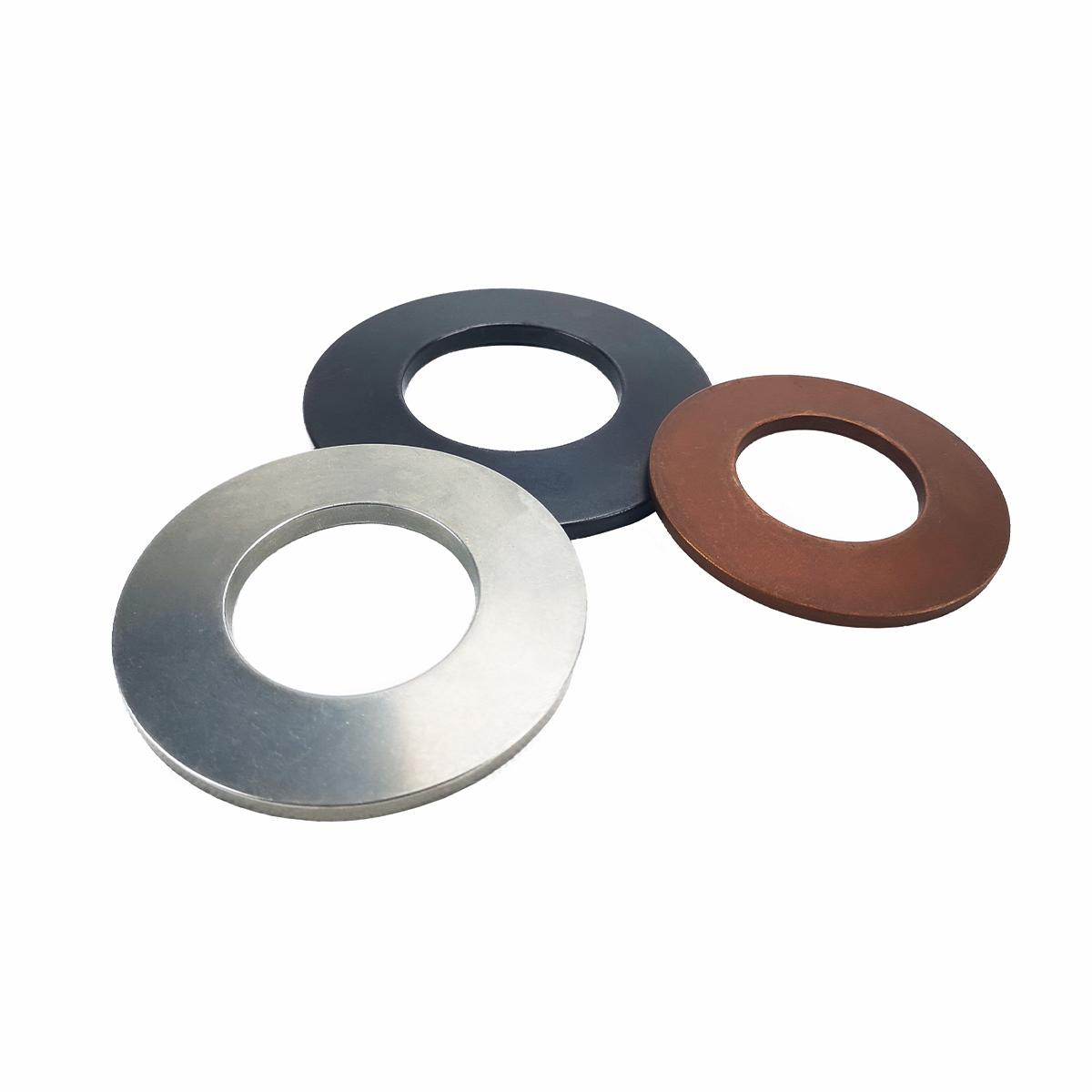
Disc springs carry high loads over short travel and can be stacked to adjust load and deflection. See disc springs.
Choosing material and finish for high-cycle automation
Fatigue is the usual limit in automation, so choose material for its stress capability and the environment together.
| Material | Where it fits in automation | Consider |
|---|---|---|
| Piano/music wire | Small, high-stress springs in dry, enclosed mechanisms | Needs oil or a coating against rust |
| Silicon-chrome spring steel | Highly stressed springs and repeated loading | Heat treatment and finish must be controlled |
| Oil-tempered wire | Larger wire sizes in fixtures and handling equipment | Coating needed outside dry areas |
| Stainless 304 / 316 | Wash-down or clean areas, and stainless wave springs | Lower strength than music wire at the same size |
| Carbon spring wire with zinc or black coating | General machine parts in normal factory conditions | Coating thickness affects fit on tight parts |
If your equipment runs at high speed, tell us the operating frequency. A spring whose natural frequency is close to the drive frequency can surge, which raises stress and shortens life.
What to send for an engineering review
- Geometry: drawing, or wire diameter (d), outside diameter (D0) and free length (L0). For wave springs, give the bore, shaft and working height.
- Load and movement: load or torque at two positions, total stroke or angle.
- Duty: expected cycle count and operating speed.
- Environment: temperature, lubrication, wash-down or cleanroom requirements.
- Quantity and records: sample quantity, production volume and required inspection records.
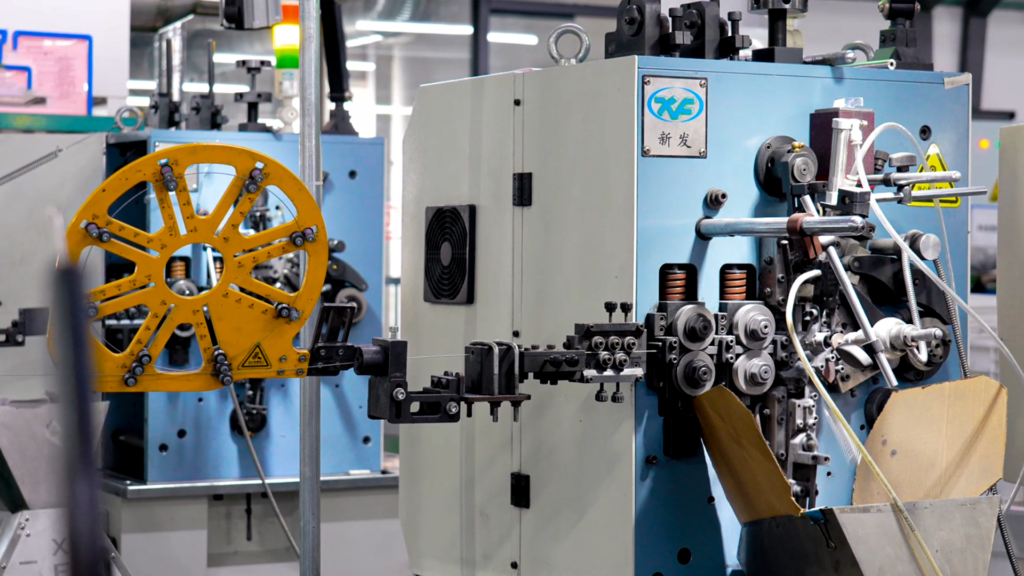
Related reading: our industrial equipment page and the manufacturing videos of coiling and forming.
Frequently asked questions
When should I use a wave spring instead of a coil spring?
When the axial space is too short for a coil spring at the load you need, or when you are preloading a bearing. Send the installed height and load and we will compare options.
Can I approve samples before production?
Yes. Prototype and pre-production samples are supplied for dimensional, load and application approval.
Can you do cycle testing?
We do not publish cycle-life figures. If your program needs a fatigue or cycle test, state the method in your inquiry and we will confirm at review whether it can be done.
Planning a gripper, joint or fixture spring? Tell us the load, stroke and space and our engineers will propose a spring type.



 Upload a Drawing