












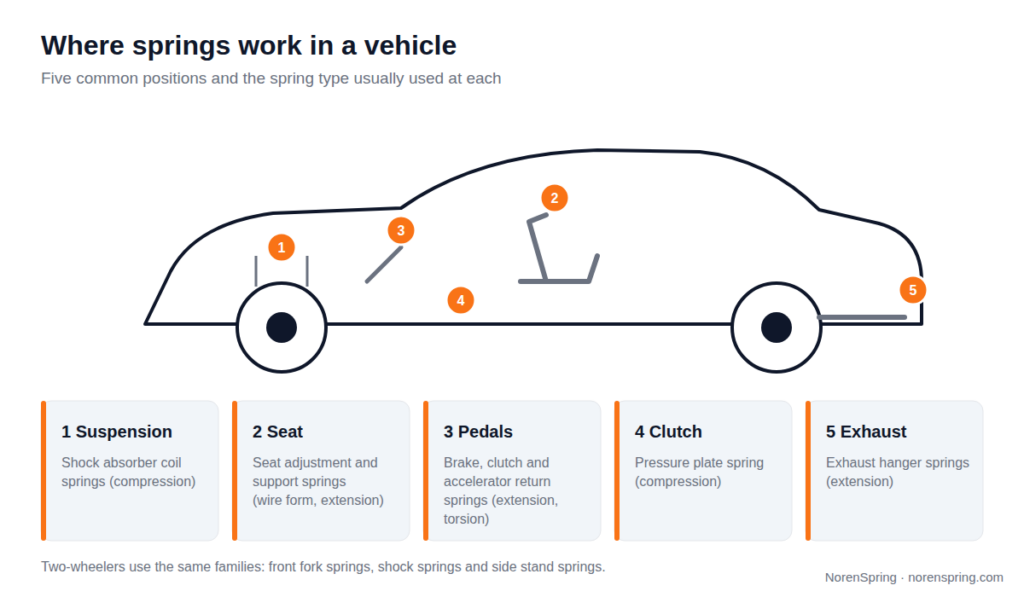
Vehicles use springs to carry ride height, support seats, return pedals and hold exhaust sections together. We have supplied automotive seat springs for seat adjustment and support, and shock absorber coil springs for suspension. Our case grids also include pedal return, clutch pressure plate and exhaust pipe springs. We make these parts to your drawing or sample under IATF 16949, and PPAP packages are available for automotive programs.
Key Takeaways
- We have supplied automotive seat springs and shock absorber coil springs.
- Certified to IATF 16949 (valid to Feb 4, 2028); PPAP packages are available for automotive programs.
- Built to your drawing or sample, from 0.1 mm to 80 mm wire.
- Engineering feedback or a quotation within 24 hours; lead time is confirmed at quotation.
Which springs automotive systems use and why
Suspension and shock absorber springs
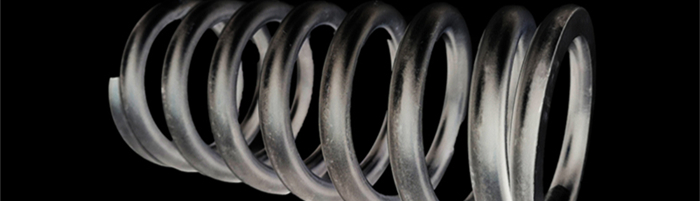
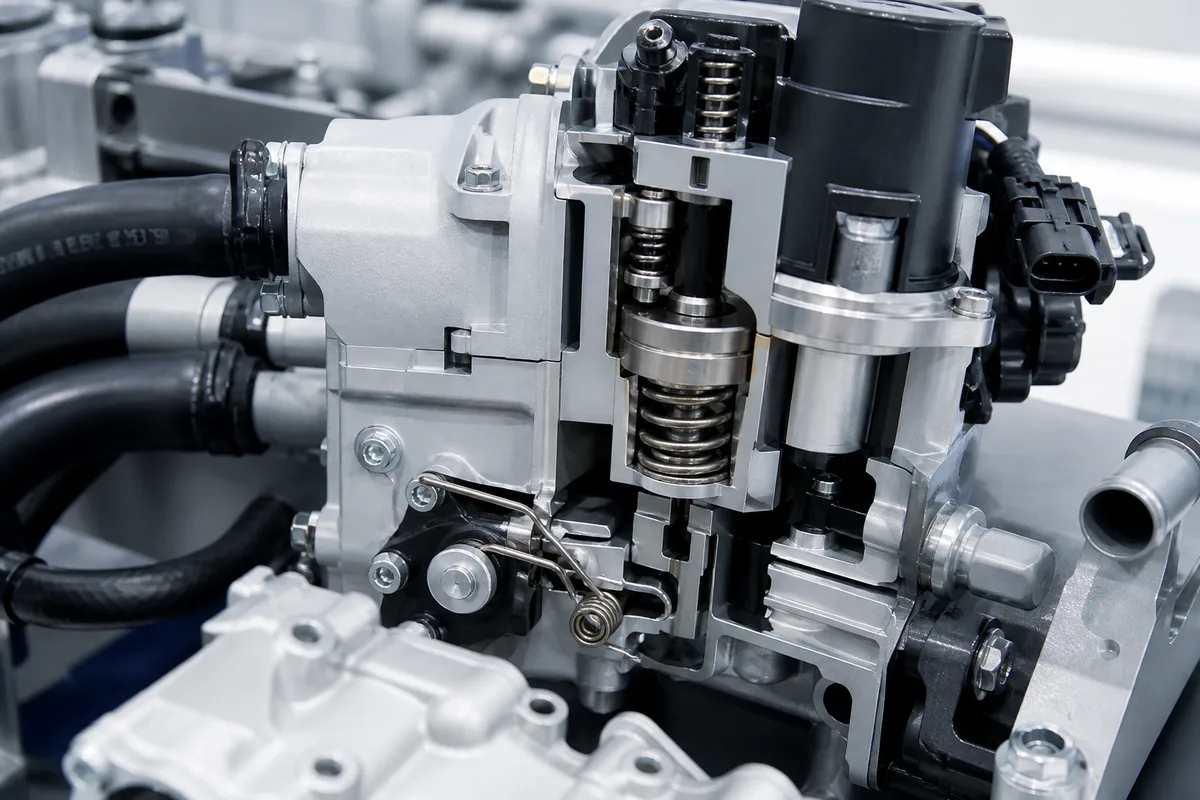
A suspension coil spring carries the vehicle’s weight at ride height and stores energy from road inputs, while the damper dissipates it. Spring rate and load at installed height are the controlling specifications, and the end type sets how the spring sits on its seats. Our compression portfolio includes a shock absorber spring and a front fork spring, and suspension springs are part of our compression spring range.
Seat springs
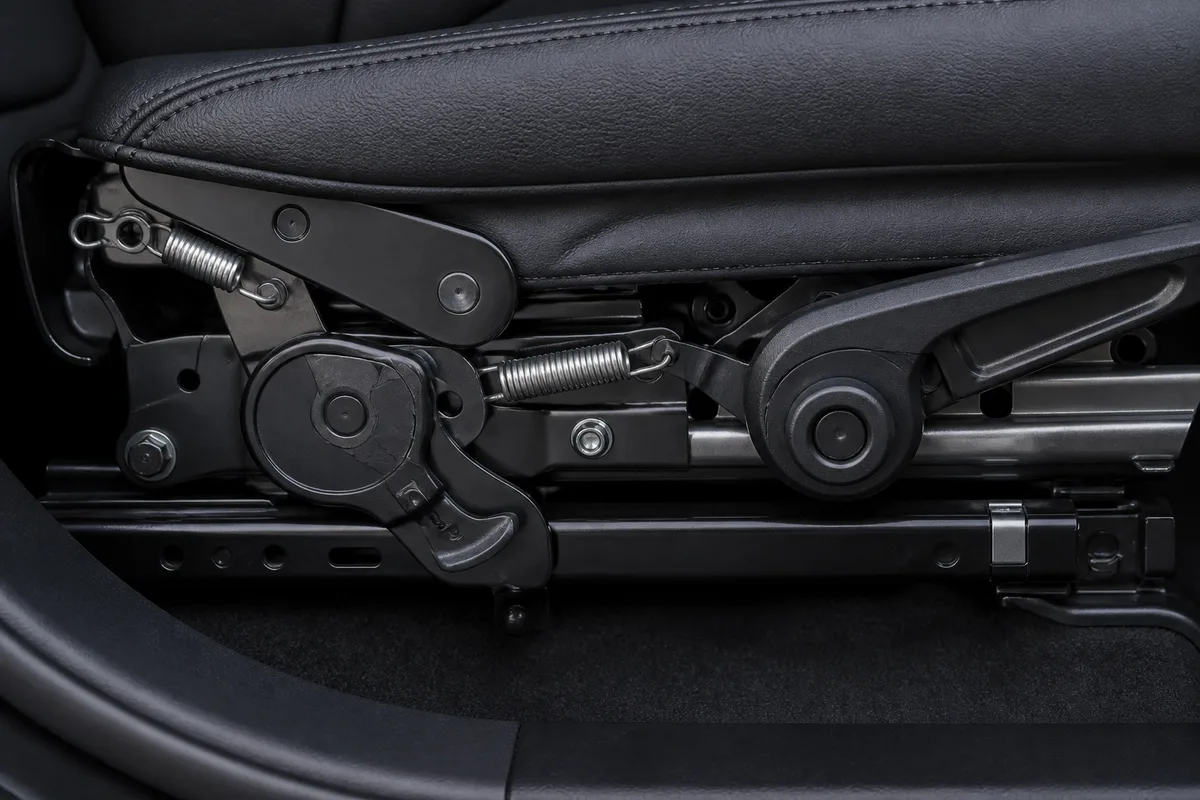
Seat springs are usually extension springs or wire forms that support the cushion and back and hold tension in adjustment mechanisms. Hook shape and initial tension matter as much as the coil body, because the hooks are often where an extension spring sees its highest stress.
Pedal, clutch and exhaust springs
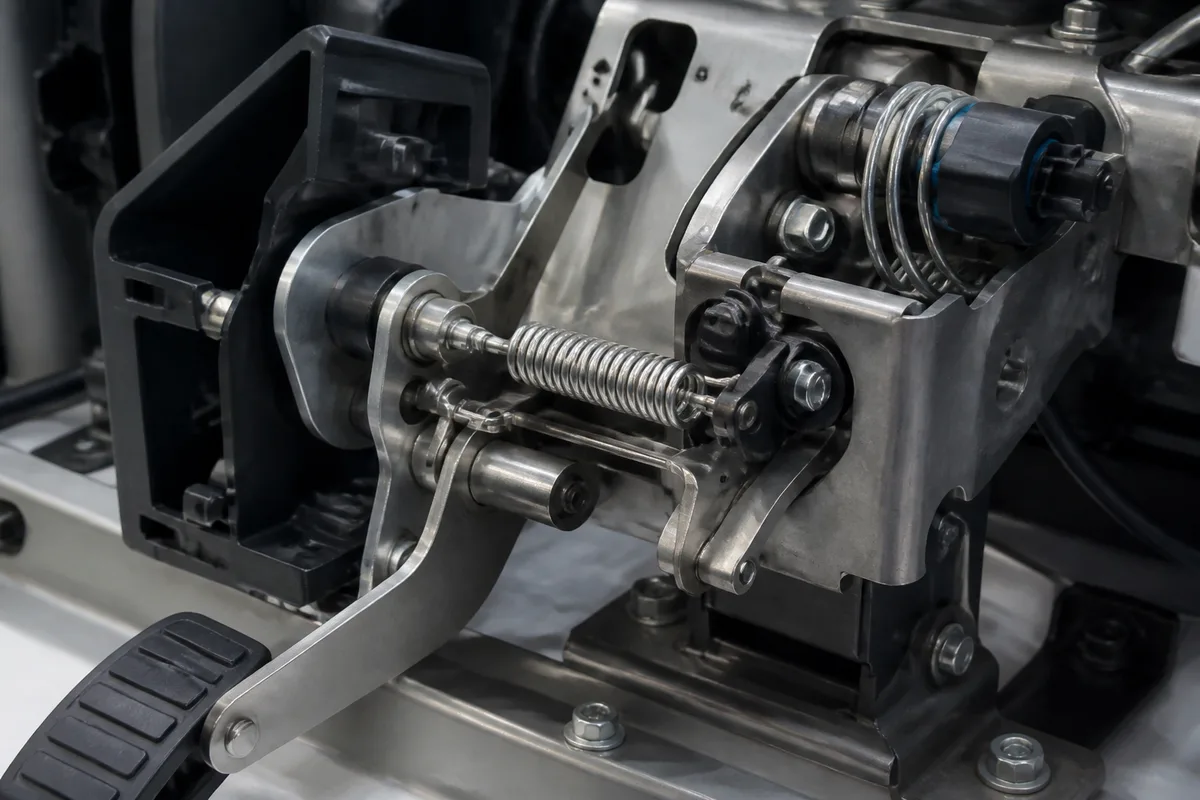
Pedal return springs bring brake, clutch and accelerator pedals back to rest. Depending on the linkage, they are extension springs or torsion springs. Our extension and torsion case grids include brake and clutch pedal return springs, an accelerator pedal spring and a side stand spring. The extension grid also has an exhaust pipe spring, which holds exhaust sections together close to a heat source. The compression grid shows a clutch pressure plate spring made from GB 75 steel, as labeled.
For other automotive springs, send the drawing and we will confirm manufacturability before quoting.
Choosing material and finish for road, heat and corrosion exposure
| Material | Where it fits | Consider |
|---|---|---|
| Silicon-chrome spring steel | Suspension and highly stressed compression springs | Needs a coating for corrosion protection |
| Oil-tempered wire | Larger compression and return springs | Coating needed where road spray reaches the part |
| Carbon spring wire or music wire | Seat springs, pedal returns, small wire forms | Zinc or black coating for corrosion protection |
| Alloy spring steel | Heavy-duty and highly stressed springs | Heat treatment and finish agreed at review |
| Stainless 304 / 316 | Exhaust hangers and exposed parts | Check relaxation at operating temperature |
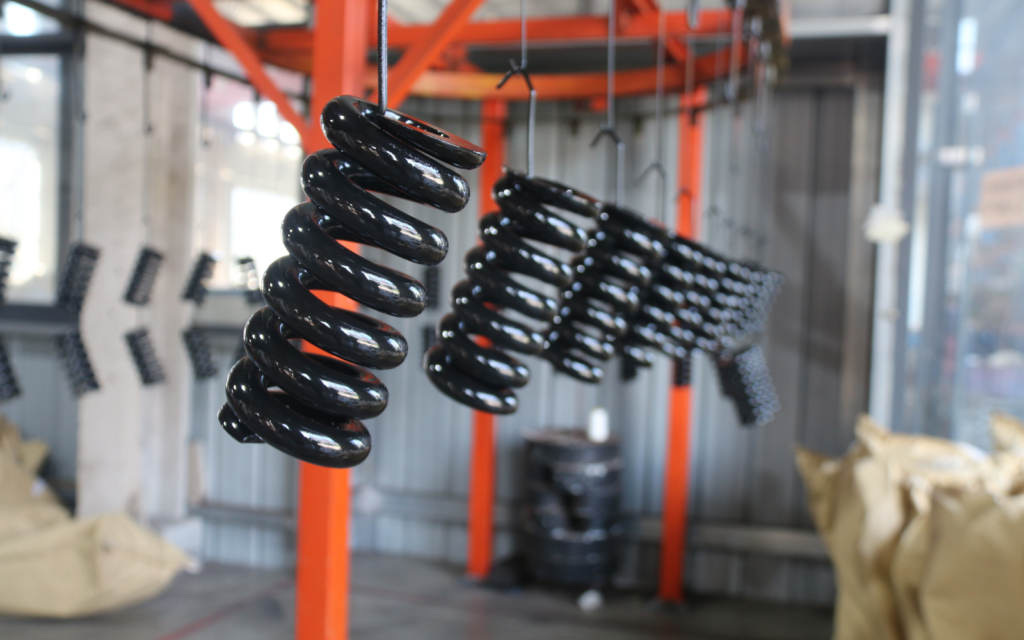
Finishes visible in our product photos include bright zinc, yellow zinc, black coating, red and blue coating, and plain or oiled. A coating adds thickness, so coil clearance and fit are checked at review.
What to send for an engineering review
- Geometry: drawing with revision, or a physical sample.
- Load and movement: force at installed and working heights, or torque and angle for torsion springs, plus travel.
- Environment: temperature near the part, road spray and corrosion exposure.
- Finish: coating type and any appearance requirement.
- Records: PPAP elements, inspection reports, material certificates and traceability needed.
- Quantity: sample, pre-production and annual volumes.
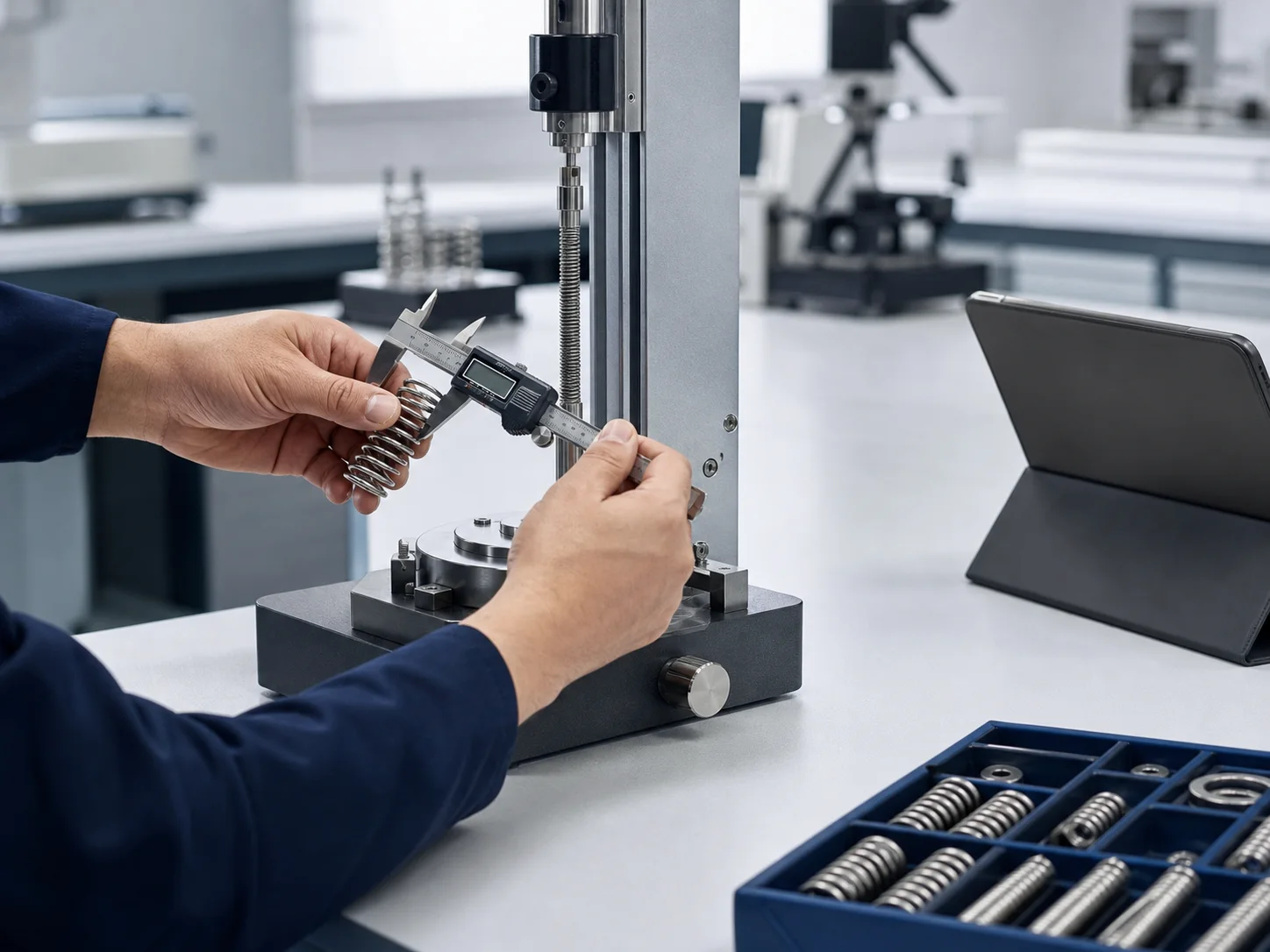
If you have no drawing, wire diameter d, outside diameter D0 and free length L0 are enough to start. Our full process is on the capabilities page.
Frequently asked questions
What records come with automotive parts?
Records are agreed at project setup and can include a PPAP package, inspection reports, material certificates, dimensional records and traceability.
Which certifications apply to automotive work?
IATF 16949 (valid to Feb 4, 2028) and ISO 9001 cover quality management. We are also certified to ISO 14001 and ISO 45001, and we run an in-house testing laboratory.
How long do samples and production take?
Samples typically take 7 to 15 working days and production 15 to 30 working days; the exact lead time is confirmed at quotation.
Send your drawing or sample through our contact page for engineering feedback within 24 hours.




 Upload a Drawing