Upload a Drawing
NorenSpring is a custom compression spring manufacturer in Xuzhou, China, founded in 2001. We make custom compression springs from 0.1 to 80 mm wire to your drawing, to a physical sample, or from just three dimensions: wire diameter, outside diameter and free length. Every design is checked for manufacturability before we quote, and you get engineering feedback within 24 hours.
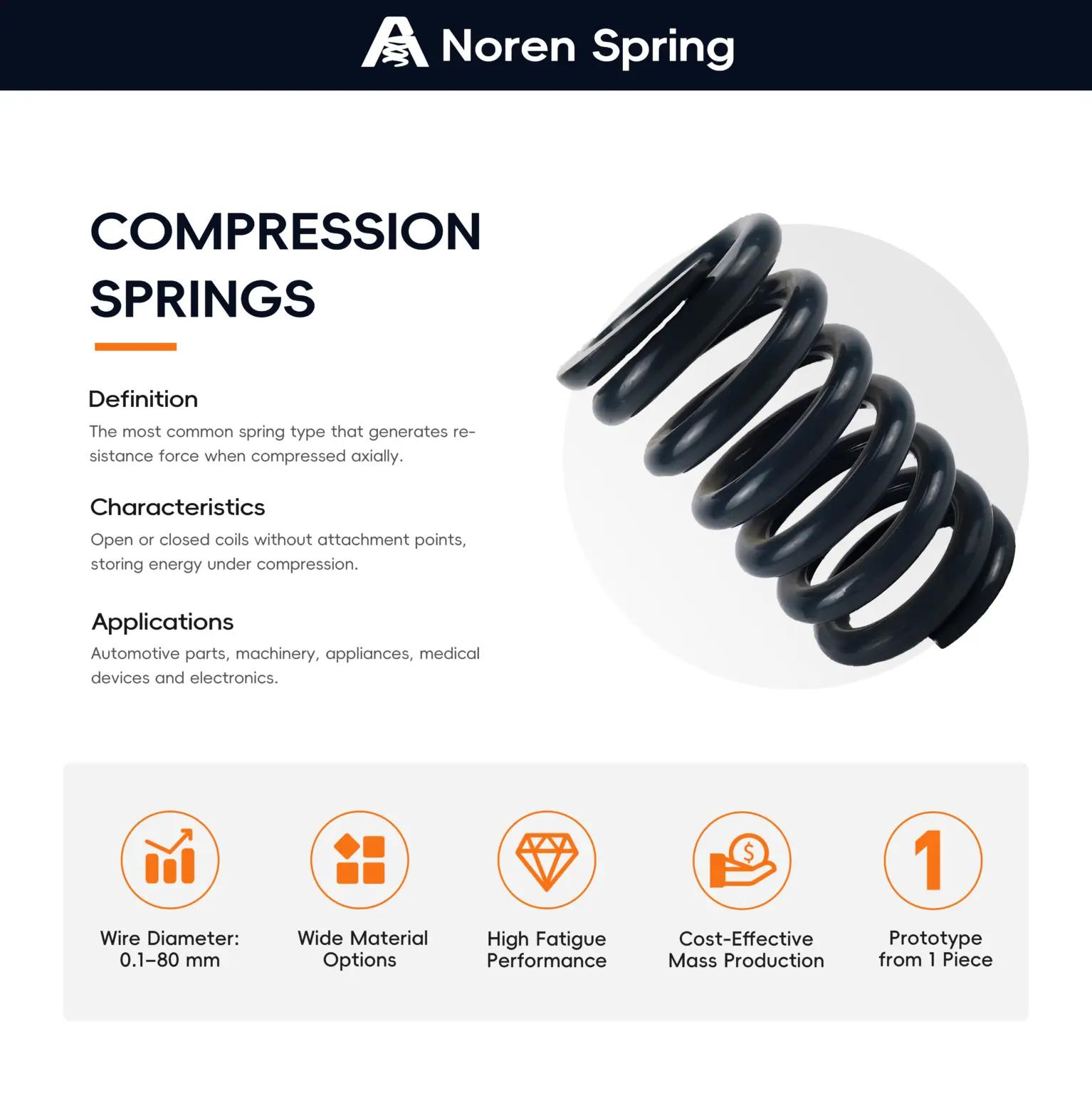
A compression spring stores energy when it’s pushed shorter and returns to its free length when the load comes off. That makes it the usual choice for return, preload and shock-absorbing jobs in vehicles, farm machinery, industrial equipment and small devices. What your assembly needs is a force at an installed height, so that’s the number we build and test to.
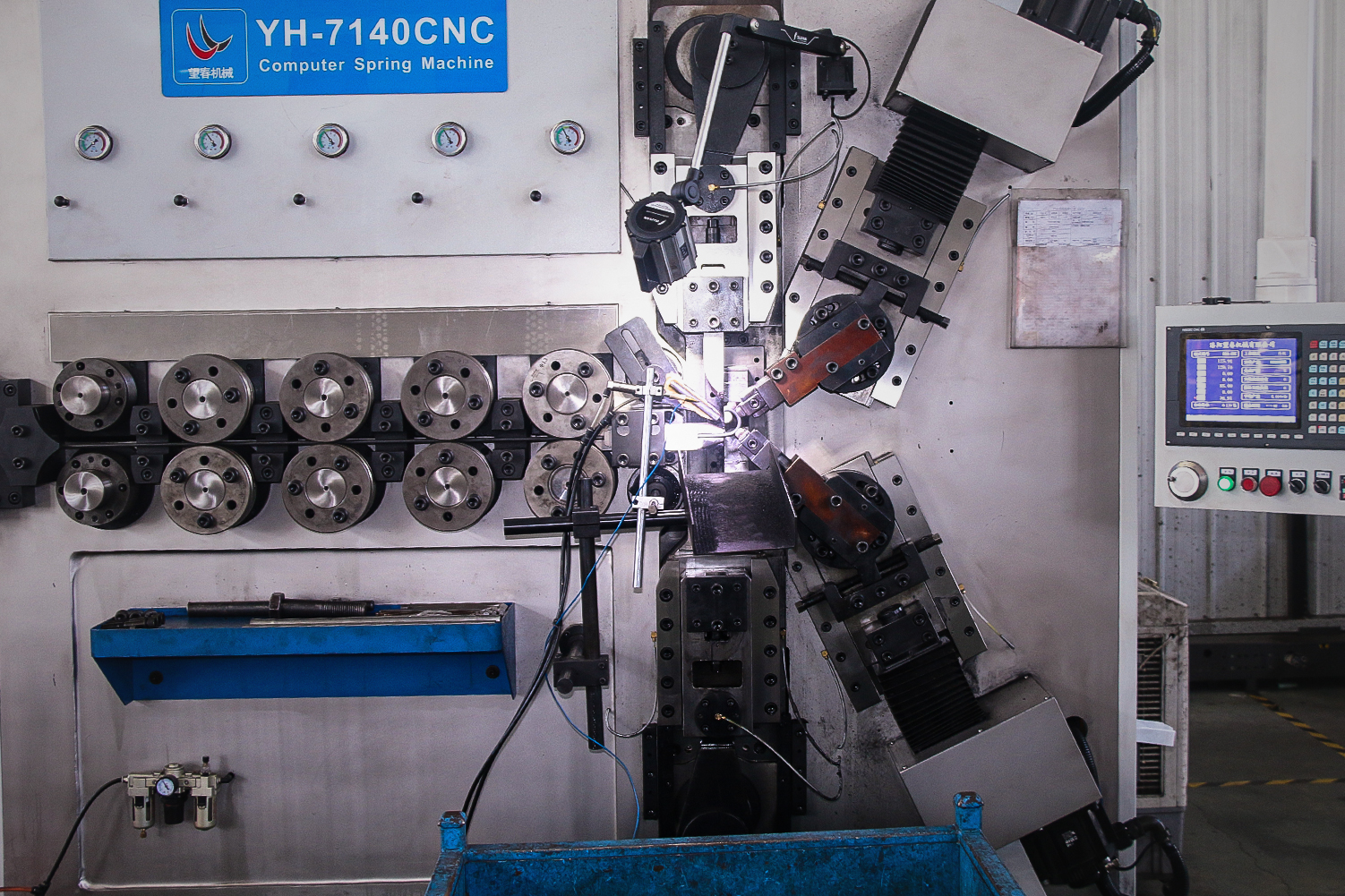
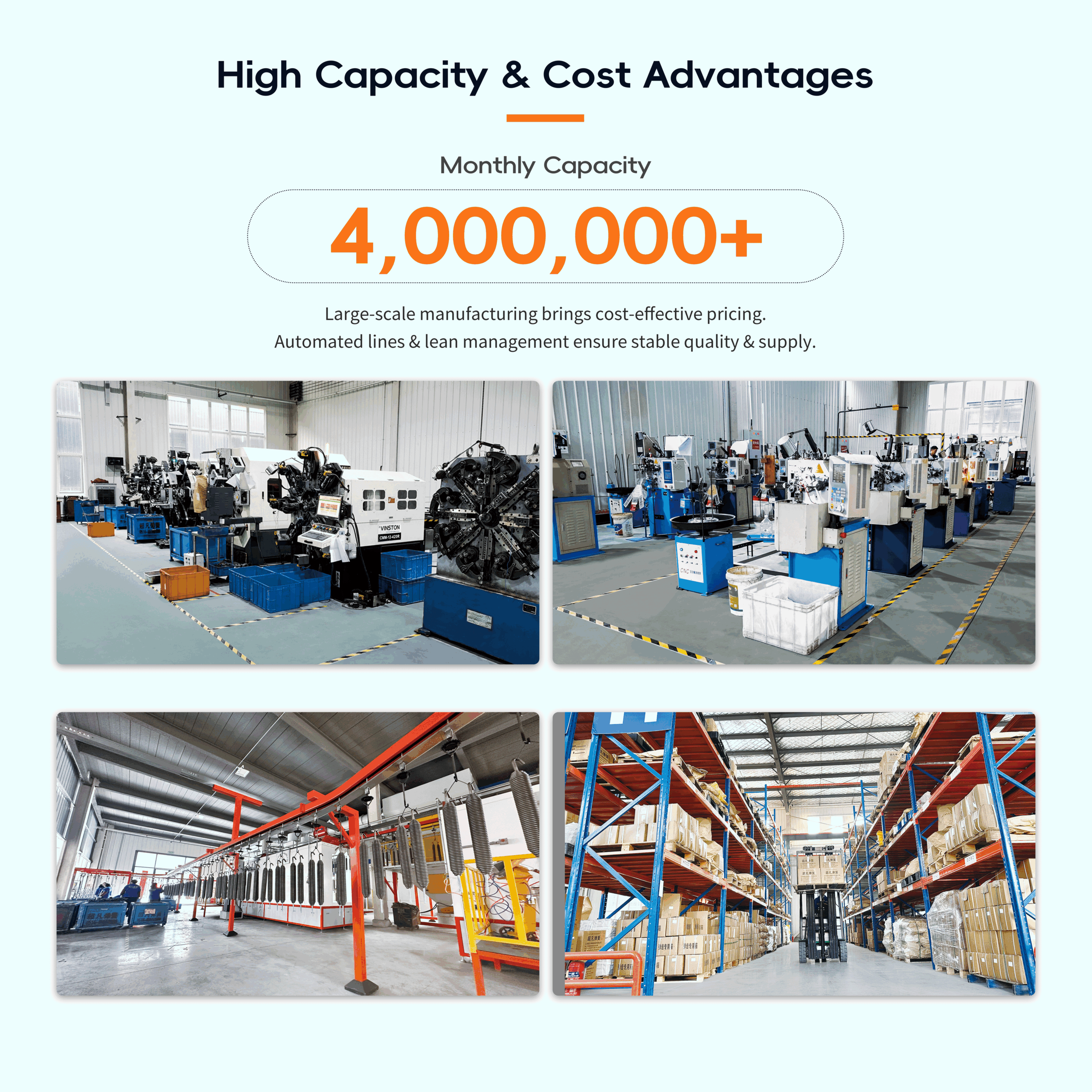
From design review and tooling preparation to forming, inspection, and packaging, each spring is produced according to approved drawings, samples, or technical requirements. We support both standard and custom compression springs, helping customers develop reliable solutions for new projects and replacement applications.
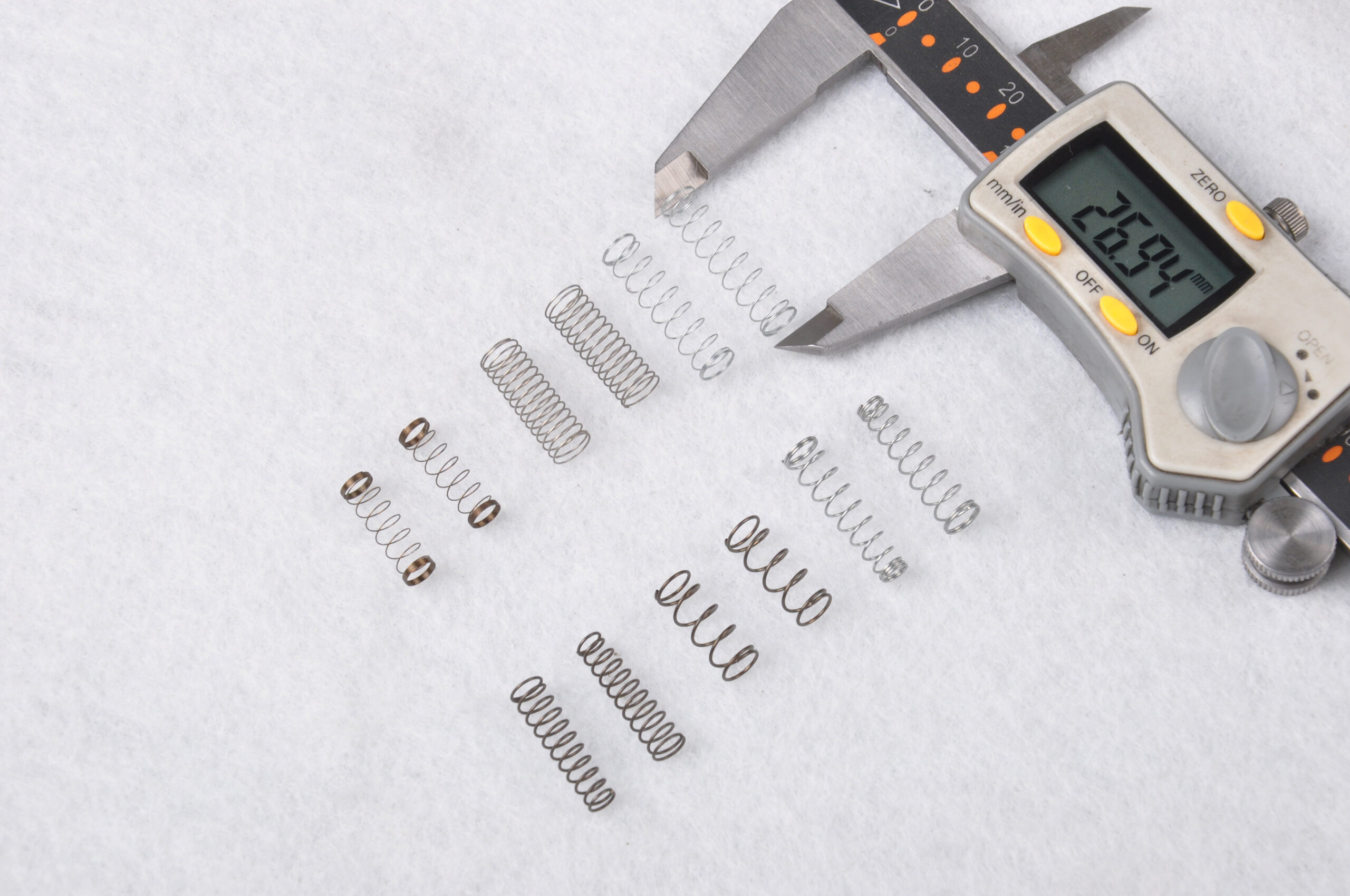
For a customized compression spring quotation, please provide your drawing, sample, dimensions, load requirements, working conditions, and expected quantity. Our team will recommend a suitable solution based on your application needs.
Compression spring specifications: wire range, materials and lead times
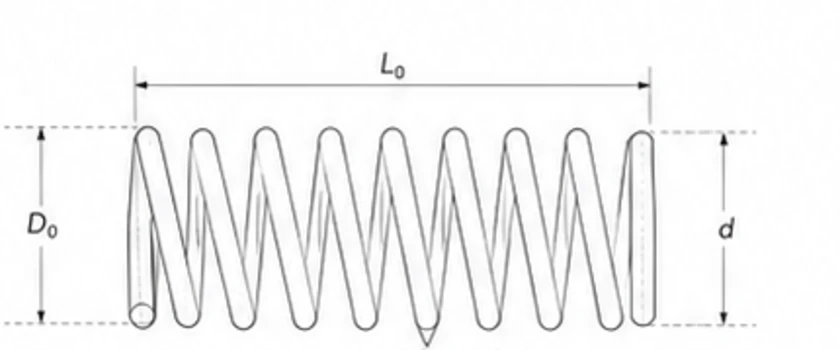
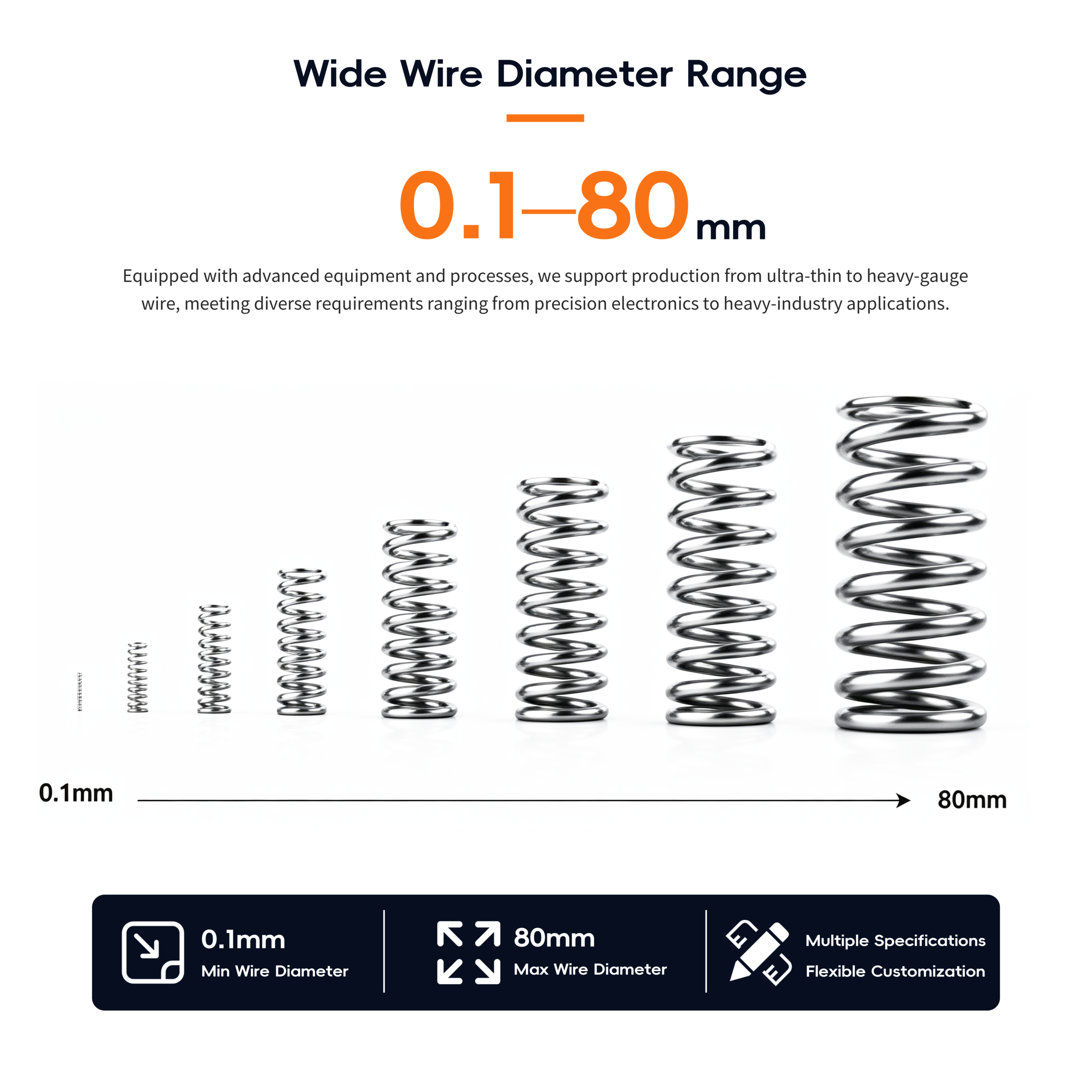
We coil wire from 0.1 to 80 mm. Outside diameter and free length depend on the wire size and the spring index (mean coil diameter divided by wire diameter), which for cold coiling usually sits between about 4 and 12. Send your numbers and we’ll confirm the geometry at review.
- Wire diameter: 0.1–80 mm (0.004–3.15 in).
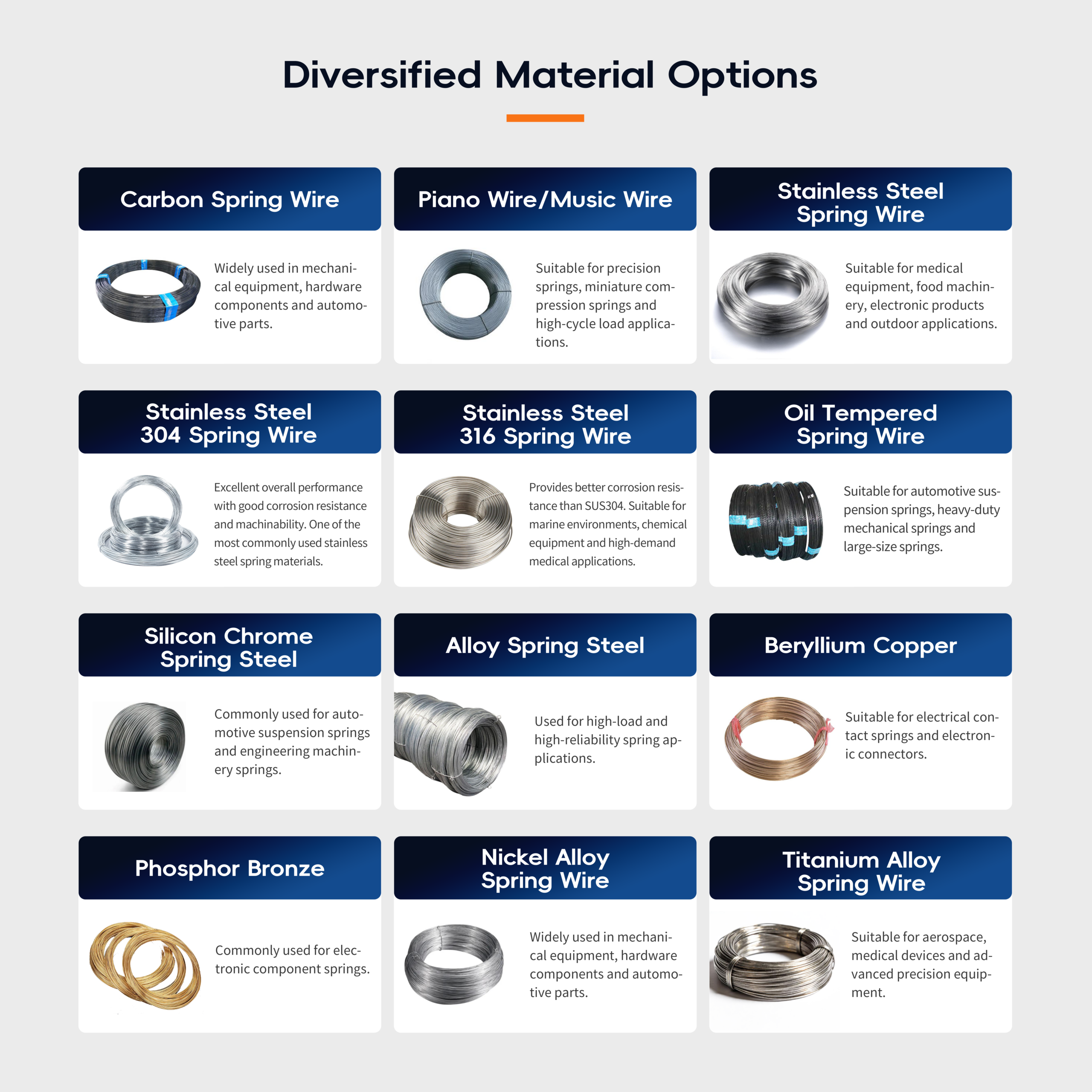
- Wire grades: carbon spring wire, music wire, oil-tempered wire, silicon-chrome spring steel, alloy spring steel, stainless steel spring wire, stainless 304, stainless 316, beryllium copper, phosphor bronze, nickel alloy and titanium alloy spring wire.
- End types: name the end type on your drawing. The table below compares the common options.
- Order size: no fixed minimum. Prototypes, small batches and high-volume production are all quoted.
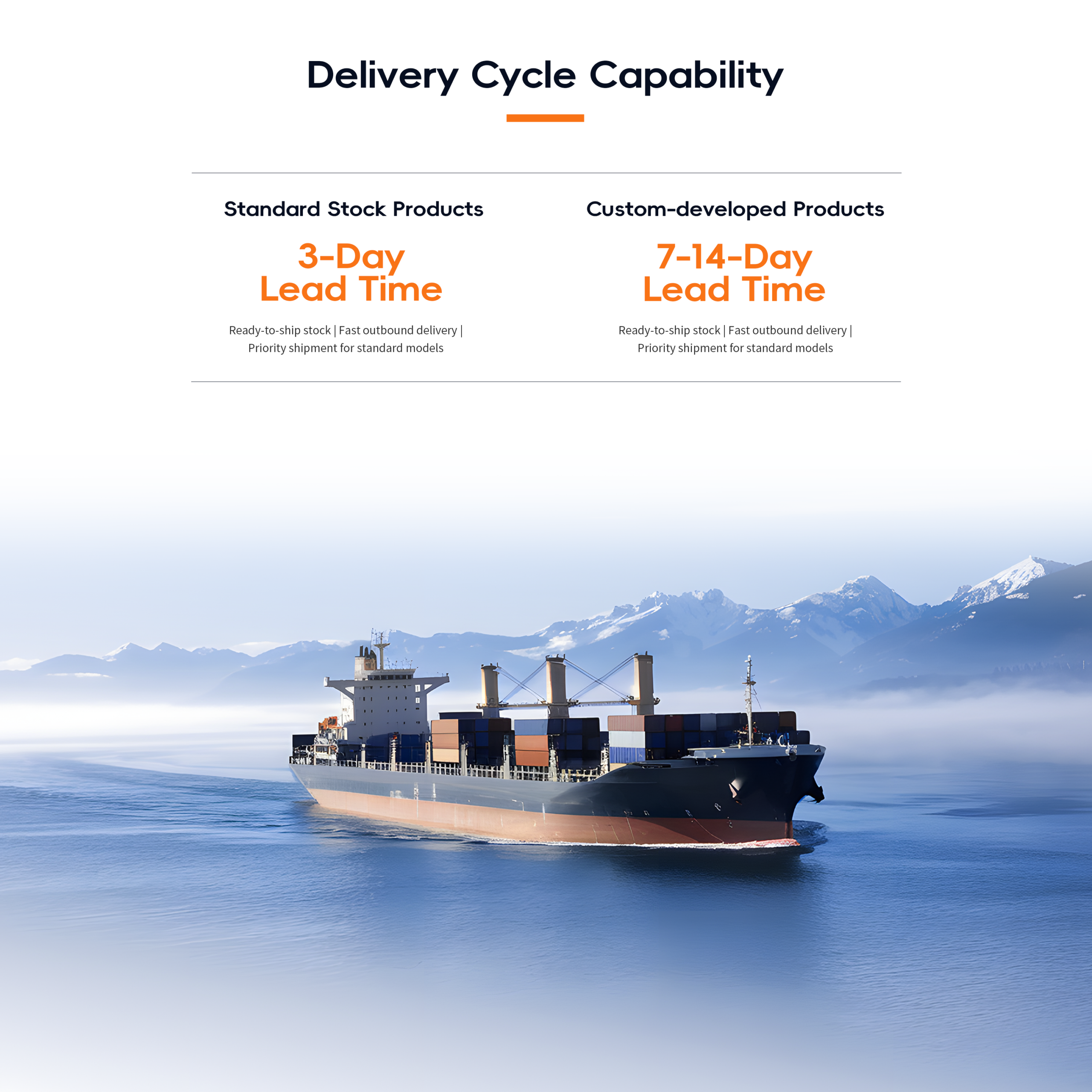
- Lead time: samples in 7–15 working days and production in 15–30 working days, confirmed at quotation.
- Records: inspection reports, material certificates, dimensional records and traceability as agreed at project setup, with PPAP and FAIR packages for automotive and aerospace programs.
Compression springs we make and how we check them
Compression spring parts we have supplied include shock springs for farm machinery in 50CrVA or 65Mn wire from 3 to 12 mm, compressor valve springs in SWOSC-V oil-tempered wire from 1 to 5 mm, clutch pressure plate springs in 50CrVA, and automotive shock absorber springs in 8 to 20 mm wire with a powder coat. On the small end we supply precision compression springs for insulin pens and lancet devices. Nine of our compression spring parts, from farm machinery to clutch clamping and compressor valves, are described in the compression spring case study.
What we need to quote
- Space: the bore it works in or the rod it fits over, and the free length.
- Force: the load at one working height, or at two heights if the rate matters.
- Limits: the lowest height it may reach in service, so we can keep it off solid.
- Ends: closed and ground for a square seat, or closed and not ground, usual for fine wire and lower-cost parts.
- Duty: cycles, temperature and whether the part sits outdoors.
Our guide on how to specify a custom compression spring explains each item, and the spring rate guide shows how wire size and active coils set the rate.
How a batch is checked
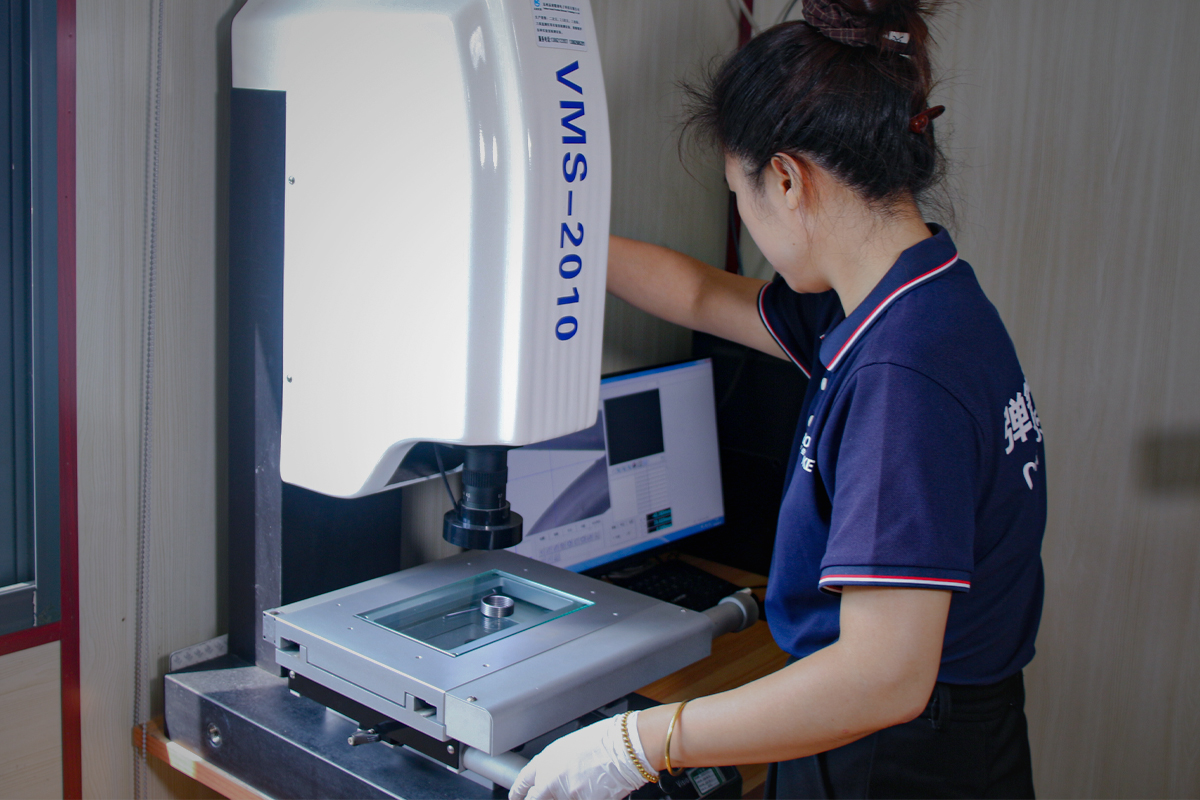
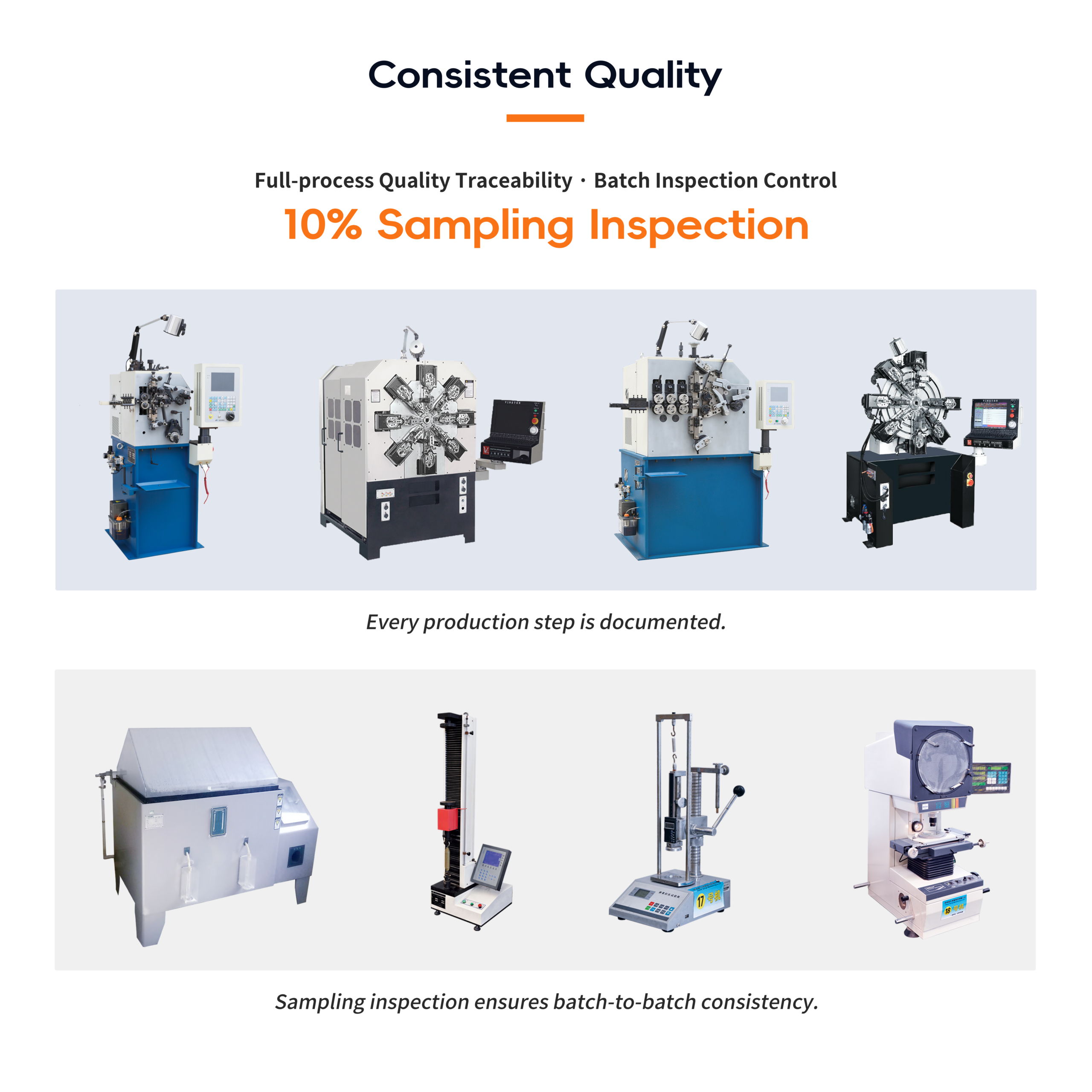
Batches are load-tested at the working height you specify, and spring hardness is checked on a Rockwell tester after heat treatment. Suspension and farm machinery springs, which take repeated shock loads, can be run on a fatigue tester before release so a loss of force shows up in our test rather than in the field.
End types and what they change
End type sets how squarely the spring stands, how short it can close and what it costs. Decide it early, because it changes the number of coils needed for the same load.
| End type | Approx. solid height | Typical use |
|---|---|---|
| Closed and ground | (Na + 2) × d | The spring must stand square on a flat seat and load evenly |
| Closed, not ground | (Na + 3) × d | Fine wire, a high index or a cost-sensitive part, usually guided in a bore or over a rod |
| Open, not ground | (Na + 1) × d | Low-cost parts whose ends locate on a pin or in a pocket |
| Open and ground | (Na + 1) × d | Rarely needed; ask before specifying it |
Na is the number of active coils and d is the wire diameter. These are textbook approximations, and real solid height also depends on wire tolerance and grinding, so give a maximum solid height on the drawing if space is tight. If a straight spring is still too tall when closed, a conical spring can close to one or two wire diameters. A wave spring fits much shorter axial spaces, and die springs suit heavy loads in press tools.
Which tolerances to mark on your drawing
Put the tight tolerance on the force at your working length and leave most other dimensions as reference. The coiler can then adjust the number of coils to hit the load, which absorbs normal variation in wire size and material. Tolerancing free length, rate, coil count and load all at once leaves nothing to adjust, and cost goes up.
- Load at length: one load at one working length, or two loads at two lengths if the rate matters, both well away from free length and solid height.
- Diameter: tolerance the outside diameter if the spring works in a bore, or the inside diameter if it sits over a rod, and leave clearance for the coils to grow under load.
- Solid height: a maximum, if the assembly can close the spring completely.
- Tolerance standard: if your company works to one, such as the quality grades in EN 15800 for cold-coiled compression springs, name the standard and grade.
For worked examples, see how to specify a custom compression spring.
Finishes and corrosion protection
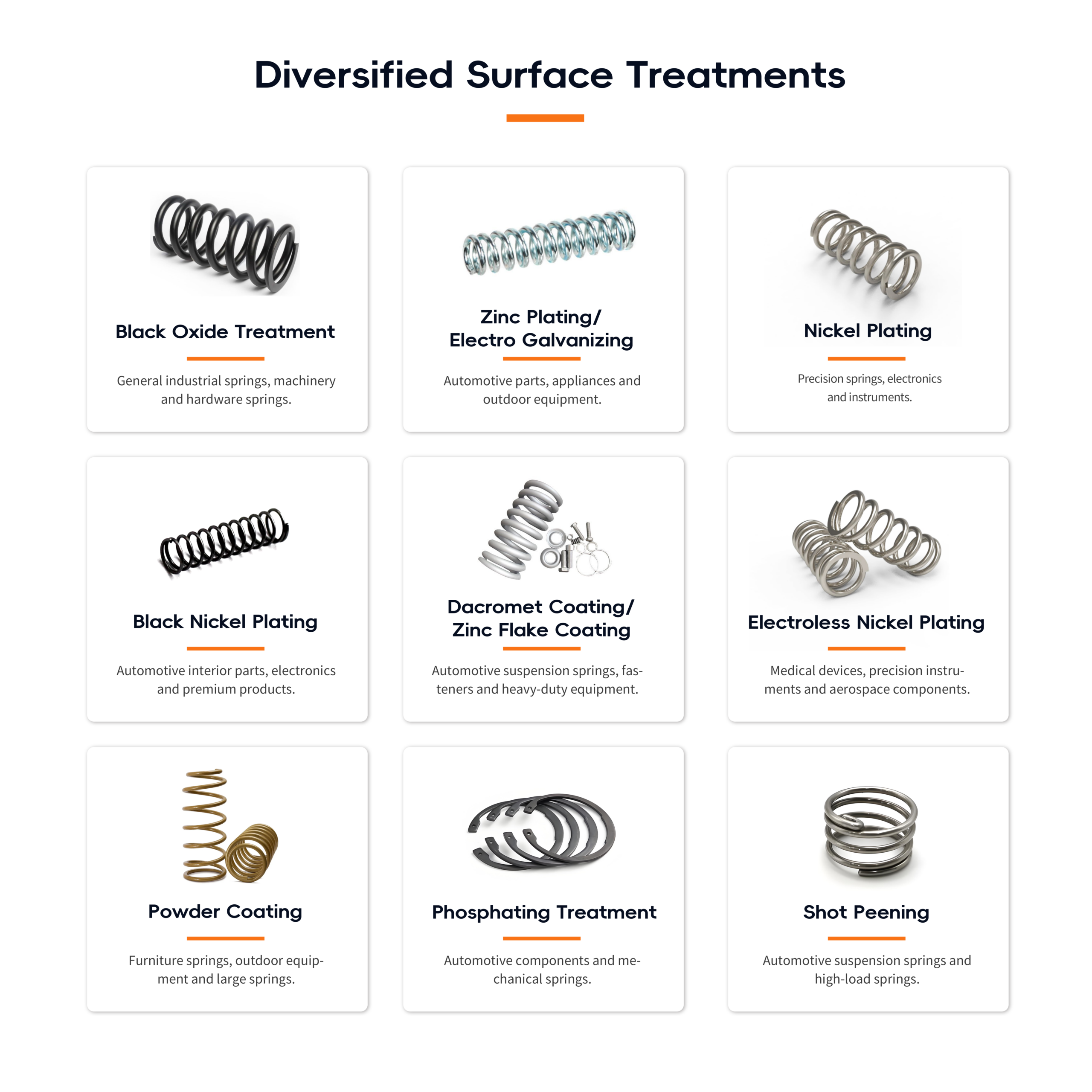
Choose the finish from the environment the spring works in. Stainless 304 and 316 springs usually need no coating, and SUS304 springs can be passivated. For carbon and alloy steel springs, finishes we’ve supplied on compression springs include:
- Zinc plating, bright or yellow, for springs used outdoors. Every zinc-plated spring is baked after plating to relieve hydrogen embrittlement, with the temperature set by the applicable national standard.
- Phosphate, for springs that work in oil or under cover.
- Powder coating, a thick colored barrier suited to larger open-coil springs such as shock absorber springs.
- Black, red or blue coatings, for corrosion protection and color identification.
- Plain, oiled, for springs that run in lubricated assemblies.
Nickel plating, black oxide and painting are also among the finishes on springs we’ve supplied. If your drawing calls for zinc flake or another finish, name the specification and we’ll confirm at review whether it can be met. Thick coatings add to the wire diameter and solid height, so allow for them on tight designs. The spring finishes guide compares each option.
Custom compression springs for automotive and agricultural machinery
Automotive and agricultural machinery are two of the main markets for our compression springs, and our quality system is certified to IATF 16949 for automotive work. PPAP packages are available for automotive programs, and the records that ship with each lot are agreed at project setup.
For vehicle springs, send the duty along with the drawing: cycles, operating temperature, and whether the spring takes shock or steady load. Suspension, clutch and valve springs carry high stress over a long service life, so material, heat treatment and stress relief are reviewed together. Shot peening and presetting are common industry treatments for high-stress, high-cycle springs; if your drawing calls for either, list it in the inquiry so it’s checked before we quote.
Farm machinery springs work outdoors, in mud and dust, under repeated shock from the ground, so zinc plating with a hydrogen relief bake, powder coating or a colored coating is the usual protection. If you need a replacement spring and have no drawing, send the old spring or clear photos with measurements, and we’ll work out the geometry and propose a drawing for your approval. Our compression spring case study includes a shock spring project for an agricultural machinery customer in the USA.
See how we approach each sector on the automotive springs and agricultural machinery springs pages.
Certified quality systems: IATF 16949 (valid to Feb 4, 2028) and ISO 9001 (valid to Dec 11, 2026). Founded 2001 · 3 production facilities · 12,000 m² · 28+ engineers · in-house testing laboratory. View our certificates.
Technically reviewed by Feng Yulin, General Manager (senior structural engineer, 15 years of spring R&D). Last reviewed: 2026-10-16.