











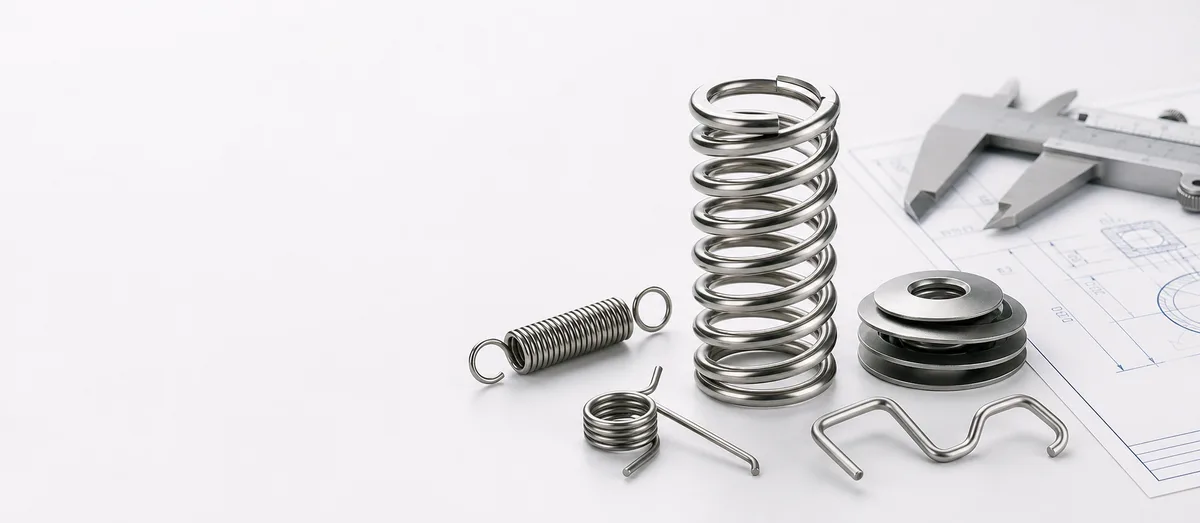
The nine extension springs on this page come from NorenSpring’s application cases. They pull things back: a tractor brake pedal, a motorcycle side stand, the sections of an exhaust pipe, a cultivator linkage, a fitness machine. What separates them is less the coil body than the ends, the initial tension and how far each one is stretched. This page is for OEM buyers designing a new return spring and for distributors sourcing replacements for tractors, motorcycles and equipment already in service. For what to send with an inquiry, see our guide to specifying a custom extension spring.
Key Takeaways
- The nine parts serve tractors and cultivators, motorcycles and exhausts, gym equipment, cable reels and general hardware.
- End forms in this portfolio include standard hooks, extended hooks, straight ends and triangular loops.
- An anonymized project below shows how a mower deck belt spring that lost tension was redesigned for a buyer in the USA.
- Parts can be matched from a physical sample as well as a drawing, with prototype samples for approval before production.
- Documentation such as inspection reports, material certificates and dimensional records is agreed at project setup.
The nine parts in this portfolio
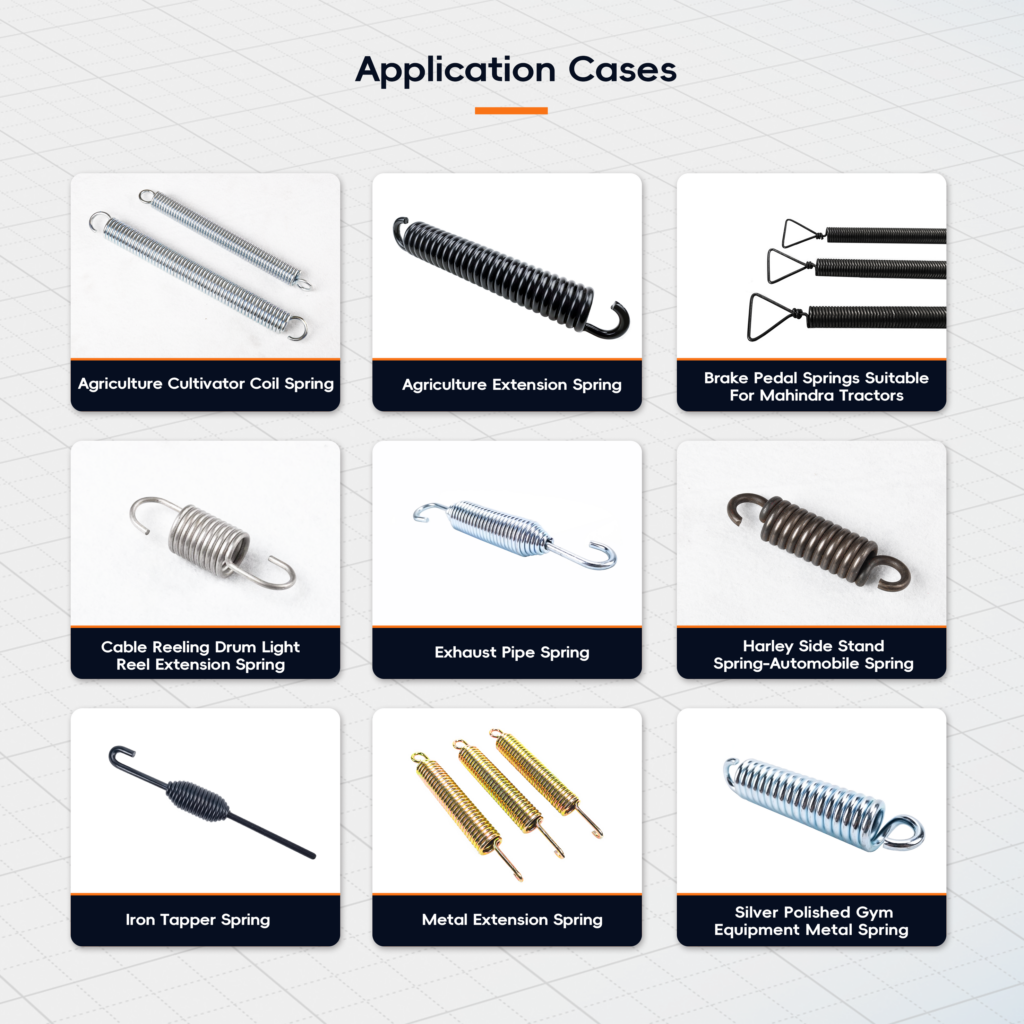
| Part | Equipment | What the spring does |
|---|---|---|
| Agriculture cultivator coil spring | Cultivator | Long spring with loop ends that keeps an implement part under tension |
| Agriculture extension spring | Farm implement linkage | Heavy spring that pulls a lever or linkage back to position |
| Brake pedal spring | Tractor brake pedal | Replacement spring suitable for Mahindra tractors; returns the pedal to the released position, with triangular end loops |
| Cable reeling drum light reel extension spring | Cable reel | Extension spring with extended hooks used in a cable reeling drum for a light reel |
| Exhaust pipe spring | Exhaust system | Holds two exhaust sections together at a joint while allowing heat movement and vibration |
| Side stand spring | Motorcycle side stand | Replacement spring compatible with Harley-Davidson motorcycles; pulls the stand up and holds it in position |
| Iron tapper spring | General hardware | Short coil body on a long straight leg with a hooked end |
| Metal extension spring | General machinery | Spring with long straight ends and small eyes at each end |
| Silver polished gym equipment spring | Fitness equipment | Provides return force or resistance, with large loop ends |
Where these springs work
Tractors and cultivators
Pedal return springs and implement springs are pulled on every operation and work outdoors in mud and dust. A tractor pedal spring must hold the pedal fully released, so its load at installed length is the number to protect. See springs for agricultural machinery.
Motorcycles and exhaust systems
A side stand spring snaps the stand between two positions and has to resist vibration without letting the stand drop. Exhaust springs sit next to hot pipes, which affects material and finish choice. More on springs for vehicles and two-wheelers.
Fitness equipment
Gym springs are handled and seen by users, so appearance and consistent force from part to part matter along with load. See springs for sports equipment.
Reels and general hardware
The cable reel, iron tapper and metal extension springs show how end forms follow the mounting point. See packaging and handling applications and industrial equipment.
Example project: a deck belt spring for mowing equipment
A buyer in the USA needed a deck belt extension spring, a replacement part compatible with John Deere mowing equipment.
- Problem. The replacement spring they had been using lost tension under high-frequency operation, so the deck belt was no longer held tight enough.
- What we changed. Working from the original part’s dimensions, our engineers redesigned the hook form and optimized the initial tension and improved fatigue performance. The spring is made from high-strength spring steel.
- Result. The spring passed installation testing on the equipment, and we now supply it as a replacement on a steady basis.
Customer details are kept confidential.
What we check before quoting a part like this
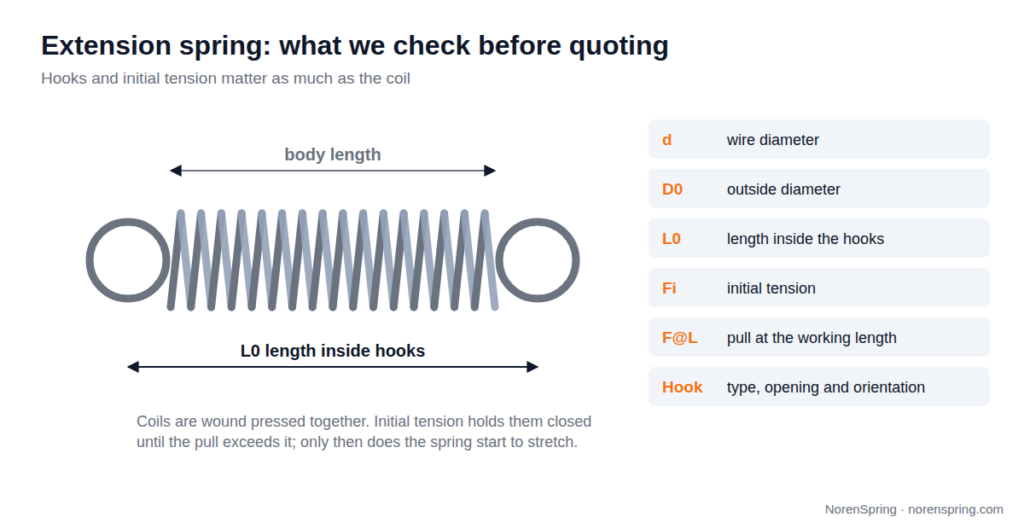
The hook bend is often the highest-stress point of an extension spring, so ends get as much attention as the coils. Our engineers review:
- Initial tension. Most extension springs are coiled with the coils pressed together. The spring does not start to stretch until that built-in force is overcome. Specify it if the part must hold a position with no movement.
- Hook type and orientation. Machine hooks, crossover hooks, extended hooks and special loops each change length and stress. Also state the angle of one hook relative to the other.
- Length inside hooks. The free length measured from the inside of one hook to the inside of the other.
- Load at extended length. One or two forces at stated lengths define the working range.
- Maximum extension. Stretching beyond the design limit permanently lengthens the spring. Tell us the longest length reached in service or assembly.
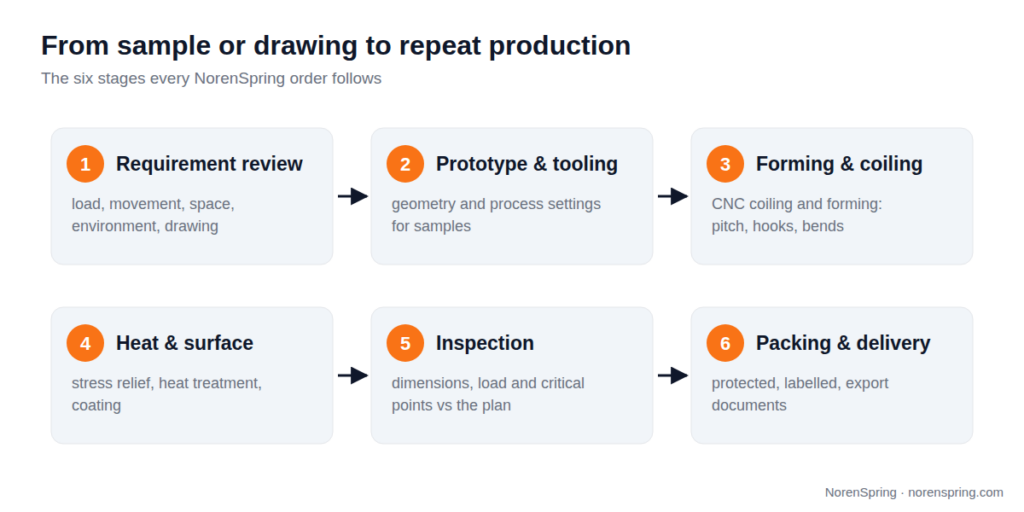
From sample or drawing to repeat production
Our team of 28+ engineers reviews each project, and we produce more than 4,000,000 springs a month for customers in 60+ countries.
- Requirement review. We check load, travel, mounting points, environment and your drawing or sample before quoting.
- Prototype and tooling. Tooling for the hook or loop form is prepared and samples are made for approval.
- Forming and coiling. CNC coiling sets body diameter and initial tension; the ends are then formed.
- Heat and surface process. Stress relief after forming, then the agreed finish.
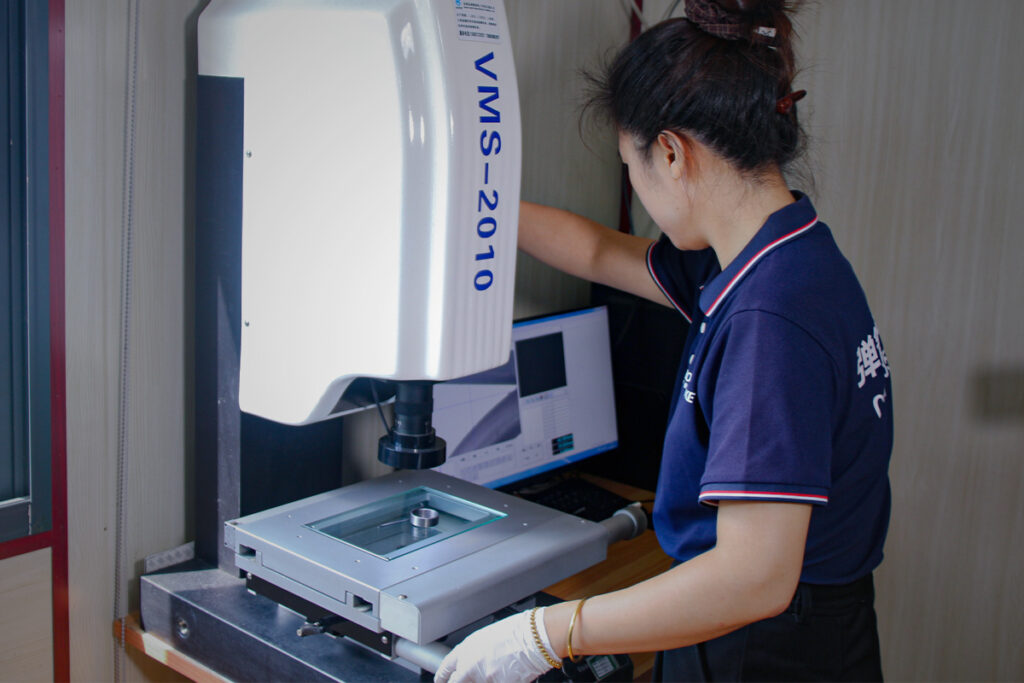
- Inspection and validation. Hook geometry and length are measured on a video measuring system, and load and initial tension on spring testers, against the agreed control plan.
- Packing and delivery. Parts are protected, identified and shipped with export documentation.
Samples typically take 7 to 15 working days and production 15 to 30 working days. The exact lead time is confirmed at quotation, since it depends on material, tooling, quantity and approvals. See our capabilities for details of each stage.
Materials, wire sizes and finishes for these parts
The table gives the material, wire diameter range and usual finish for each part, as supplied by our production team, with the main markets each part ships to.
| Part | Material | Wire diameter | Usual finish | Main markets |
|---|---|---|---|---|
| Agriculture cultivator coil spring | 50CrVA | 6–12 mm | Black oxide | India, Brazil |
| Agriculture extension spring | 65Mn or SWC | 2–8 mm | Zinc plating | USA, India |
| Brake pedal spring | SWC or 65Mn | 2–5 mm | Zinc plating | India |
| Cable reeling drum light reel extension spring | SWP-B | 1–4 mm | Zinc plating | USA, Germany |
| Exhaust pipe spring | Stainless steel 304 | 1–3 mm | Passivation | USA, Japan |
| Side stand spring | SWC | 2–4 mm | Zinc plating | USA, Europe |
| Iron tapper spring | Carbon steel | 2–6 mm | Black oxide | USA |
| Metal extension spring | SWC or SWP | 1–8 mm | Zinc or nickel plating | Germany, USA |
| Silver polished gym equipment spring | Stainless steel 304 | 3–10 mm | Polishing | USA, Canada |
Grades are listed as our production team specifies them: 50CrVA (chromium-vanadium) and 65Mn are Chinese GB spring steels, and SWC, SWP and SWP-B are Japanese JIS hard-drawn and piano wires. Photos may show a different finish from the usual one listed in the table.
Other materials and finishes
Zinc and coatings protect carbon steel outdoors. Stainless steel suits damp or washdown locations without plating.
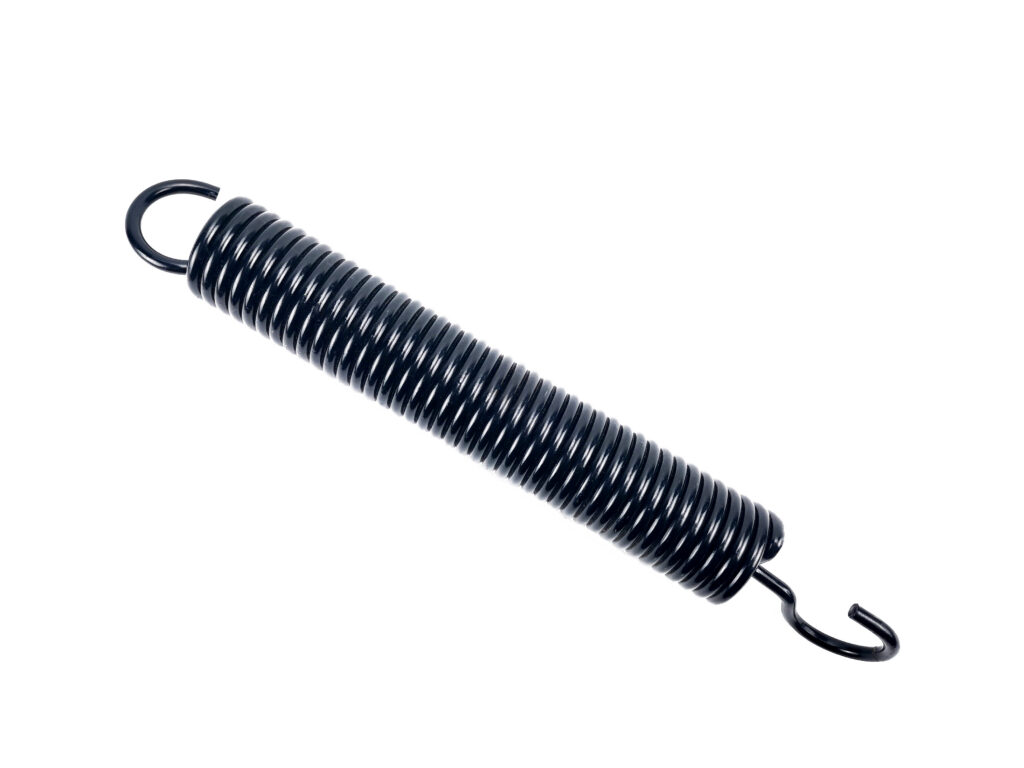
Wire options include carbon spring wire, music wire, oil-tempered wire, stainless 304 and 316, alloy spring steel, phosphor bronze, beryllium copper, and nickel and titanium alloys. For springs near exhaust heat, tell us the temperature so an engineer can suggest a grade.
Frequently asked questions
Can you copy a worn extension spring from a sample?
Yes. Send the sample, or photos with measured wire diameter, outside diameter and length. We can then make prototype samples for dimensional, load and fit approval before production.
How quickly will I get a quote?
Within 24 hours. Samples typically take 7 to 15 working days and production 15 to 30 working days, and the exact lead time is confirmed in the quote.
What records can ship with the springs?
Inspection reports, material certificates, dimensional records and traceability, as agreed at project setup.
Send a drawing or a sample
Replacing a pedal, stand or implement spring, or designing a new one? Send your drawing or sample details, including the hook style and the force you need. You will have engineering feedback or a quote within 24 hours. Or see our full extension spring range.
