










In this article
- Key takeaways
- What is chrome vanadium spring steel?
- ASTM A231 vs A232: commercial or valve spring quality?
- How much load can a chrome vanadium spring carry?
- Temperature limit: why CrV is used for warm springs
- Chrome vanadium vs chrome silicon vs carbon spring wire
- Where we use chrome vanadium
- Finishes and heat treatment for CrV springs
- How to specify a chrome vanadium spring
- Frequently asked questions
- About the authors
- Sources
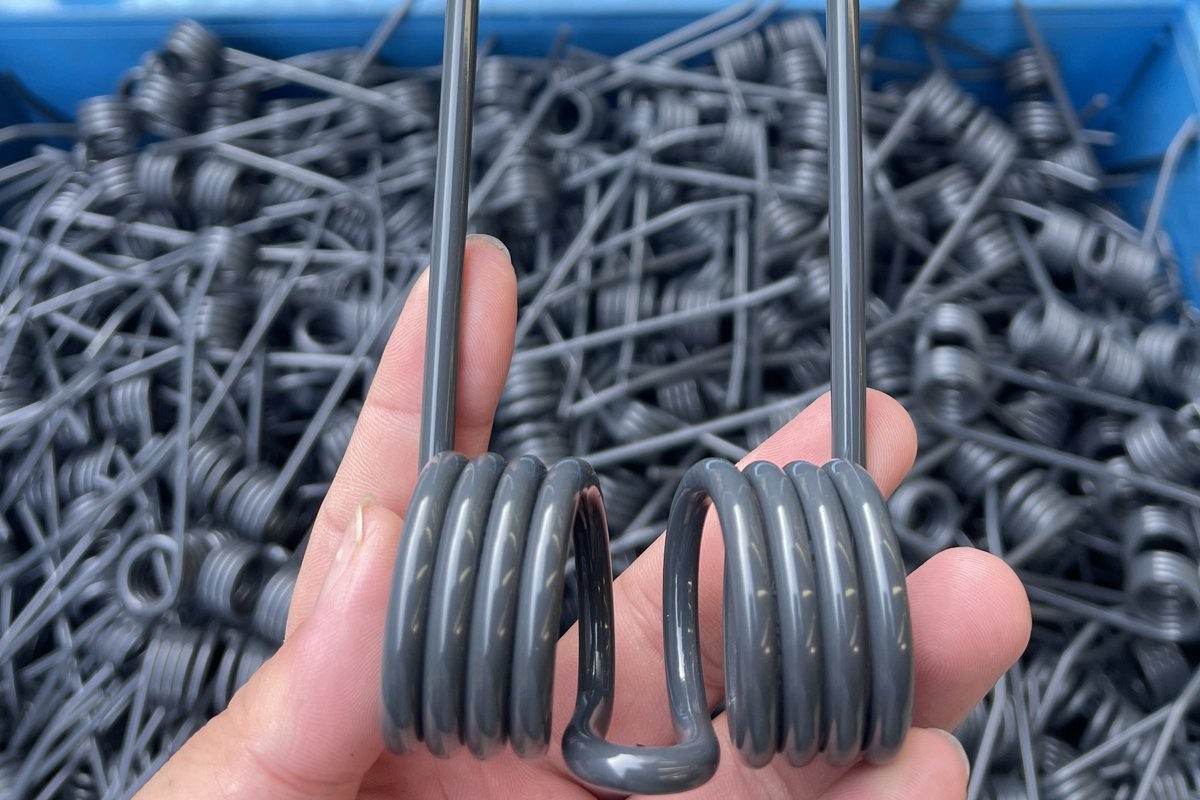
Chrome vanadium springs are springs wound from an oil-tempered alloy steel that contains about 0.5% carbon, 0.8–1.1% chromium and at least 0.15% vanadium [1]. Compared with plain carbon spring wire, chrome vanadium (CrV) keeps its strength at higher temperatures, up to about 218 °C (425 °F), and stands up better to shock loads [1]. It is the classic material for engine valve springs, clutch springs, compressor valve springs and the agricultural tines that hit stones all day.
This guide explains the two ASTM wire grades, ASTM A231 and A232, the European and Chinese equivalents, how strong the wire is at each size, how much load a CrV spring can carry, and when another material is the better buy.
Key takeaways
- Two ASTM grades. ASTM A231 is commercial quality chrome vanadium wire; ASTM A232 is valve spring quality, with the same chemistry and a tighter surface inspection [2].
- Same steel, different names. 51CrV4 (1.8159) in Europe, AISI/SAE 6150 in the US and 50CrVA in China describe very similar chromium vanadium spring steels [3].
- Strength falls with size. A232 wire ranges from 2,068–2,241 MPa at 0.51 mm down to 1,310–1,448 MPa at 12.7 mm.
- Use it warm and under shock. CrV is rated to about 218 °C, against 121 °C for music wire and oil-tempered carbon wire, and 246 °C for chrome silicon [1].
- Chrome silicon is stronger; CrV is tougher and easier to source in large sizes. For the highest stresses and temperatures, choose chrome silicon. For shock-loaded parts at moderate temperatures, CrV remains a good choice.
What is chrome vanadium spring steel?
Chrome vanadium is a medium-carbon alloy steel. Chromium increases hardenability, so thick wire hardens all the way through; vanadium forms fine carbides that keep the grain small, which helps toughness and fatigue resistance. In the SAE system these steels form the 61xx family, with 0.60–0.95% chromium and a minimum of 0.10% or 0.15% vanadium [4].
For springs, chrome vanadium is usually bought as oil-tempered wire: the steel mill draws the wire, hardens it in oil and tempers it before it reaches the spring maker. The spring maker coils it cold and then stress relieves it. Larger bars that are hot coiled are hardened and tempered after coiling instead.
The main grade names you will see on drawings:
| Standard | Grade | Carbon | Chromium | Vanadium | Typical form |
|---|---|---|---|---|---|
| ASTM A231 (US) | Chrome vanadium, commercial quality | 0.48–0.53% | 0.80–1.10% | 0.15% min | Oil-tempered wire |
| ASTM A232 (US) | Chrome vanadium, valve spring quality | 0.48–0.53% | 0.80–1.10% | 0.15% min | Oil-tempered wire, surface inspected |
| EN 10089 (Europe) | 51CrV4, 1.8159 | 0.47–0.55% | 0.90–1.20% | 0.10–0.25% | Bar and rod for hot or cold forming |
| SAE (US) | 6150 | about 0.50% | about 0.95% | 0.15% min | Bar and wire |
| GB/T 1222 (China) | 50CrVA | about 0.50% | 0.80–1.10% | about 0.10–0.20% | Bar and wire |
Sources: ASTM ranges from Lee Spring [1] and Gibbs [2]; 51CrV4 from Ovako [3], which also lists AISI 6150 as a similar designation. The 50CrVA values are rounded nominal figures; always check the mill certificate for the exact heat.
ASTM A231 vs A232: commercial or valve spring quality?
Both grades have the same chemistry and strength range: Master Spring’s material table lists 1,310–2,069 MPa minimum tensile strength, a modulus E of 207 GPa, a torsion modulus G of 79.3 GPa and a hardness of HRC 41–55 for both [5]. The difference is surface quality.
- ASTM A231 is commercial quality. It suits clutch springs, tines, industrial compression springs and most shock-loaded parts.
- ASTM A232 is valve spring quality. Gibbs notes that its valve quality wire is eddy current tested “to assure the finest possible surface in keeping with automotive industry requirements” [2]. Surface seams and decarburisation are where fatigue cracks start, so A232 is the right choice when a spring must survive tens of millions of cycles, for example an engine or compressor valve spring.
A third grade, ASTM A878, is a modified chrome vanadium valve wire with higher carbon and lower chromium [5]. It is less common.
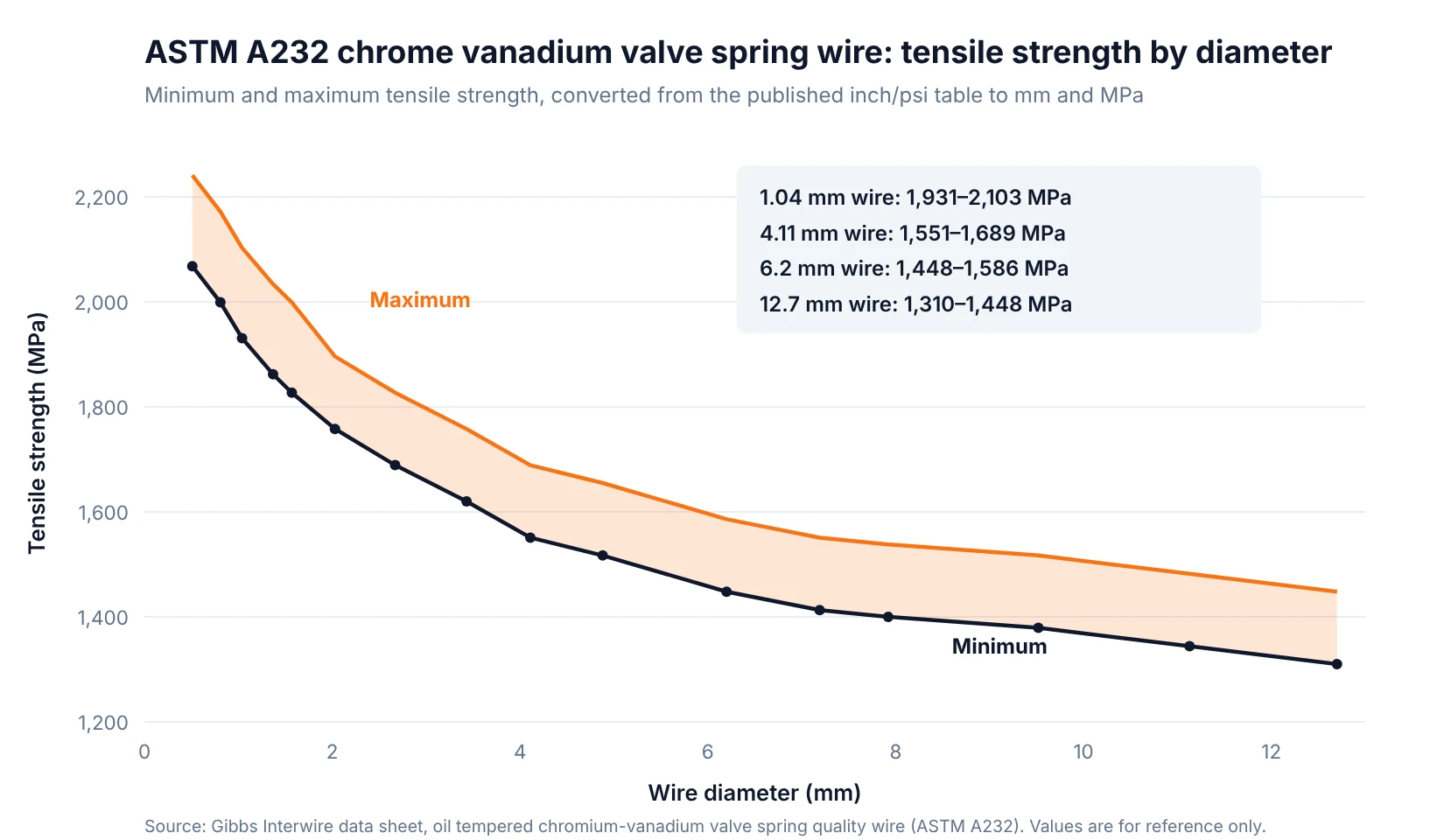
As with every drawn spring wire, thinner wire is stronger. The tensile range drops by roughly a third from the finest to the thickest size in the table [2]:
| Wire diameter | Minimum tensile | Maximum tensile |
|---|---|---|
| 1.04 mm (0.041 in) | 1,931 MPa | 2,103 MPa |
| 2.03 mm (0.080 in) | 1,758 MPa | 1,896 MPa |
| 4.11 mm (0.162 in) | 1,551 MPa | 1,689 MPa |
| 6.20 mm (0.244 in) | 1,448 MPa | 1,586 MPa |
| 9.53 mm (0.375 in) | 1,379 MPa | 1,517 MPa |
| 12.70 mm (0.500 in) | 1,310 MPa | 1,448 MPa |
How much load can a chrome vanadium spring carry?
To show what these numbers mean in practice, we worked through a family of compression springs with a spring index C = D/d of 7, a common middle-of-the-range index. Master Spring gives 45% of minimum tensile strength as the maximum design stress for chrome vanadium [5]. We used that figure with the Wahl correction factor and the standard formula F = τπd³ / (8DK).
For a 6.0 mm wire:
- Minimum tensile strength, interpolated from the A232 table: about 1,458 MPa.
- Design stress: 0.45 × 1,458 = 656 MPa.
- Mean coil diameter: D = 7 × 6 = 42 mm. Wahl factor for C = 7: K = 1.213.
- Maximum static load: F = 656 × π × 6³ / (8 × 42 × 1.213) ≈ 1,093 N.
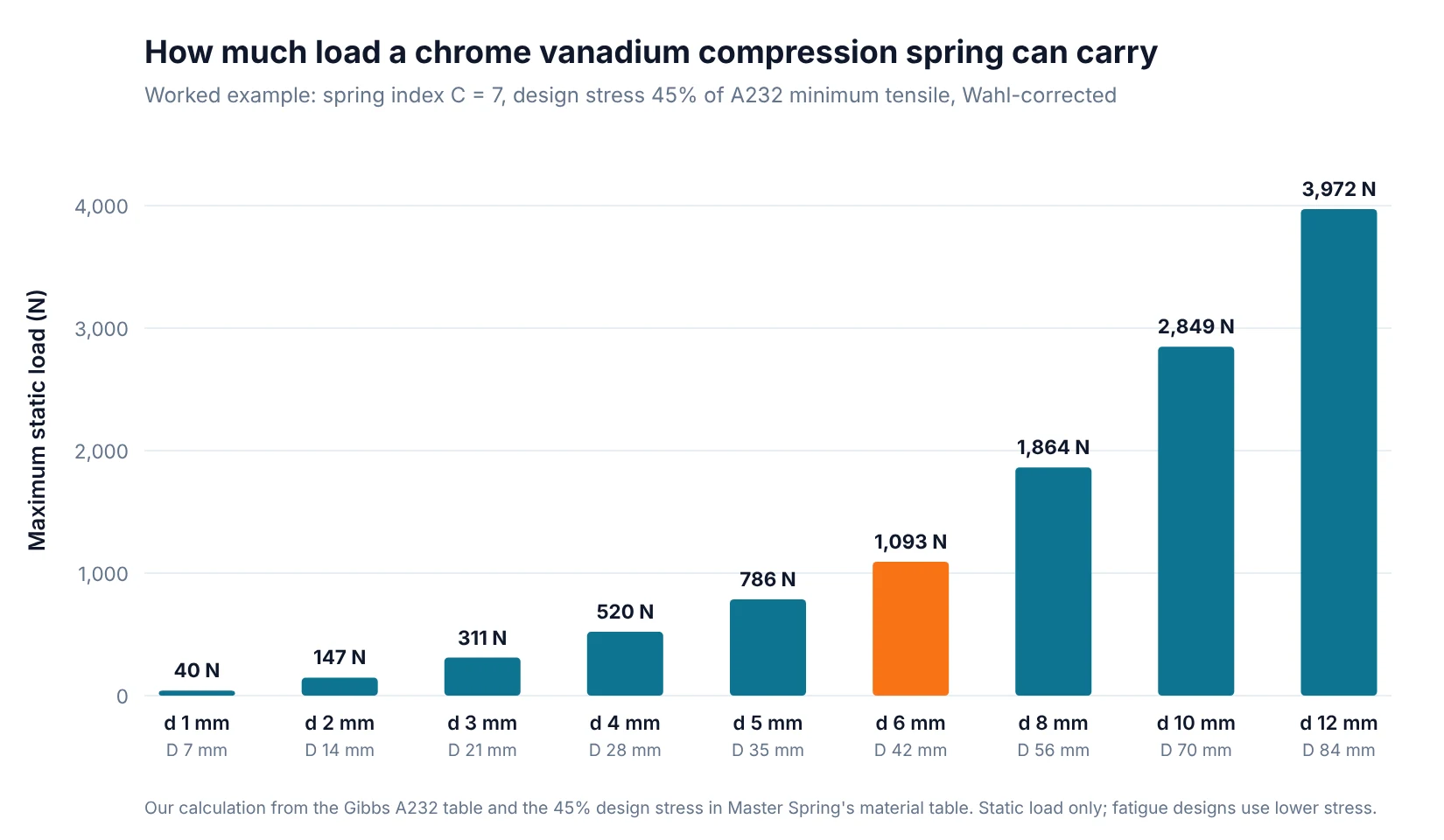
Two cautions apply. First, this is a static limit; a spring that cycles millions of times needs a lower working stress, and shot peening raises the fatigue limit (see our guide to shot peening springs). Second, the load you can use also depends on the solid height, buckling and space, so treat the chart as a sizing starting point, not a design.
Temperature limit: why CrV is used for warm springs
Plain carbon spring wires relax quickly once they run hot. Lee Spring lists a maximum operating temperature of 121 °C (250 °F) for music wire, hard-drawn and oil-tempered carbon wire, 218 °C (425 °F) for chrome vanadium and 246 °C (475 °F) for chrome silicon [1]. That extra 97 °C over carbon steel is the main reason chrome vanadium became the standard for engine and compressor valve springs.
Above about 218 °C, chrome vanadium loses load through relaxation faster than designers usually accept. For hotter service, the next steps are chrome silicon, then stainless steels and nickel alloys. Our chrome silicon springs guide covers the step up, and the spring wire material guide compares all the common wires.
Chrome vanadium vs chrome silicon vs carbon spring wire
| Wire | ASTM grade | Minimum tensile range | Max. temperature | Best for |
|---|---|---|---|---|
| Oil-tempered carbon | A229 | Class I 1,138–2,020 MPa | 121 °C | General springs in larger sizes, average stress |
| Music wire | A228 | 1,586–2,751 MPa | 121 °C | Small, highly stressed springs at room temperature |
| Chrome vanadium | A231 / A232 | 1,310–2,069 MPa | 218 °C | Shock loads, moderate heat, valve and clutch springs |
| Chrome silicon | A401 / A877 | 1,544–2,069 MPa | 246 °C | Highest stress and heat in carbon-alloy steels |
Source: Lee Spring material table, converted from psi to MPa [1].
In short:
- Choose chrome vanadium for springs that take impacts or vibration, run up to about 200 °C, or need thick wire that hardens through, such as agricultural tines and heavy clutch springs.
- Choose chrome silicon when the stress is at the limit or the temperature is close to 250 °C, such as high-performance valve springs.
- Stay with carbon wire when the spring works at room temperature and cost matters more than the last few percent of life.
Where we use chrome vanadium
Chrome vanadium, in the Chinese grade 50CrVA, is one of the most common materials in our own production. Parts we have supplied in 50CrVA, alone or as an alternative grade, include:
| Part | Material | Wire diameter | Finish | Main markets |
|---|---|---|---|---|
| Baler tine springs | 50CrVA | 5–10 mm | Phosphate or black oxide | Germany, Ireland, USA |
| Harvester reel tine springs | 50CrVA | 5–12 mm | Powder coating, paint or phosphate | Germany, rest of Europe, USA |
| Harrow and cultivator tine springs | 50CrVA | 6–12 mm | Phosphate or black oxide | USA, Australia, India, Brazil |
| Clutch pressure plate springs | 50CrVA | 2–6 mm | Phosphate | India |
| Compressor valve springs | SWOSC-V or 50CrVA | 1–5 mm | Zinc plating or oil-tempered finish | USA, Japan |
| Fodder harvester compression springs | 60Si2Mn or 50CrVA | 5–10 mm | Phosphate | Germany, USA |
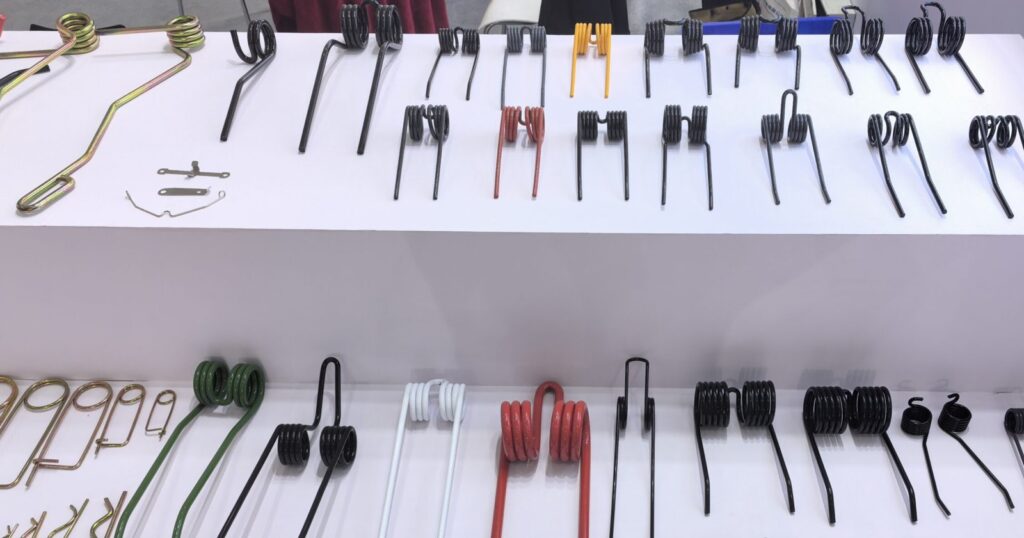
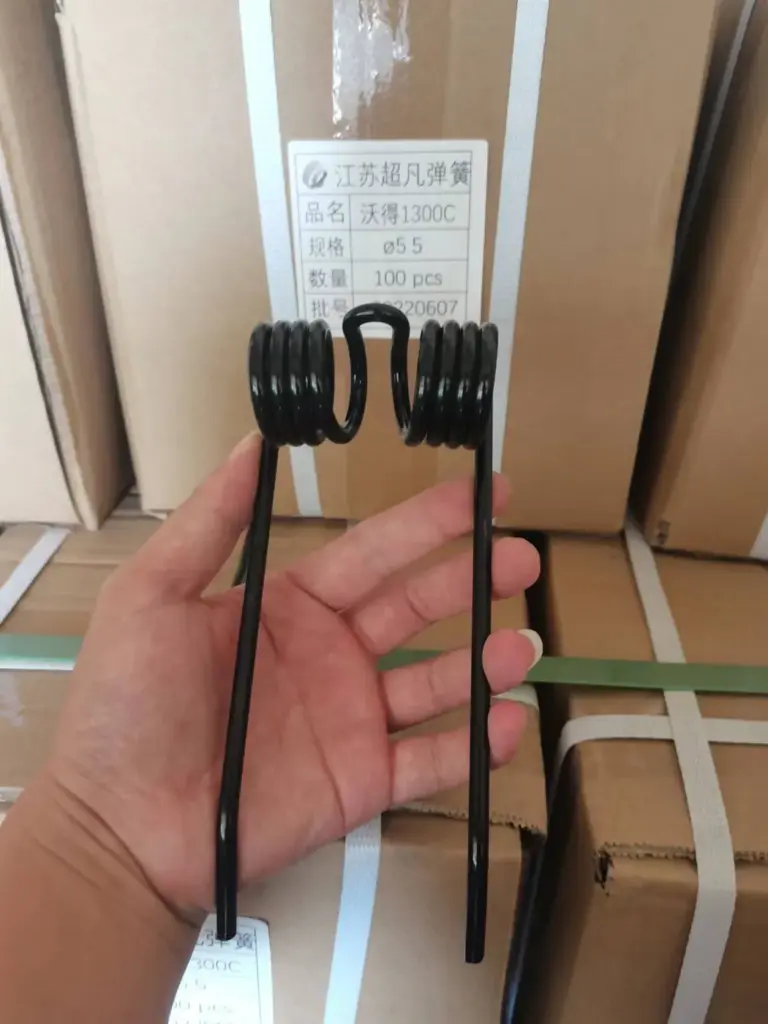
Agricultural tines show why toughness matters as much as strength. A tine bends thousands of times an hour and occasionally hits a stone, so the wire has to absorb a shock without cracking at the coil-to-leg transition. Our spring tines guide explains how to measure and specify them.
Finishes and heat treatment for CrV springs
Chrome vanadium rusts like any carbon-alloy steel, so it needs a finish. On our parts we use phosphate with oil, black oxide, powder coating, paint and zinc plating, chosen by exposure. Zinc-plated springs are baked after plating to relieve hydrogen, because high-strength alloy steels are sensitive to hydrogen embrittlement. Our spring finishes guide compares the options.
For cold-coiled oil-tempered wire, the main heat treatment after coiling is a stress relief, which removes coiling stress and stabilises the shape. For long-life valve springs, shot peening and presetting are usually added.
How to specify a chrome vanadium spring
When you send a drawing or inquiry, include:
- Material grade: ASTM A231 or A232, or the equivalent 51CrV4 or 50CrVA, and whether an alternative grade is acceptable.
- Geometry: wire diameter, outside or inside diameter, free length, active and total coils, end type.
- Loads: force at the working length and at the maximum stroke, with tolerances.
- Duty: static or cyclic, the target number of cycles, and the operating temperature range.
- Finish: phosphate, black oxide, powder coating or zinc plating, plus any salt spray requirement.
- Records: material certificate, hardness or load test records, and the inspection plan you need.
We make chrome vanadium compression, extension and torsion springs and wire forms to drawing, from prototype samples to production. Send your drawing or the data above through our contact page, or see our custom compression springs range.
Frequently asked questions
What is chrome vanadium spring wire?
It is an oil-tempered alloy steel wire with about 0.5% carbon, 0.8–1.1% chromium and at least 0.15% vanadium, covered by ASTM A231 (commercial quality) and ASTM A232 (valve spring quality). It is used for springs that take shock loads or run up to about 218 °C, such as valve springs, clutch springs and agricultural tines.
Is chrome vanadium better than chrome silicon for springs?
Not overall. Chrome silicon has higher strength and is rated about 28 °C hotter, 246 °C against 218 °C, so it is better for the most highly stressed and hottest springs. Chrome vanadium is a good, slightly tougher choice for shock-loaded springs at moderate temperature and is widely available in large wire sizes.
What is the difference between ASTM A231 and A232?
The chemistry and strength range are the same. ASTM A232 is valve spring quality wire with tighter control of surface defects, for example eddy current testing, so it suits high-cycle springs such as engine and compressor valve springs. ASTM A231 is commercial quality for general springs.
Is 50CrVA the same as 51CrV4?
They are very similar chromium vanadium spring steels and are usually treated as equivalents, together with SAE 6150. The allowed ranges for carbon, chromium and vanadium differ slightly between the Chinese and European standards, so for critical parts check the mill certificate against your drawing.
Do chrome vanadium springs rust?
Yes. Chrome vanadium contains only about 1% chromium, far below the 10.5% or more needed for stainless steel, so it needs a finish such as phosphate, black oxide, powder coating or zinc plating. For wet or corrosive environments, consider a stainless spring instead.
About the authors
This guide was prepared by the NorenSpring engineering team, which designs and manufactures custom compression, extension and torsion springs and wire forms in Xuzhou, China, since 2001. Technical content reviewed by Feng Yulin, General Manager and senior structural engineer, who has 15 years of spring R&D experience and more than 30 national patents. Our certificates are shown on our about page. Sources were last checked on November 6, 2026.
Sources
- Lee Spring, Spring Materials table: chemistry, minimum tensile strength and maximum operating temperature of spring wires. leespring.com. Retrieved 2026-11-06.
- Gibbs Interwire, Oil Tempered Chromium-Vanadium Wire, Valve Spring Quality technical data sheet (ASTM A232 tensile table). gibbswire.com. Retrieved 2026-11-06.
- Ovako Steel Navigator, 51CrV4 EN 10089:2002 material data sheet. ovako.com. Retrieved 2026-11-06.
- Wikipedia, SAE steel grades, chromium-vanadium steels (61xx). wikipedia.org. Retrieved 2026-11-06.
- Master Spring and Wire Form Co., Properties of Materials (design stress, moduli, hardness and temperature by wire grade). masterspring.com. Retrieved 2026-11-06.



