In this article
Four trends are shaping spring manufacturing in 2026: tighter control of spring steel quality, lightweight composite springs in some vehicle suspensions, metal 3D printing for prototypes and complex shapes, and stronger traceability expectations from automotive customers. None of them replaces the steel coil spring. Each one changes what a careful buyer asks for.
Key takeaways
- Materials: China’s revised spring steel standard, GB/T 1222-2025, took effect on May 1, 2026, with new requirements on chemistry, inclusions, decarburisation and grain size. High-strength spring wire now reaches tensile strengths above 2,000 N/mm².
- Composites: Glass-fibre springs are in series production, but in a few programmes only, such as Audi’s GFRP coil springs (announced 2014) and Rassini’s hybrid leaf spring on the 2021 Ford F-150.
- 3D printing: Additive manufacturing can make spring shapes that coiling can’t, but as-built fatigue strength is low and post-processing such as shot peening is essential.
- Traceability: IATF 16949 includes traceability requirements for automotive suppliers (clause 8.5.2.1), and the AIAG publishes a guideline on meeting those requirements.
Trend 1: Cleaner, stronger spring steels
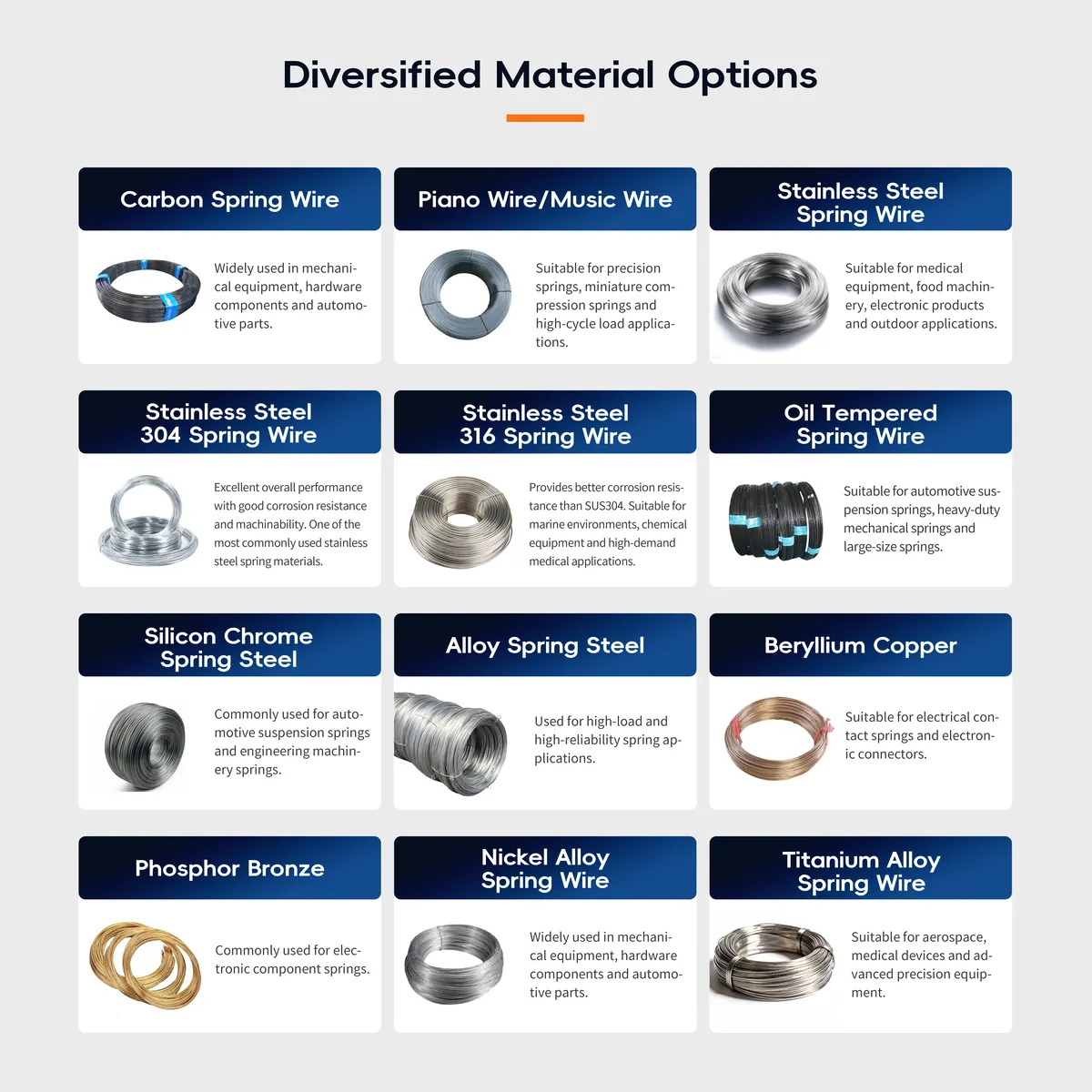
Spring steel quality is moving in one direction: cleaner steel with tighter control of the features that start fatigue cracks. China’s revised national standard for spring steels, GB/T 1222-2025, took effect on May 1, 2026. Its foreword lists 14 technical changes, including new phosphorus and sulphur content groups, revised copper and oxygen limits, changed requirements for non-metallic inclusions and decarburisation, and a new grain size requirement. It also absorbs the separate automotive suspension spring steel standards. Our article on what GB/T 1222-2025 means for buyers covers the changes in detail.
Strength keeps rising, too. Engineers at ThyssenKrupp Federn wrote as early as 2005 that “development of light weight coil springs requires high strength material” and put the tensile strength level of the day at 2050 MPa (Dziembella and Manke, OSTI). Today, a commercial oil-tempered silicon-chrome-vanadium valve spring wire such as Suzuki Garphyttan’s SWOSC-VHV is specified at 2160–2260 N/mm² in 1.60–2.00 mm diameters (Suzuki Garphyttan). Higher strength lets a designer use less wire for the same load, which saves weight and space.
What it means for buyers: Higher-strength wire isn’t automatically better. It’s more sensitive to surface damage and corrosion, so a stronger material usually comes with shot peening and better surface protection. State the working stress and the duty on your enquiry, and let the spring maker propose the material.
Trend 2: Composite springs, real but niche
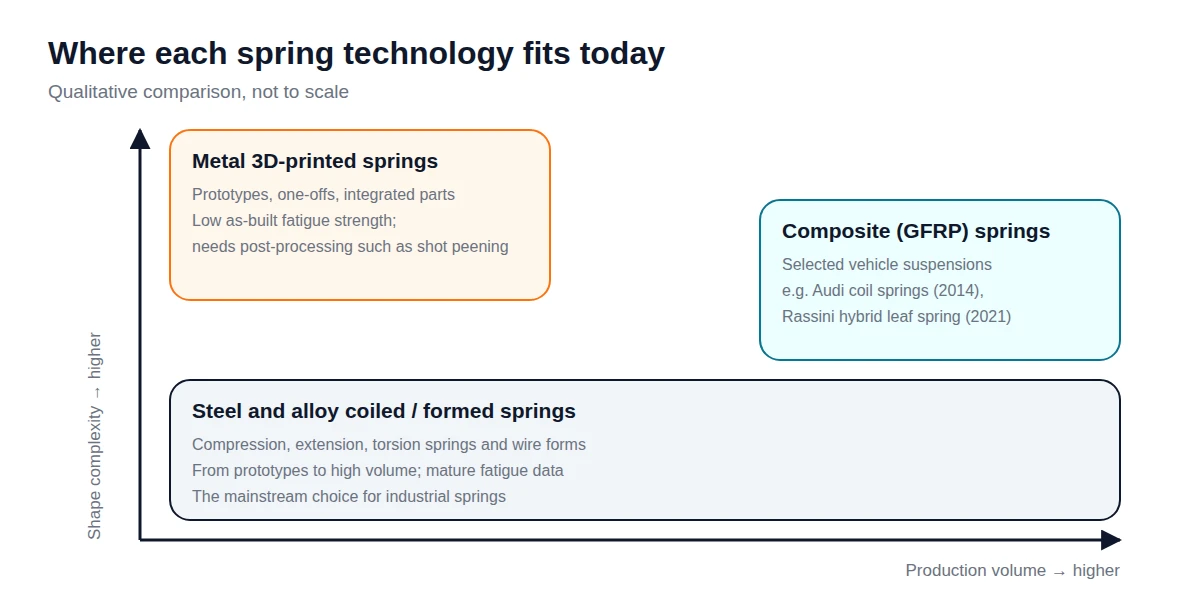
Fibre-reinforced polymer springs have moved from prototypes into series production, but only in a few programmes. In 2014, Audi announced it would be the first carmaker to put glass-fibre reinforced polymer (GFRP) coil springs, made by Sogefi, into series production. Sogefi said they weigh between 40 and 70 percent less than traditional steel springs (CompositesWorld, July 2014). In 2021, Rassini’s hybrid rear leaf spring for the Ford F-150 combined a steel main leaf with a GFRP helper leaf, saving 16 kilograms while matching the stiffness and durability of a conventional steel leaf pack (CompositesWorld, June 2021).
What it means for buyers: Composites make sense where weight savings justify higher part cost and new tooling, mainly vehicle suspensions. For the vast majority of industrial springs, clips and wire forms, steel and stainless steel remain the practical choice. The hybrid approach, steel where strength and joining matter and composite where weight matters, is the pattern to watch.
Trend 3: 3D-printed springs for prototypes and complex shapes
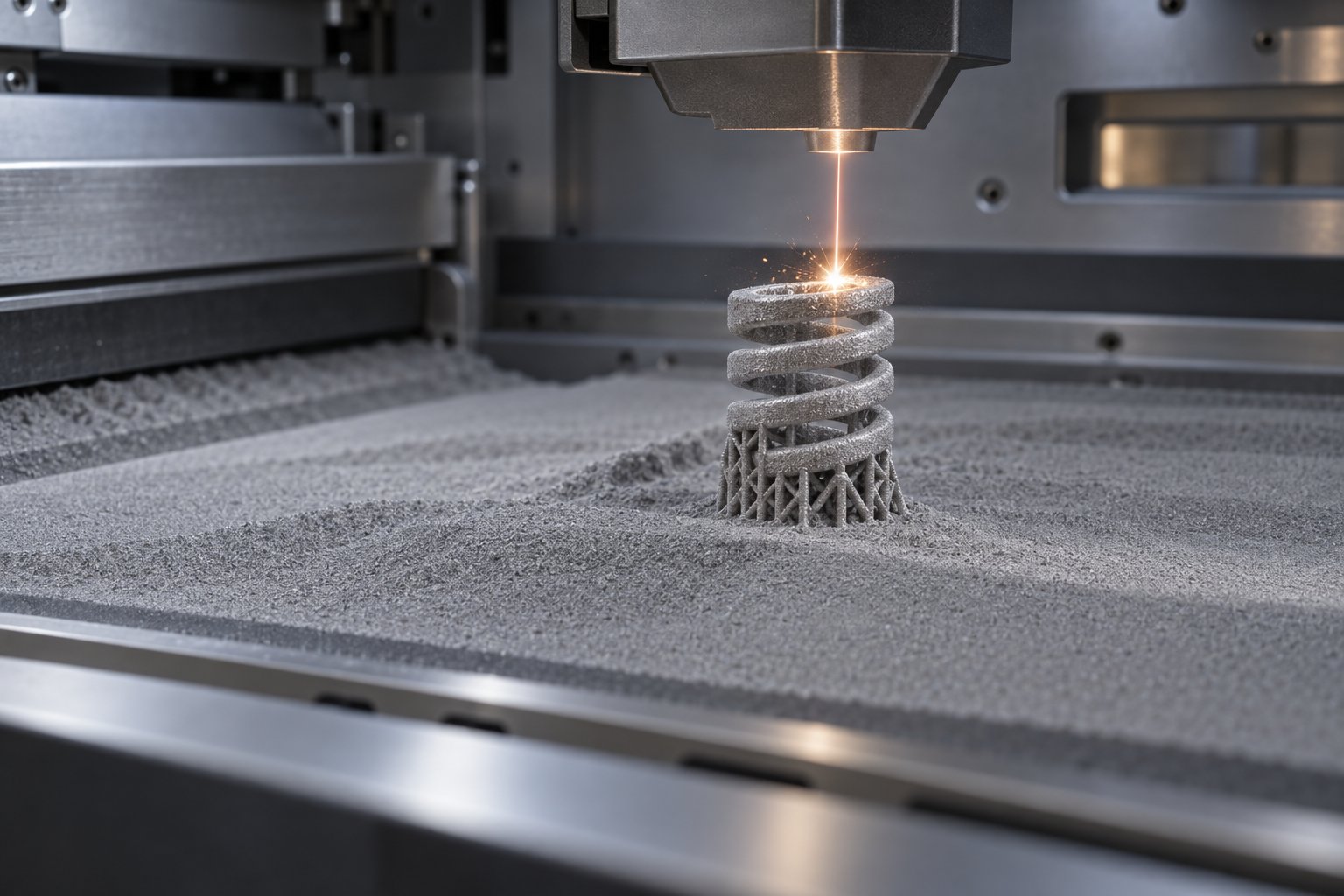
Metal additive manufacturing (AM) can build spring geometries that can’t be coiled or bent from wire, such as variable-section springs, integrated spring-and-mount parts and flexures. The limit is fatigue. A 2022 study of laser powder bed fusion 316L stainless steel found a fatigue limit of about 200 MPa as built, rising to over 600 MPa after severe shot peening (Rautio et al., Materials, 2022). A 2023 review of fatigue in additively manufactured metals called fatigue performance “a thorny problem” that may hinder AM parts from replacing conventional ones under cyclic loading (Yi et al., arXiv, 2023).
What it means for buyers: Treat 3D-printed springs as a tool for prototypes, low-volume special shapes and design exploration, not as a cheaper or faster replacement for coiled springs in volume. A printed prototype can prove the geometry; the production part is usually still coiled or formed from wire and heat-treated. None of the studies cited here shows printed springs costing less than coiled ones at production volumes.
Trend 4: Traceability from wire to finished spring
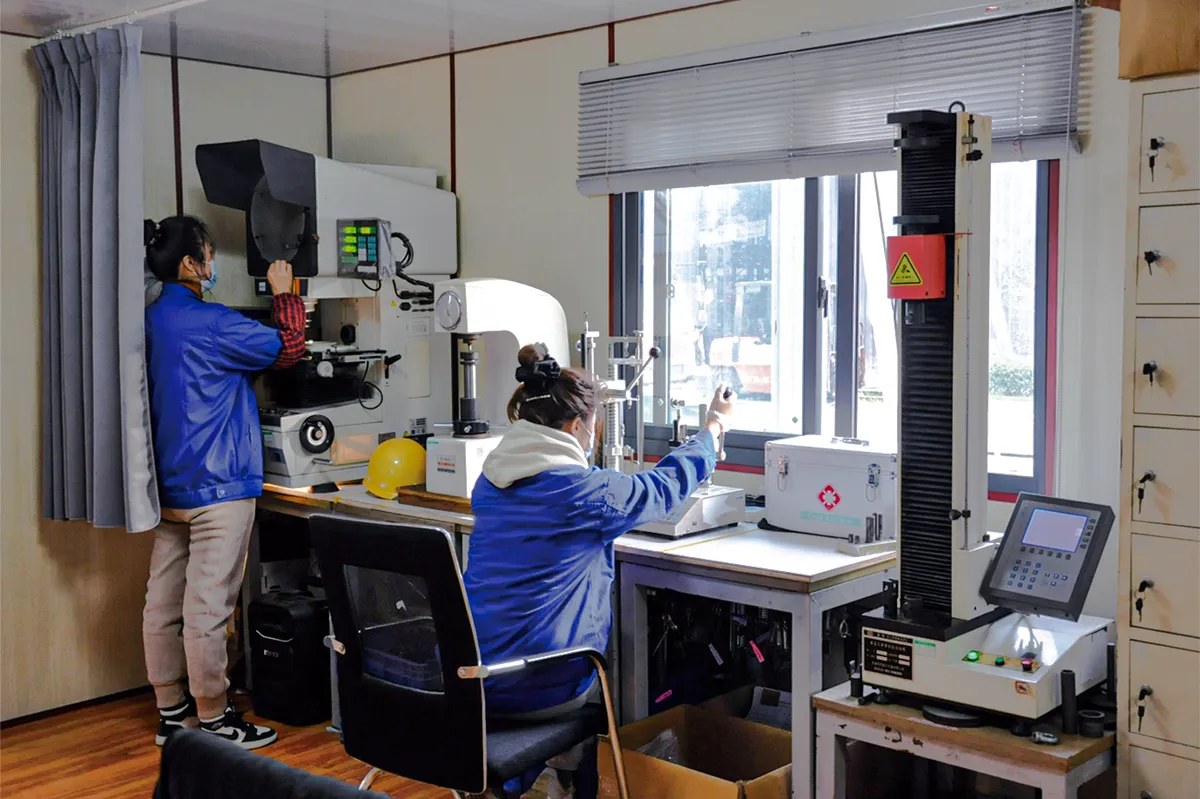
Automotive customers expect to trace a spring back to its wire heat, heat-treatment batch and inspection records. IATF 16949, the automotive quality management standard, includes specific traceability requirements for suppliers (clause 8.5.2.1). The automotive industry group AIAG publishes a Traceability Guideline to help suppliers meet “IATF 16949 traceability requirements” (AIAG, 2019).
What it means for buyers: Agree the traceability level when the project starts: which records you need (material certificate, heat treatment, inspection report, first article), how lots are marked, and how long records are kept. It’s much harder to add later. See how we structure this on our capabilities page and automotive springs page.
How to act on these trends
| Trend | Question to ask your spring supplier |
|---|---|
| Cleaner, stronger steels | Which steel standard, grade and group will the material certificate show? |
| Composite springs | Is weight worth a new material and tooling for this part, or is optimised steel enough? |
| 3D printing | Can a printed prototype prove the geometry before production tooling? |
| Traceability | Which records are kept per lot, and can a finished spring be traced back to the wire heat? |
NorenSpring makes springs from 0.1 mm to 80 mm wire in carbon, alloy and stainless steels and non-ferrous alloys, holds IATF 16949 certification, and agrees inspection and traceability records with each customer at project setup. If one of these trends affects a part you’re sourcing, send us the drawing and our engineers will review it.
About the authors
Prepared by the NorenSpring engineering team in Xuzhou, China. Technical review by Feng Yulin, General Manager and senior structural engineer, with 15 years of spring R&D experience and more than 30 national patents. More about NorenSpring.
Editor’s note (September 2026): this article was rewritten with sourced information. An earlier version included cost, lead-time and regulatory figures that we couldn’t verify, and they have been removed.
Sources
- GB/T 1222-2025 foreword and scope preview; SAMR, national standard announcement No. 29 of 2025.
- K. Dziembella and R. Manke, “High-strength steel in coil spring production”, 2005, via OSTI ETDEWEB.
- Suzuki Garphyttan, SWOSC-VHV oil-tempered valve spring wire data.
- CompositesWorld, “Sogefi composite coil spring to be launched by Audi for 2015”, July 2014.
- CompositesWorld, “Hexion partners with Rassini for composite leaf spring application in new Ford F-150 model”, June 2021.
- T. Rautio et al., “The Effect of Severe Shot Peening on Fatigue Life of Laser Powder Bed Fusion Manufactured 316L Stainless Steel”, Materials 15(10), 2022.
- Yi et al., “A holistic review on fatigue properties of additively manufactured metals”, arXiv:2311.07046, 2023.
- AIAG, “AIAG’s new Traceability Guideline now in stock”, 2019.