












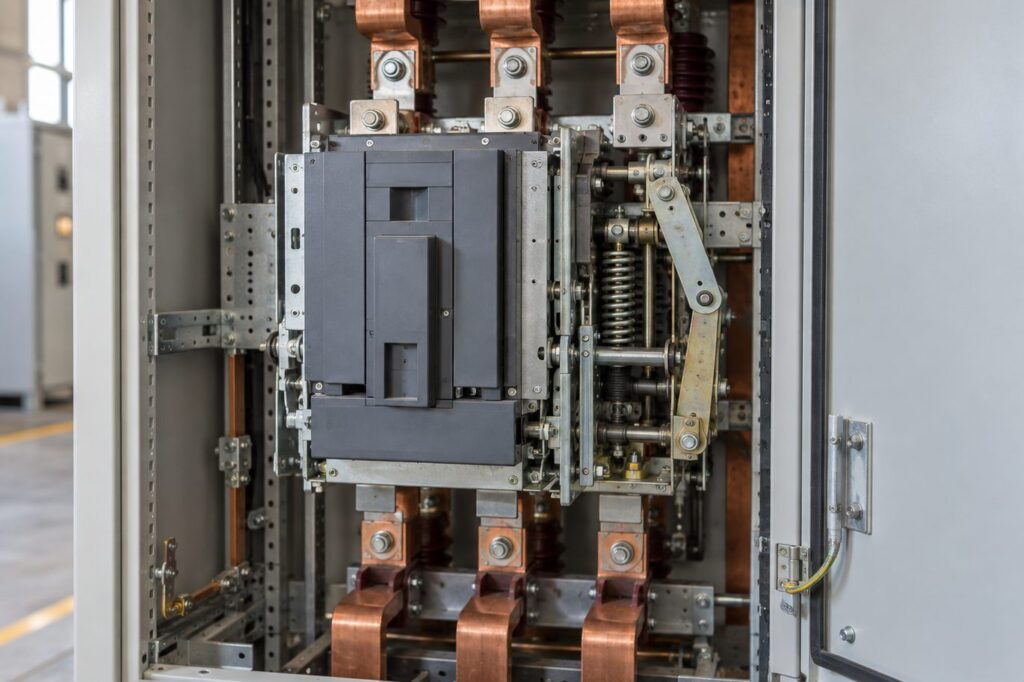
Springs in energy equipment mostly hold preload in bolted joints, store energy in switchgear and breaker mechanisms, close valves, and return doors and latches on outdoor equipment. We make disc, compression and torsion springs to drawing or sample. This page describes what we can make, not past energy projects. Outdoors, material and finish decide how long a spring keeps working, so most of this page covers that choice.
Key Takeaways
- Disc springs help keep bolt preload as joints settle, creep or change temperature.
- Springs are made to drawing or sample, with wire from 0.1 mm to 80 mm.
- Materials include stainless 304 and 316, silicon-chrome and alloy spring steel, oil-tempered wire and nickel alloy spring wire.
- Finishes on our parts include bright zinc, yellow zinc, black coating and plain or oiled steel.
Which springs energy equipment uses and why
Disc springs in bolted joints
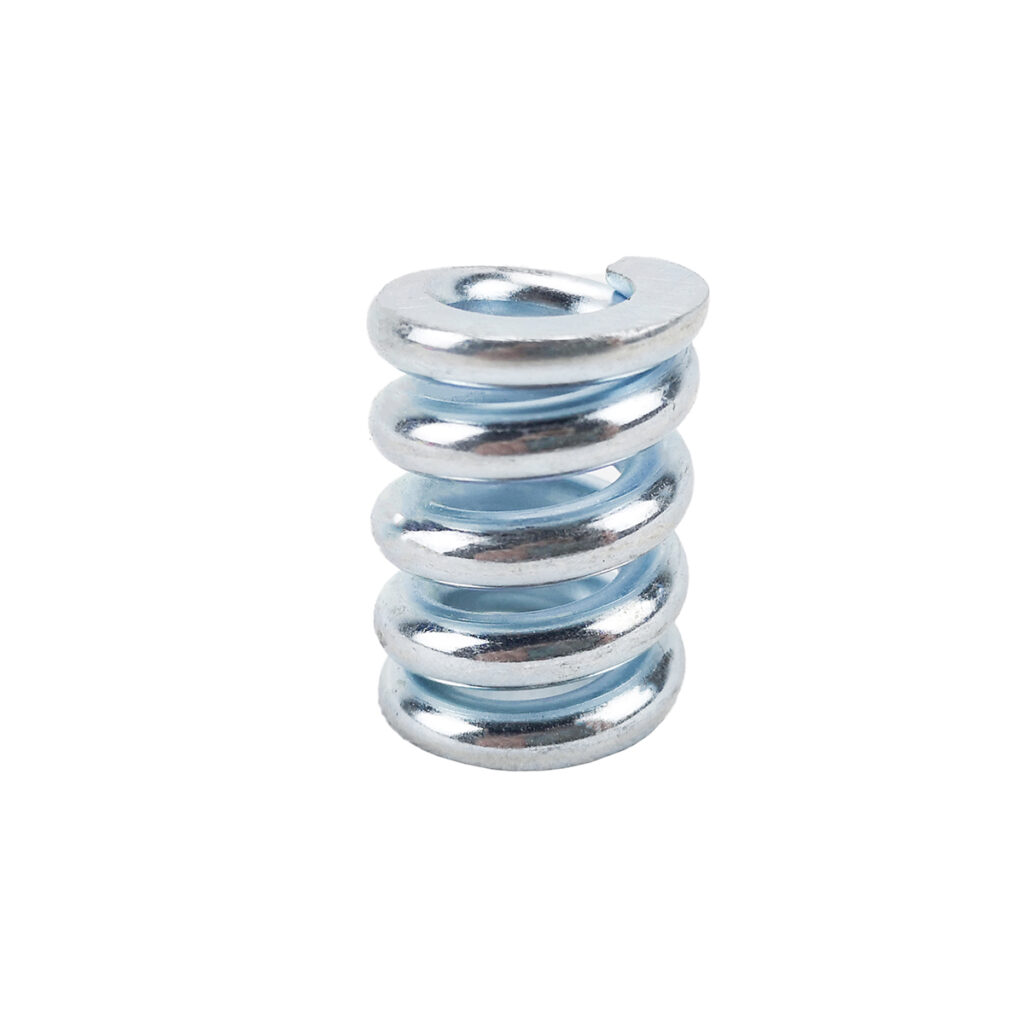
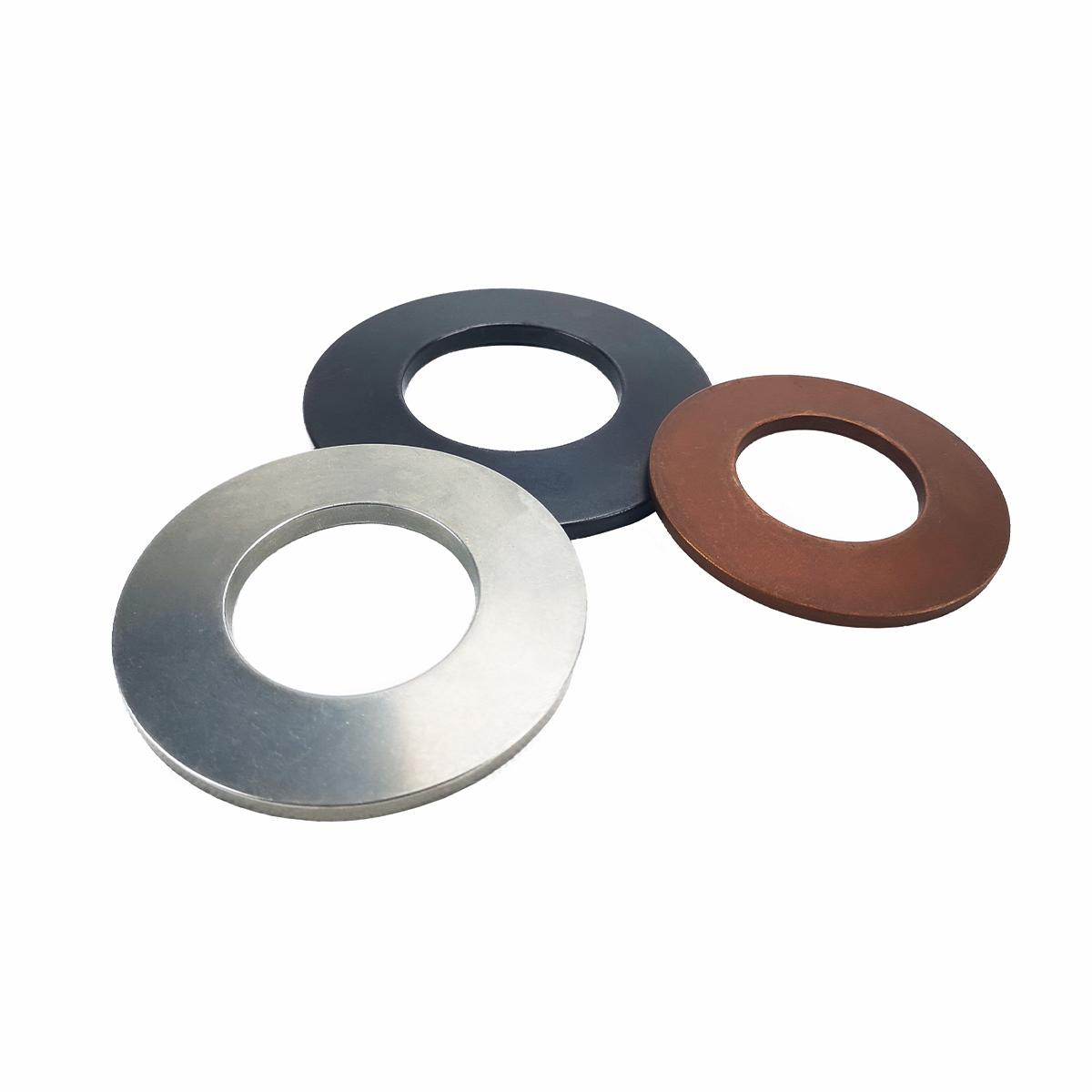
Bolted joints in busbars and flanges can lose clamping force as conductors creep, gaskets settle or parts expand and contract with temperature. A disc spring under the nut adds elastic travel, so the same settling costs less preload.
Switchgear and breaker mechanisms
Operating mechanisms often store energy in charged compression springs or torsion springs and release it to open or close contacts quickly. These springs may sit charged for long periods and then must deliver a defined force immediately, so stress level and relaxation resistance guide the material choice.
Valves and outdoor equipment
In relief and check valves, the installed force of a compression spring sets the cracking pressure; our hydraulics page covers valve springs in more detail. Torsion and extension springs return cabinet doors, latches and access covers. For coastal sites, our marine and offshore page covers salt-exposure materials.
Choosing material and finish for outdoor and high-temperature service
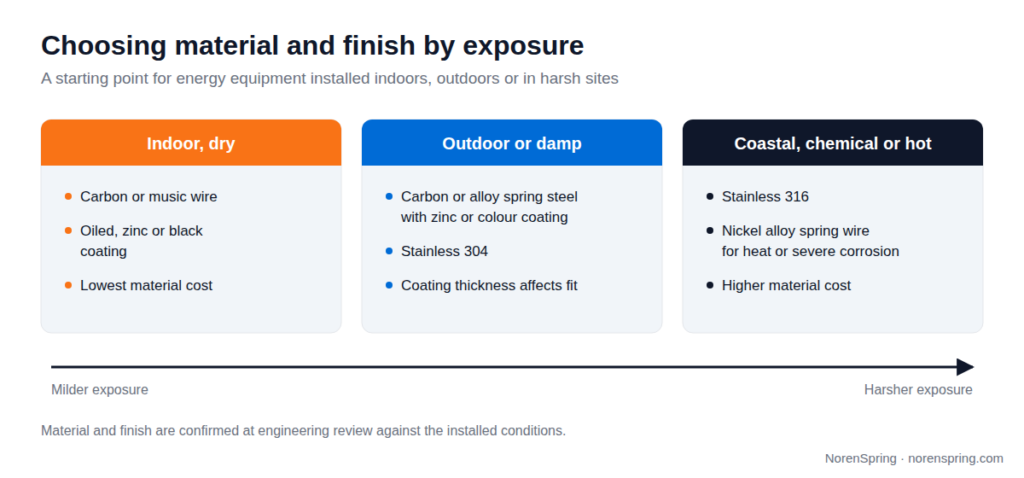
| Material | Where it fits | Consider |
|---|---|---|
| Carbon spring wire, zinc or black coated | Indoor switchgear and sheltered cabinets | Coating wears where parts rub; zinc plating high-strength wire needs hydrogen-embrittlement control |
| Oil-tempered wire, coated | Larger mechanism springs | Needs a sound coating outdoors |
| Silicon-chrome spring steel | Highly stressed charging springs; warm locations | Better relaxation resistance than carbon or oil-tempered wire; needs a coating |
| Alloy spring steel | Disc springs for bolted joints and heavy mechanisms | Finish choice depends on exposure |
| Stainless 304 / 316 | Outdoor and coastal parts without relying on a coating | Lower strength than spring steel; 316 handles chlorides better |
| Nickel alloy spring wire | High temperature or severe corrosion | Higher material cost |
Also check the metals the spring touches: with moisture present, dissimilar metals in contact can speed up corrosion of the less noble one, so choose spring, washer and conductor materials together.

The in-house lab includes a salt spray chamber, hardness testers and a metallographic microscope; the checks for your part are agreed in the control plan. Our full process is on the capabilities page.
What to send for an engineering review
- Geometry: drawing, or wire diameter d, outside diameter D0 and free length L0.
- Load and movement: force or torque at the working position and travel; for disc springs, bolt size and target preload.
- Exposure: indoor or outdoor, coastal or industrial air, temperature range.
- Mating parts: materials of bolts, washers, conductors or housings the spring touches.
- Quantity and records: volume and the documents you need with each shipment.
Frequently asked questions
Do you provide salt-spray hour ratings?
No. If your specification requires a corrosion test, name the method in your inquiry and we will review it before quotation.
Should a bolted joint use one disc spring or a stack?
Series stacks add travel; parallel stacks add force. Send the joint data and we can suggest an arrangement.
What records and certifications do you have?
Inspection reports, material certificates, dimensional records and traceability, as agreed at project setup. We hold IATF 16949, ISO 9001, ISO 13485, ISO 14001 and ISO 45001.
Planning a spring for outdoor energy equipment? Send the drawing and exposure details for engineering feedback within 24 hours.




 Upload a Drawing