











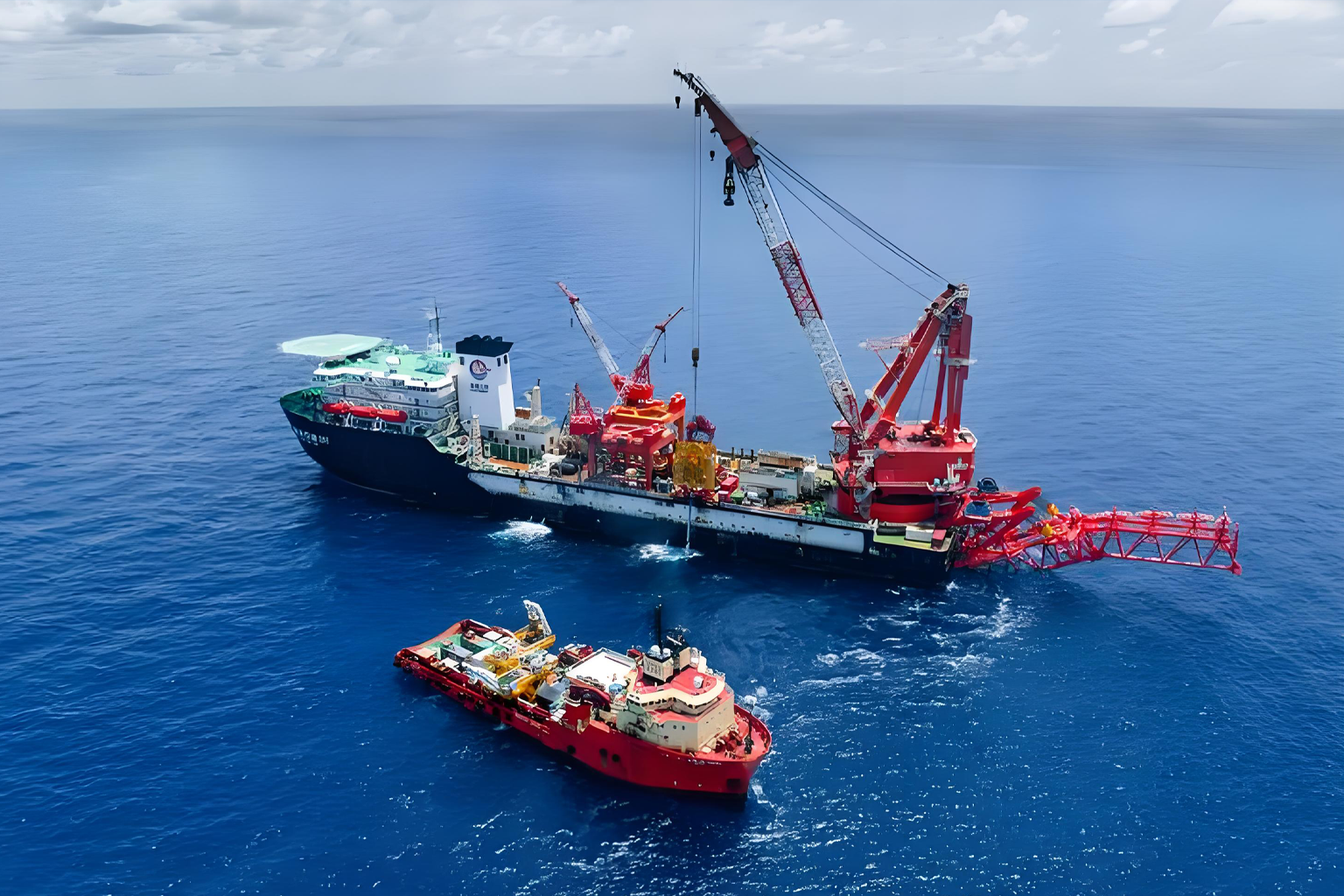
For a spring on a ship, platform or dock, material is the first decision and geometry comes second. Salt water and salt air corrode carbon steel quickly and can pit 304-type stainless, so the spring must be sized in a material that suits its exposure. Material options for made-to-drawing springs include stainless 304 and 316, phosphor bronze, nickel alloy and titanium alloy wire, with feasibility confirmed for each design at review. This page covers what we can make, not past marine work.
Key Takeaways
- Materials offered include stainless 304 and 316, phosphor bronze, nickel alloy (including Inconel) and titanium alloy spring wire.
- Exposure type (salt air, splash or immersion) and mating metals decide the material more than load does.
- Material certificates are supplied as agreed at project setup.
- Stainless 316 is a common default for spray zones; stagnant immersion and crevices may call for nickel or titanium alloys.
Which springs marine and offshore equipment uses and why
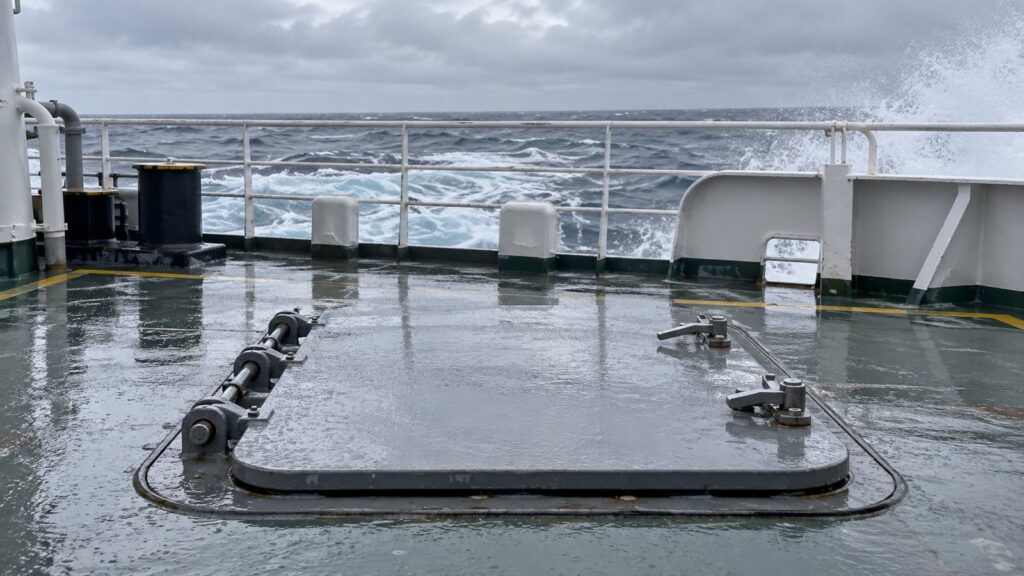
Torsion and extension springs return hatches, doors and latches. On deck they sit in spray, and the hook or leg bend is a high-stress point where pitting does the most harm. See our torsion springs.
Compression springs close check valves and relief valves in seawater, ballast and fuel systems. They are often fully immersed, which rules out most coated carbon steels. See compression springs.
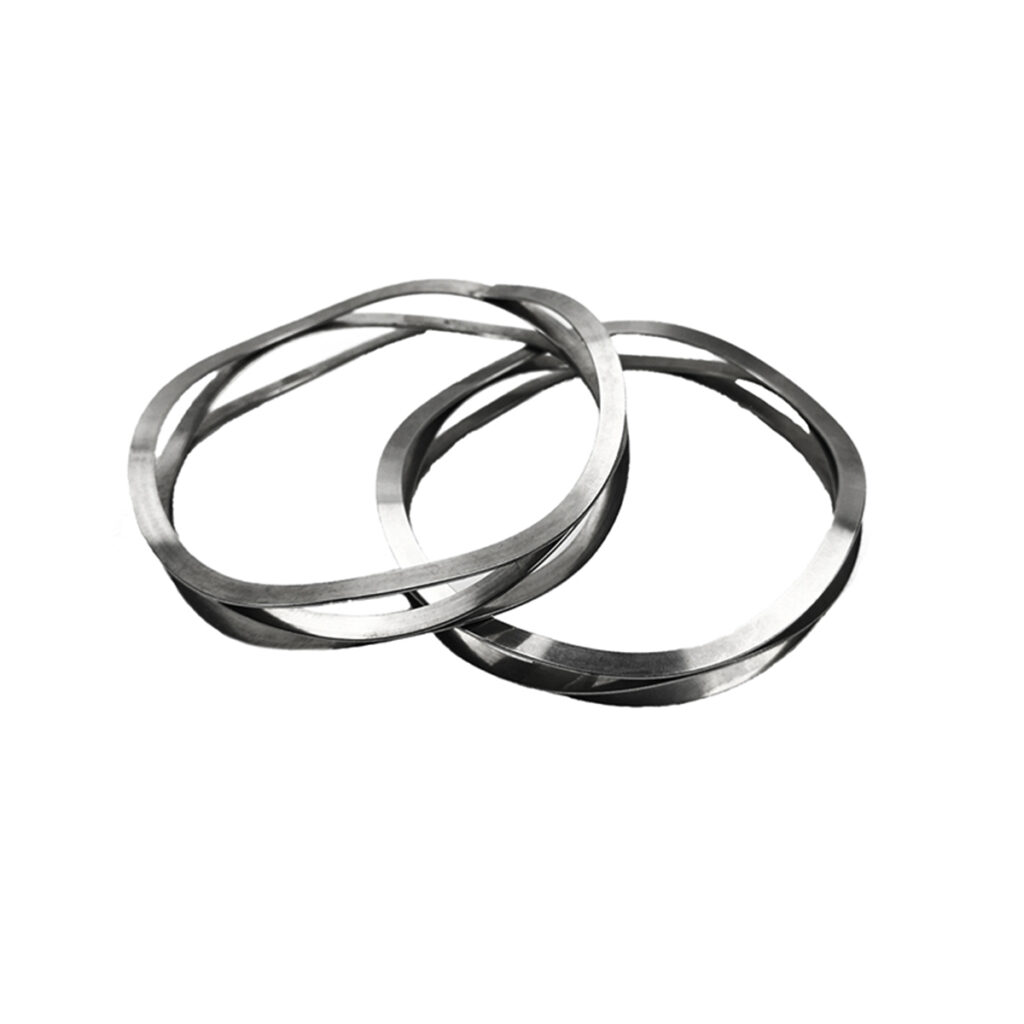
Wave springs load seals and take up play in pumps and rotating equipment where axial space is short. See wave springs.
Wire forms and clips retain pins and hold components in instruments and enclosures. For fluid-system springs, our hydraulics page covers related valve and preload applications.
Choosing material and finish for salt-water exposure
| Material | Where it fits | Limits to consider |
|---|---|---|
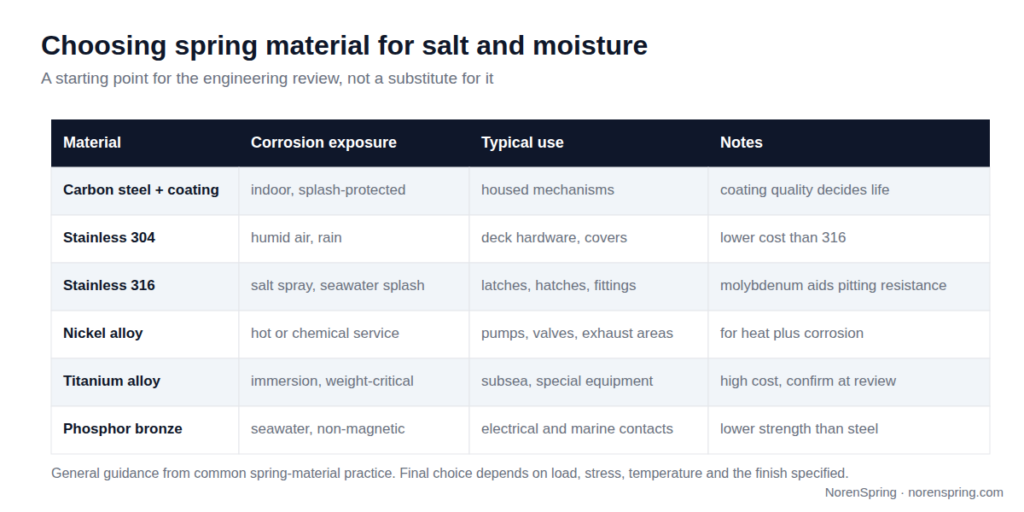
| Stainless 304 | Salt air in sheltered or interior locations | Can pit in chloride conditions, especially where water stays trapped |
| Stainless 316 | Spray and splash zones; common default for deck hardware | Better pitting resistance than 304 thanks to molybdenum, but can still suffer crevice corrosion in stagnant seawater |
| Phosphor bronze | Seawater exposure, non-magnetic parts | Lower strength than steel, so a larger wire may be needed for the same load |
| Nickel alloy spring wire | Severe corrosion or high temperature | Higher material cost |
| Titanium alloy spring wire | Immersion where weight and corrosion both matter | Lower stiffness than steel changes the geometry for the same rate; higher cost |
| Carbon or oil-tempered wire with zinc plating or another coating | Dry, protected locations only | The coating wears or chips and corrosion follows |
Whatever the material, check the metals the spring touches: in seawater, dissimilar metals in contact can speed up corrosion of the less noble one. High-strength springs near cathodic protection can be at risk of hydrogen embrittlement, so mention it if your equipment uses it. Also avoid designs that trap water around the coils. If your specification calls for a corrosion test, state the method on the drawing and we will review whether it can be done before we quote.
What to send for an engineering review
- Geometry: drawing, or wire diameter (d), outside diameter (D0) and free length (L0).
- Load and movement: force or torque at the working position and travel.
- Exposure: salt air, splash or full immersion; water temperature; any fuel, oil or chemicals.
- Mating parts: the materials of pins, housings and fasteners the spring touches.
- Service: how often the part can be inspected or replaced.
- Quantity and records: production volume and required material certificates.
Energy and offshore equipment often share these conditions; see our energy page.
Frequently asked questions
Is 316 stainless always enough for seawater?
Not always. It suits most spray and splash zones, but stagnant immersion and crevices can still cause attack. Nickel or titanium alloys may be worth reviewing for those cases.
Do you provide salt-spray test ratings?
We do not publish salt-spray hour ratings. If your program requires a specific test, include it in your inquiry and we will review it before quotation.
Can you make titanium springs?
Titanium alloy spring wire is on our material list. Feasibility for a specific design is confirmed at engineering review.
Sourcing a spring for salt exposure? Describe the exposure, mating metals and load and we will suggest a material to review.


 Upload a Drawing