










In this article
- Key takeaways
- Why did the customer audit the factory after receiving our quote?
- What did the audit route cover?
- What capacity did the customer come to check?
- Stop 3: How do we control heat treatment on spring parts?
- Stop 4: What quality checks did the customer see in our testing room?
- Stop 5: Production buildings on the Xuzhou campus
- What did the customer say after the audit?
- What happens next?
- What should you check when you audit a wire form supplier?
- Planning an audit or a new wire form project?
On 18 November 2026, the business development director of a Spanish automotive components company audited our spring factory in Xuzhou, China. After receiving our quotation for car seat wire forms, he came to check 2 things: production capacity and quality control. Chairman Wu Chao and General Manager Feng Yulin hosted the visit.
| Item | Details |
|---|---|
| Date | 18 November 2026 |
| Place | NorenSpring factory, Xuzhou, Jiangsu Province, China |
| Visitor | Business Development Director, Spanish automotive components company |
| Hosts | Wu Chao (Chairman) and Feng Yulin (General Manager) |
| Parts discussed | Wire forms for car seats |
| Project stage | Quotation sent; supplier evaluation under way |
| Audit focus | Production capacity and quality control |
| Agreed next step | Customer to send order quality requirements and packaging requirements |
Key takeaways
- Route: raw wire store, CNC coiling and wire forming, heat treatment furnace and tempering area, then the testing room.
- Feedback: positive on capacity and quality control; he hopes to build a long-term strategic partnership with NorenSpring.
- Next step: back in Spain, he will send order quality requirements and packaging requirements.
Why did the customer audit the factory after receiving our quote?
Wire forms are parts bent from spring wire into a set shape, such as clips, hooks, frames and seat suspension wires, rather than coiled into a helix. In a seat, they help hold the cushion and backrest shape and take load every time someone sits down.
A quote shows what a part will cost. It does not show whether the supplier can hold that price, quality and delivery at production volume, which is why automotive buyers usually audit a plant before approving it.
Spain shows why the bar is high. It is the second-largest vehicle producer in Europe, its plants built 2.27 million vehicles in 2025, and its auto supply industry accounts for 75% of a vehicle’s value, according to ICEX-Invest in Spain [3]. As a result, Spanish component makers answer to demanding vehicle plants, and they audit their own suppliers in turn. Across the EU, the European Commission counts 13.8 million direct and indirect automotive jobs, or 6.1% of total EU employment [4]. The same sources show how export-driven this supply chain is. Spain hosts 9 multinational vehicle brands with 18 plants, exports 86% of the vehicles it builds to more than 100 countries, and its spare parts industry invoiced €41.5 billion in 2025 [3]. At EU level, automotive turnover represents over 7% of EU GDP [4]. A seat wire is bent in several planes and loaded every time someone sits down, so small changes in wire, forming or heat treatment show up in fit and durability.
New to the part type? Our wire forms design guide covers bends, legs and tolerances.
What did the audit route cover?
The audit followed the material from incoming wire to the testing room in 5 stops.
| Stop | What the customer looked at | Buyer question it answers |
|---|---|---|
| 1. Raw material store | Incoming spring wire coils and stainless wire spools, labelled by grade and size | Is the wire identified and traceable to a material certificate? |
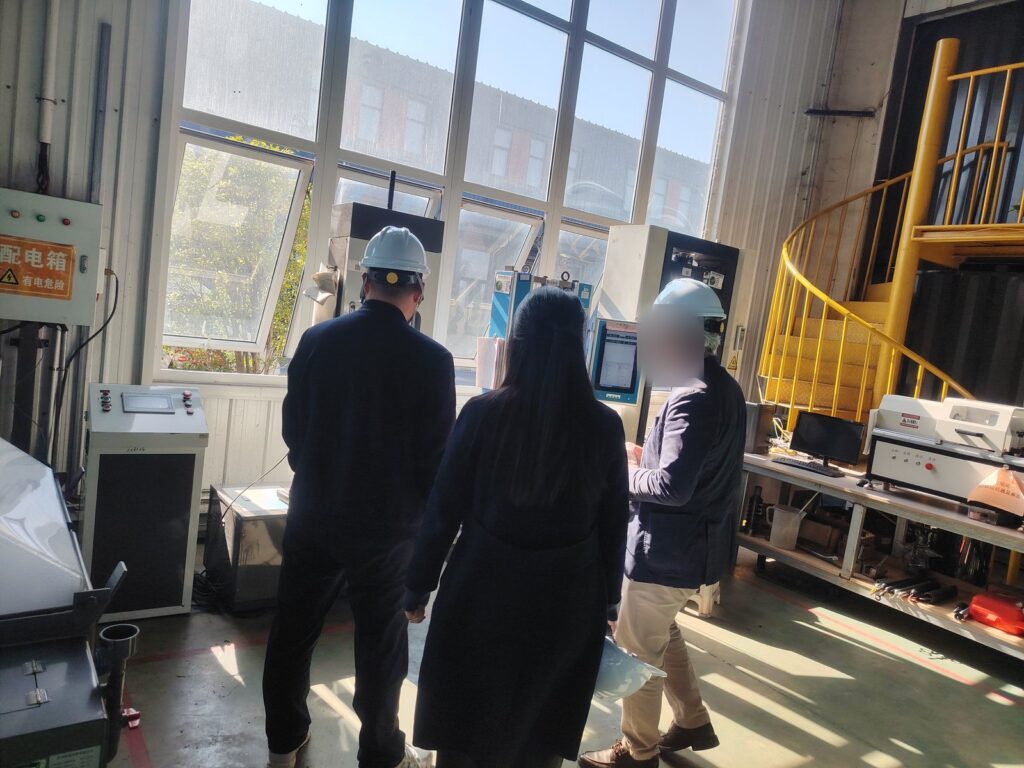
| 2. CNC coiling and wire forming | Automatic coilers, a large CNC coiling machine and multi-axis CNC wire forming machines | Is there enough machine capacity, and are parts formed by program rather than by hand? |
| 3. Heat treatment | The spring heat treatment furnace and the tempering area | Are temperature and time controlled, and does hardness end up within the drawing? |
| 4. Testing room | Spring tension and compression testers, a vision measuring system and a salt spray chamber | Can dimensions, load and coating be checked in-house, with records? |
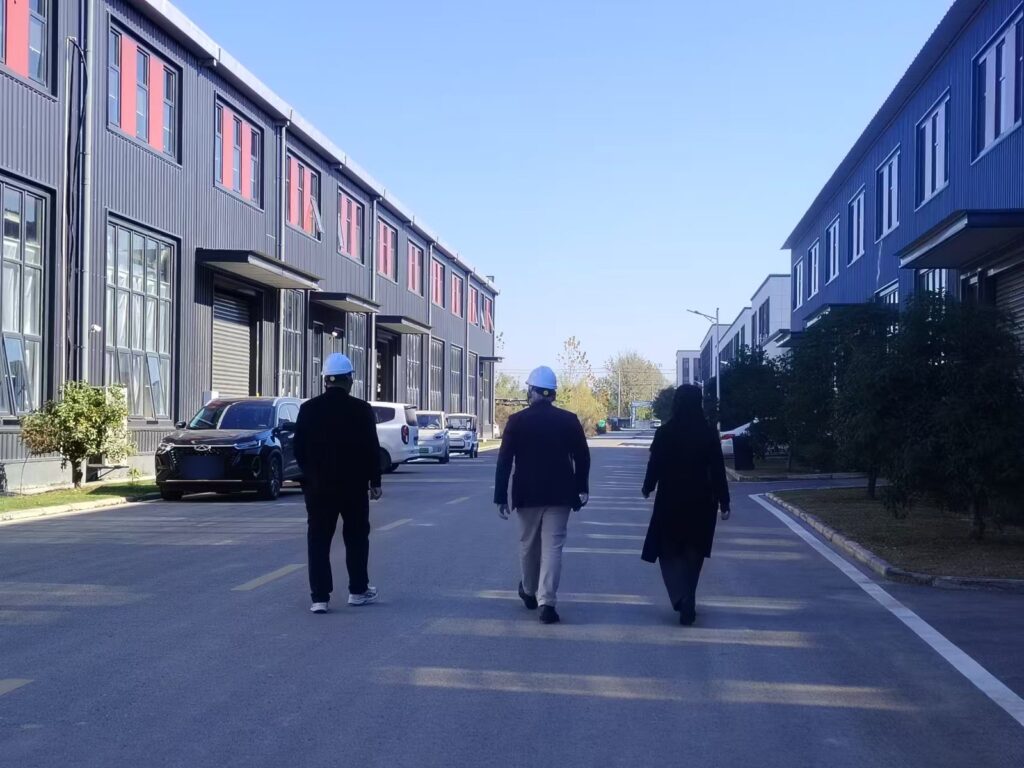
| 5. Production buildings | The walk between workshops on our Xuzhou campus | Is the site a real, running plant with room for the program? |
Stop 1: Raw material store
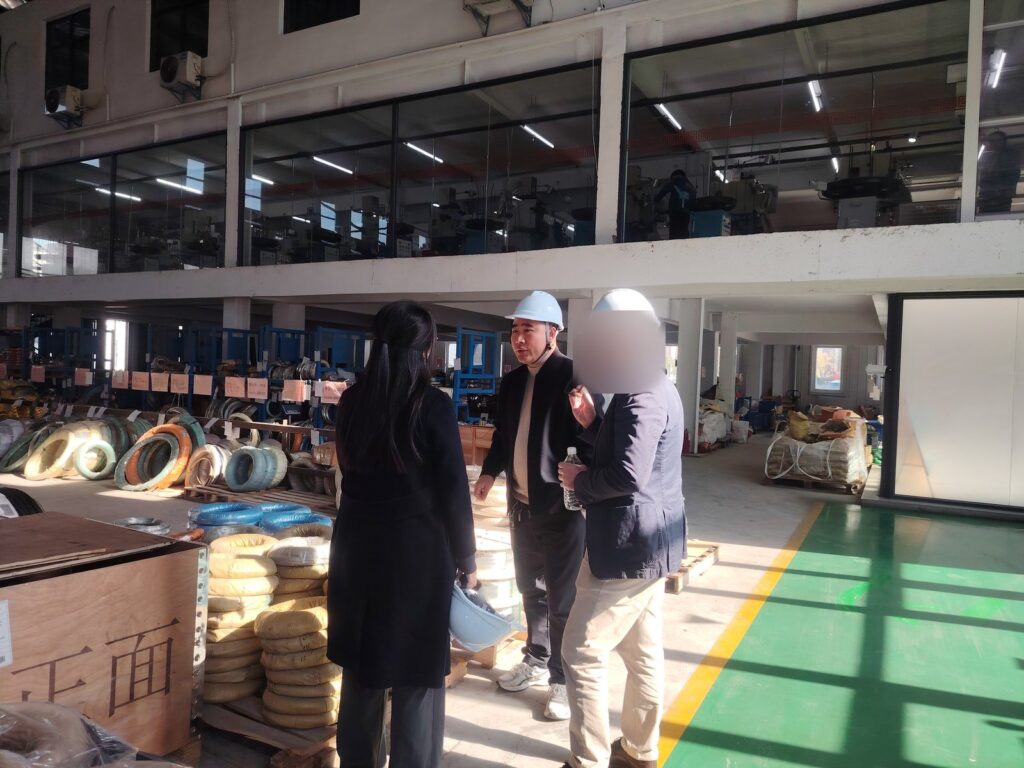
The audit started at the wire store, where traceability begins: the batch on a part label should lead back to its coil and that coil’s material certificate. NorenSpring staff showed how incoming coils are identified and recorded.
Stop 2: CNC coiling and wire forming lines
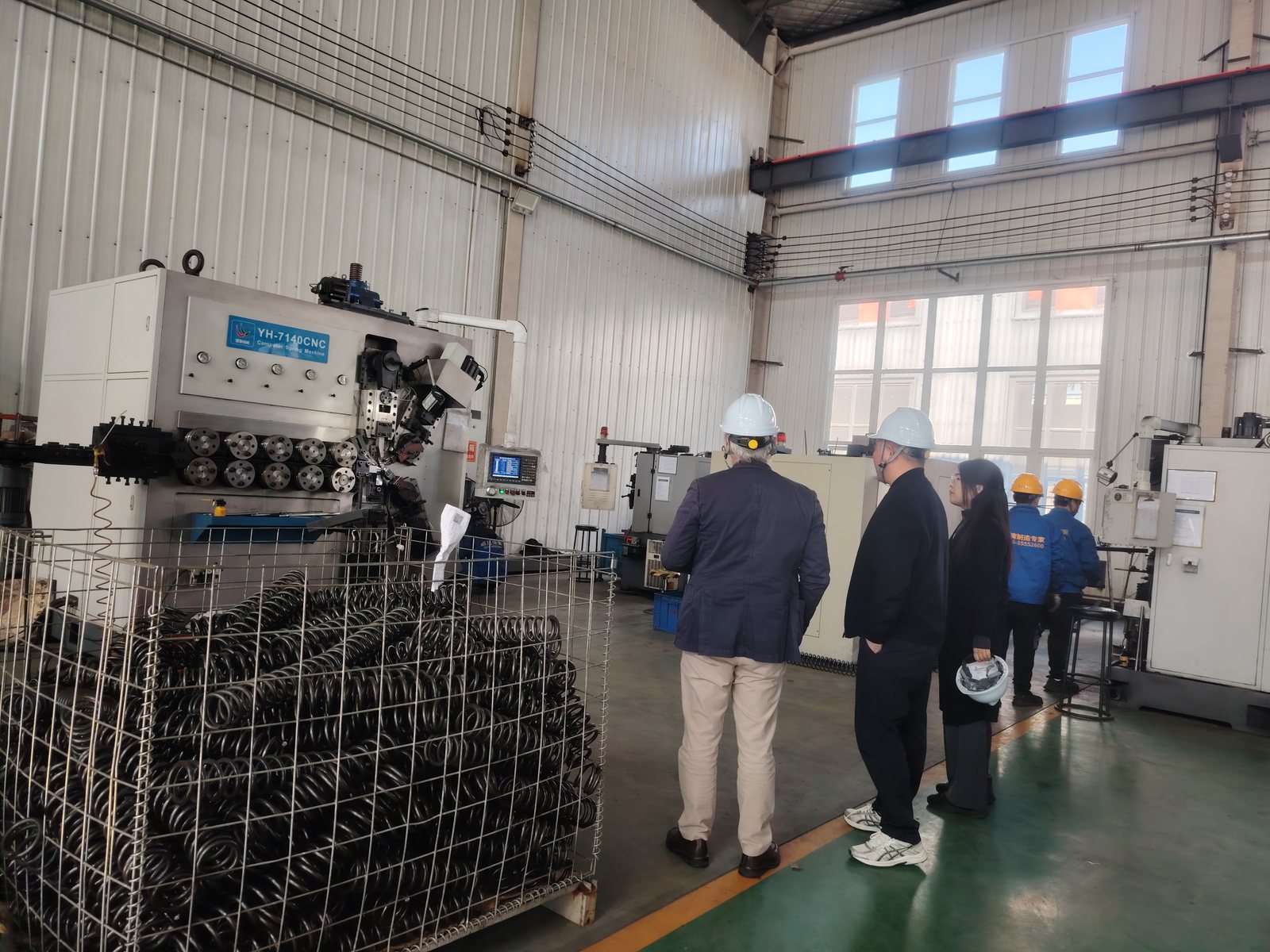
Seat wire forms are made on the multi-axis CNC wire forming machines. Each bend angle and leg length is set in the program, so every cycle repeats the same part. The customer also checked parts straight off the tooling at a discharge chute.
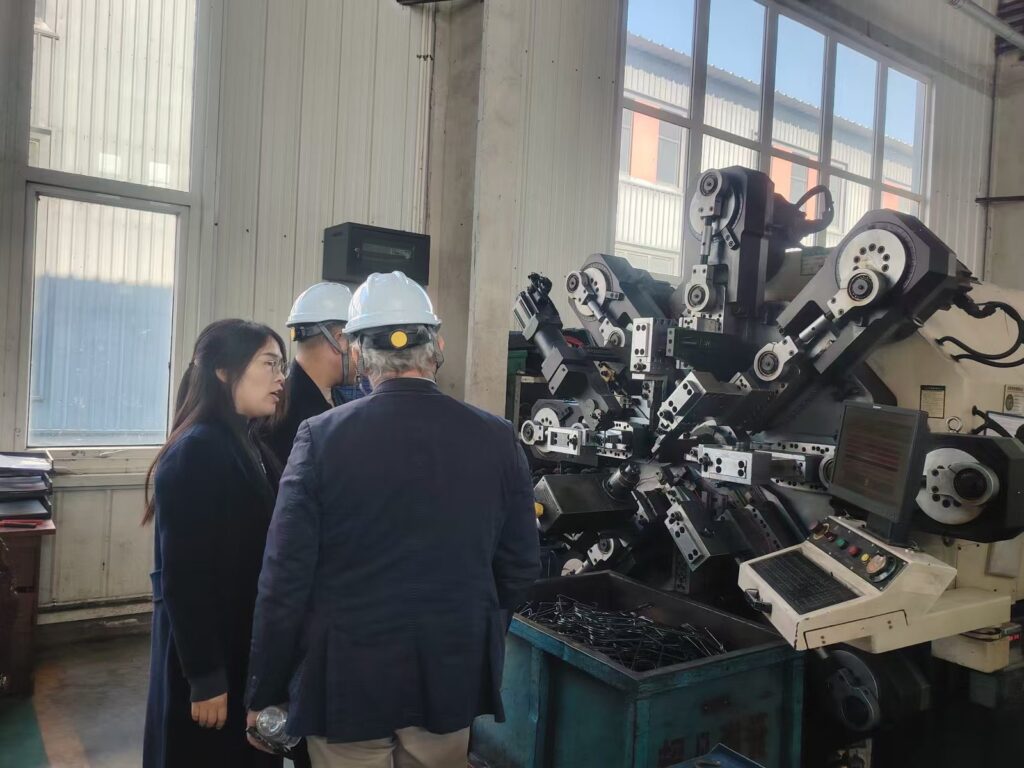
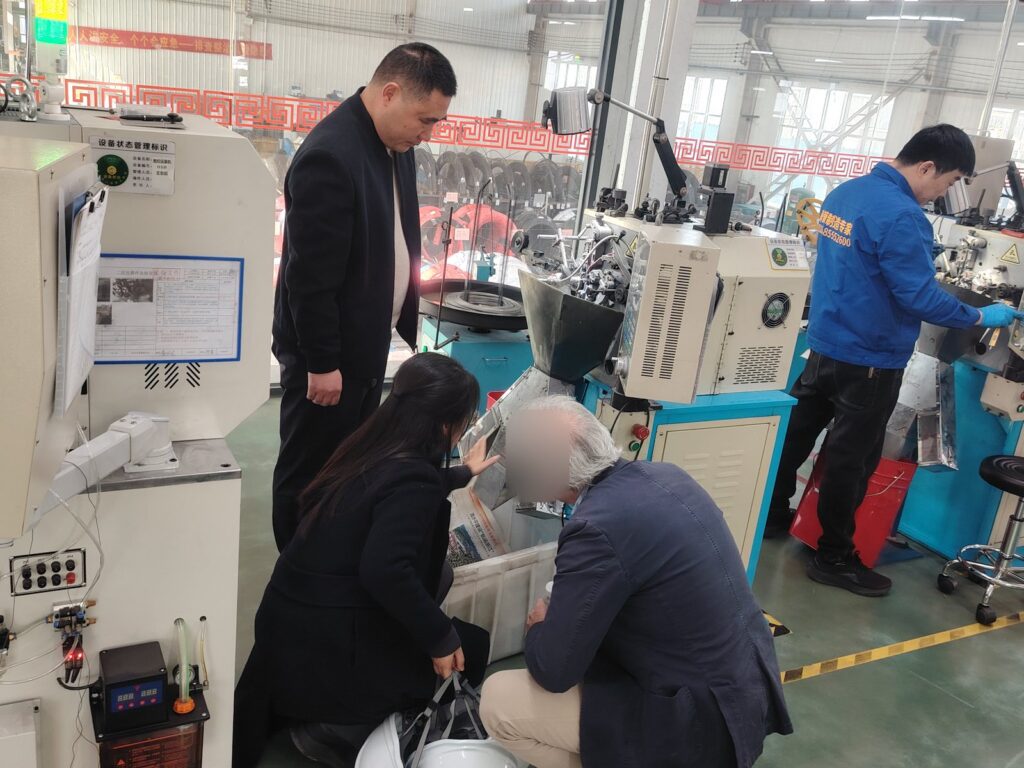
Full step list: spring manufacturing process.
What capacity did the customer come to check?
These are the plant figures published on our About page.
| Capacity item | NorenSpring, Xuzhou |
|---|---|
| Production area | 12,000 m² across our production base |
| Production lines | 3 |
| Employees | 120+, including 28+ engineers |
| Monthly output | 4,000,000+ springs |
| Wire diameter range | 0.1 mm to 80 mm |
| Certifications | IATF 16949 (to 4 February 2028), ISO 9001, ISO 14001, ISO 45001 |
Part-level capacity depends on forming cycle time, tooling, heat treatment batch size and inspection time, so we confirm it once annual volume is fixed.
Stop 3: How do we control heat treatment on spring parts?
At the spring heat treatment furnace, NorenSpring staff explained that we set furnace temperature and time strictly in line with Chinese national standards. Quenching and tempering is a 2-step heat treatment: the steel is hardened by heating and rapid cooling, then reheated to a lower temperature to trade some hardness for toughness. For parts that need it, it serves 3 purposes:
- Strength and elasticity. Quenching and tempering raise the strength of the steel so the part springs back instead of taking a set.
- Stress relief. Tempering removes internal stress left by coiling and bending, which helps prevent distortion and cracking.
- Stable hardness. The process brings hardness into the range on the drawing, for example 49–53 HRC. Holding that range is what gives a spring part its fatigue life under repeated loading.
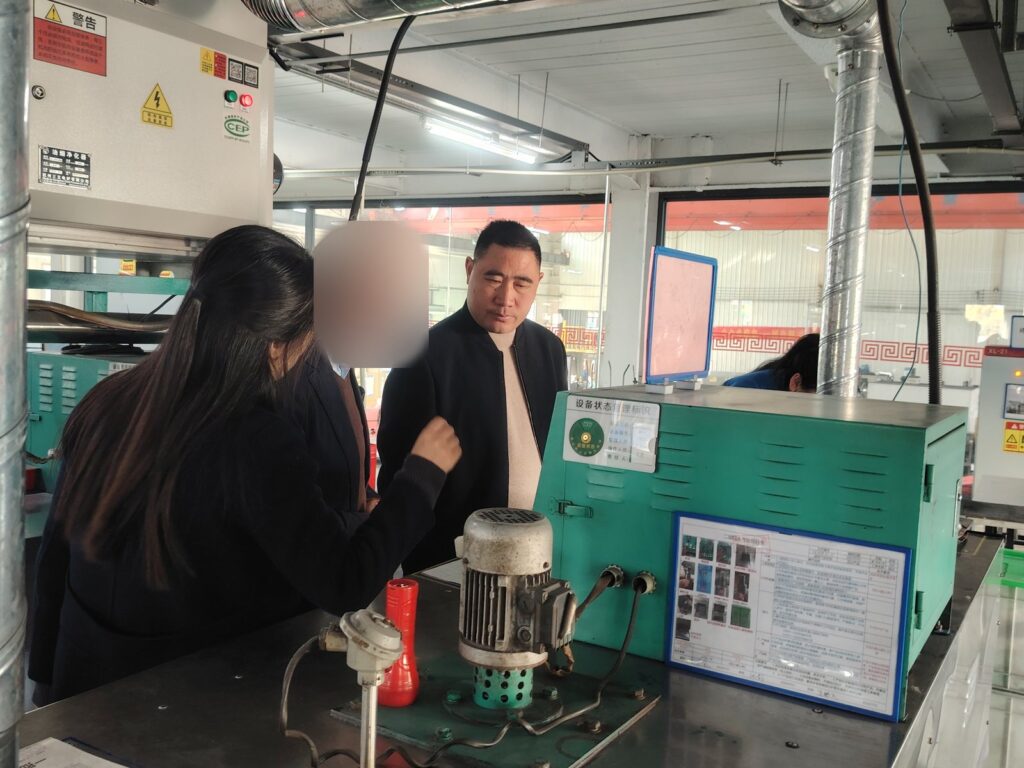
After the furnace, parts pass through the tempering area, where operators handle and sort them before inspection. A buyer should expect hardness to be checked against the drawing after this step, not assumed from the furnace setting alone.
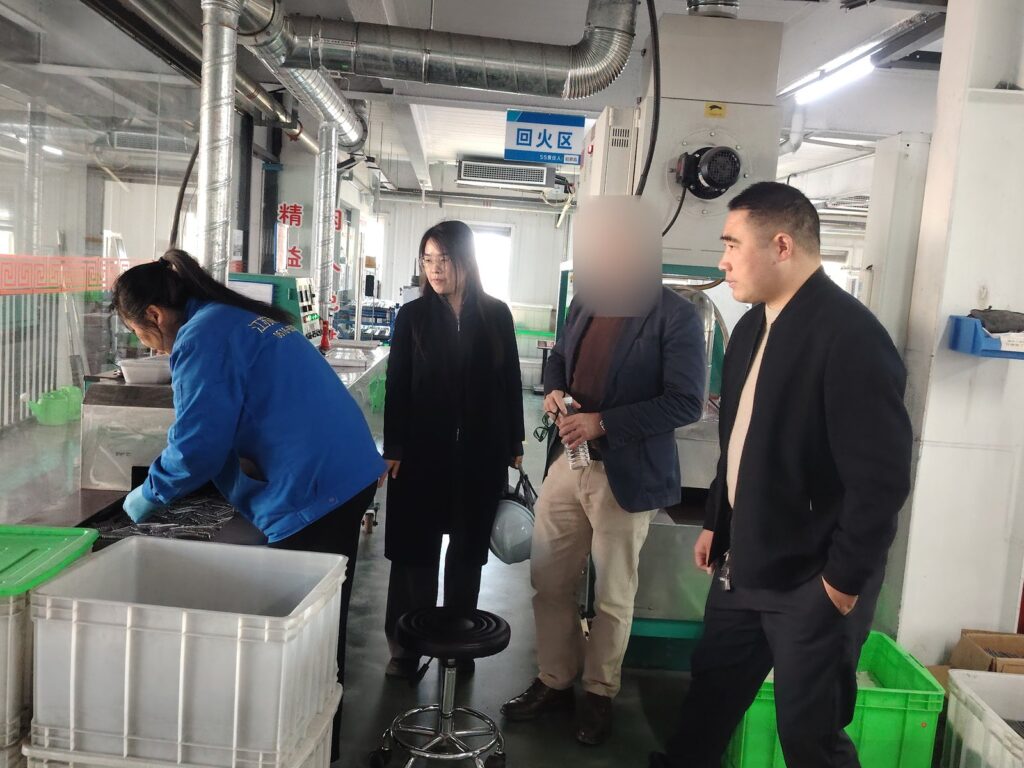
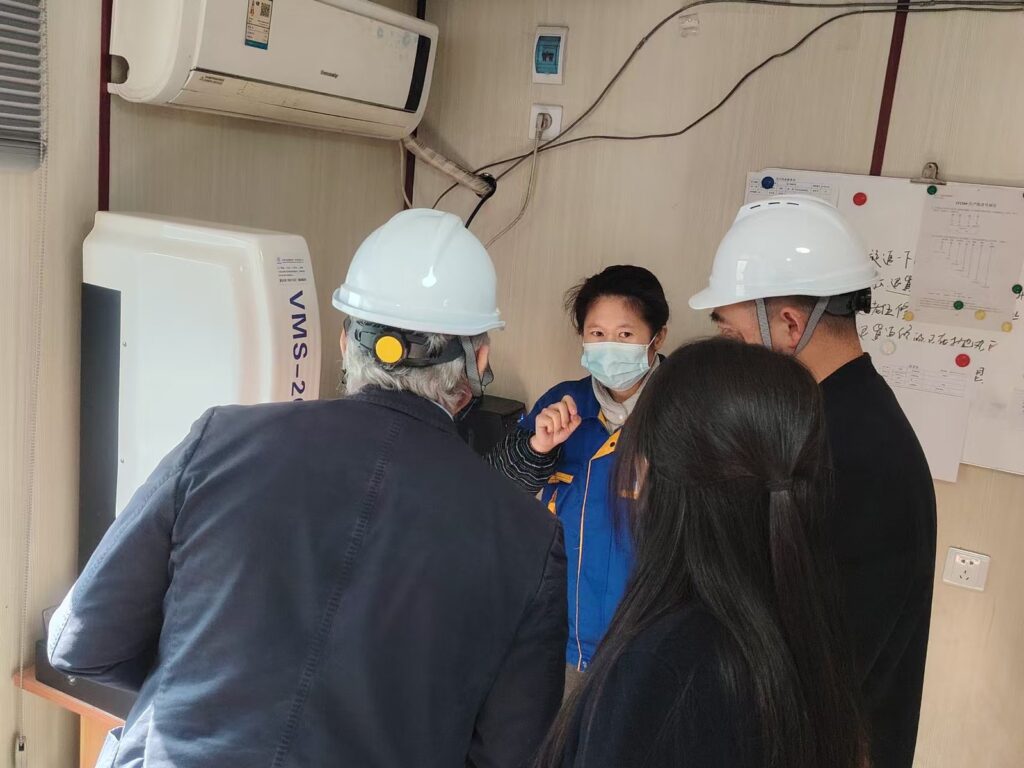
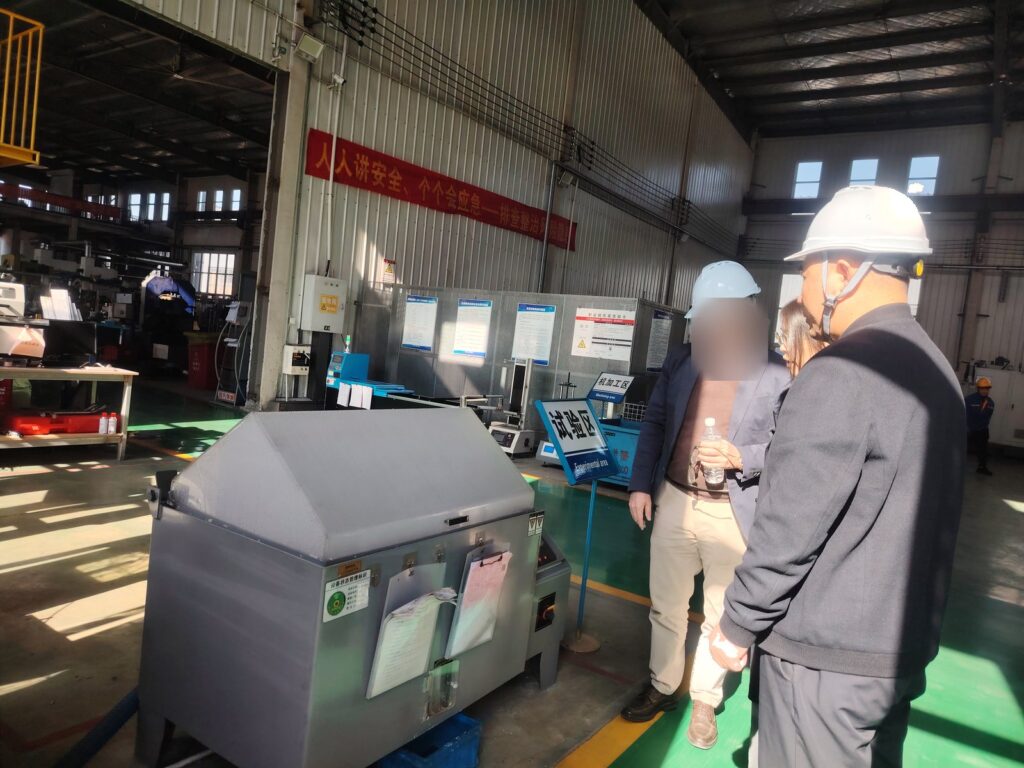
Stop 4: What quality checks did the customer see in our testing room?
In the testing room, parts are checked against the drawing and control plan. For wire forms bent in several planes, the vision measuring system matters most.
| Equipment (model series) | What it checks | Relevance to seat wire forms |
|---|---|---|
| Vision Measuring System (Keyence IM-8000 / IM-8030) | Length, outside diameter, wire diameter, angles, shape | Bend angles and leg lengths |
| Video Measuring System (OGP SmartScope ZIP / VMS-3020) | 2D dimensions, profiles, hole positions | Overall wire form profile |
| Spring Tension & Compression Tester (JISC PRO / Aikoh 1311NR) | Load, spring rate, working height | Load at the installed position |
| Rockwell Hardness Tester (Mitutoyo HR-530 / HR-150A) | Material hardness | Hardness against the drawing, e.g. 49–53 HRC |
| Salt Spray Tester (Q-Fog CCT1100 / NSS) | Zinc, nickel, e-coat and anti-rust performance | Coated parts |
| Material Analyzer (Thermo Scientific Niton XL2 / OES) | Chemical composition | Confirms the steel grade of incoming wire |
IATF 16949 is the automotive quality management standard published by the International Automotive Task Force; in 2016 it replaced ISO/TS 16949 [1]. NorenSpring holds IATF 16949 certification, valid to 4 February 2028.
PPAP is the Production Part Approval Process, the automotive industry’s standard way to show that a supplier’s production parts consistently meet the design record and specification [2]. For automotive programs, we can prepare a PPAP package. Which PPAP level and which documents are needed is agreed with each customer at project setup. You can read more about how we accept or reject parts in our post on spring testing and acceptance.
Stop 5: Production buildings on the Xuzhou campus
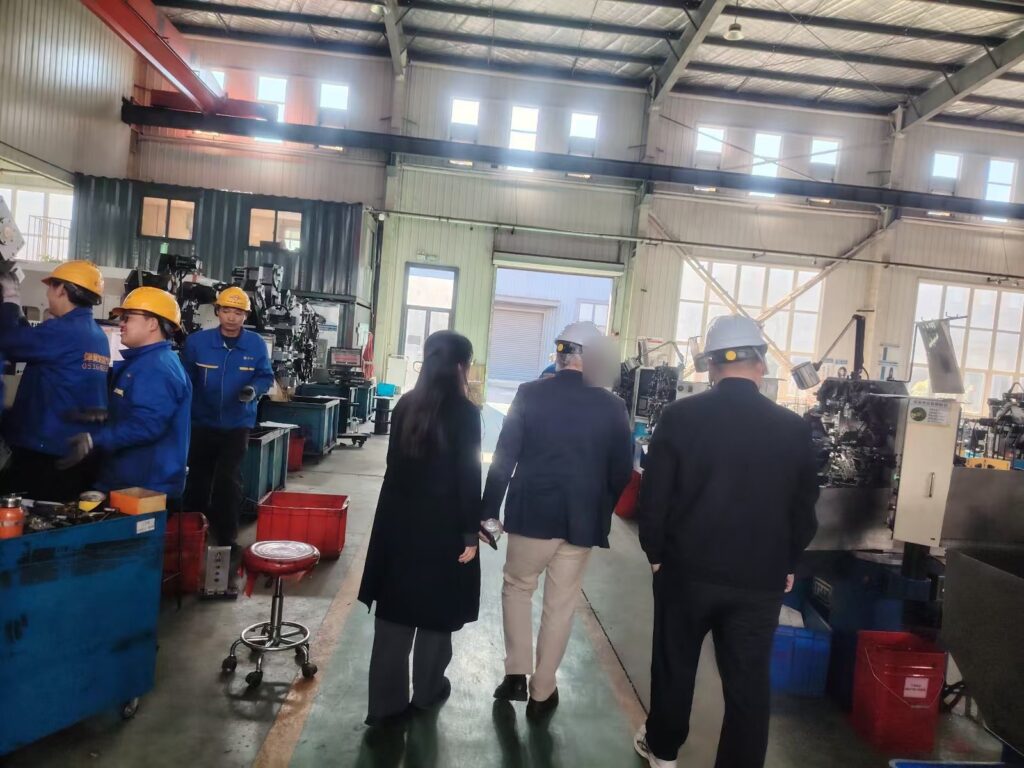
The audit closed with a walk between the production buildings, which house our 3 production lines on a 12,000 m² production base.
What did the customer say after the audit?
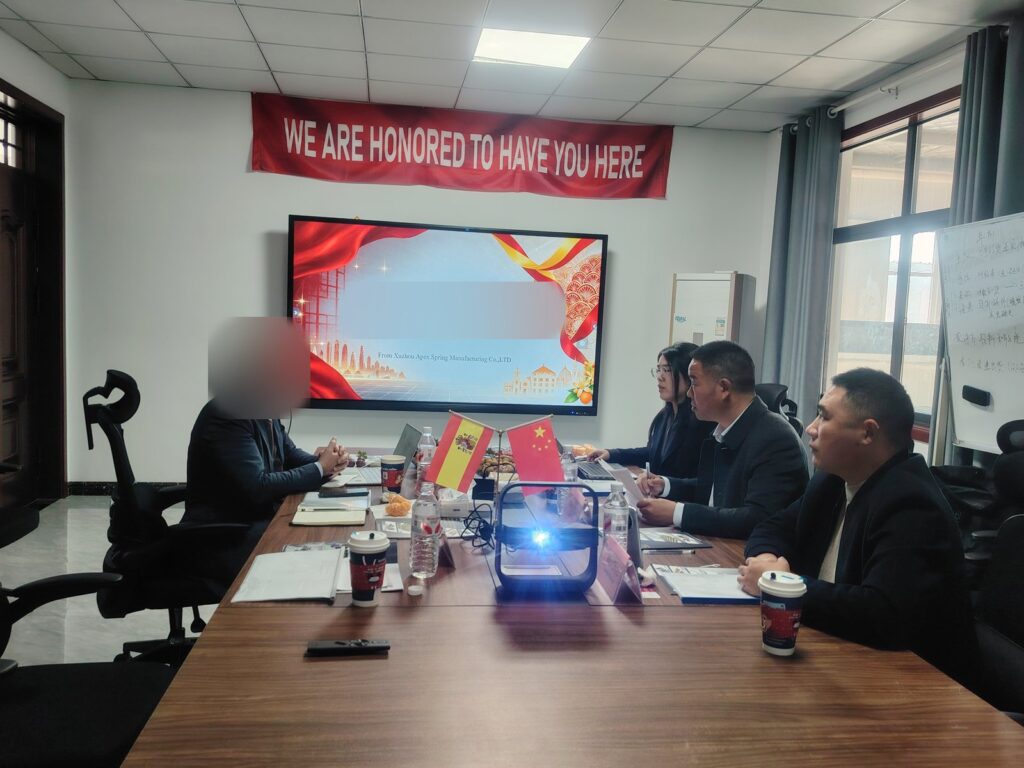
Back in the meeting room, the customer gave his feedback. He was positive about both NorenSpring’s production capacity and its quality control. He told us he hopes to build a long-term strategic partnership with NorenSpring.
However, we take that as encouragement, not as an order. Samples, quality planning and part approval still lie ahead.
What happens next?
After returning to Spain, the customer will send 2 sets of requirements. The quality requirements will set critical dimensions, hardness, load checks, finish, inspection frequency and shipping documents. The packaging requirements will set how parts are protected from tangling and scratching, how many go in each unit, and how each unit is labelled. Once both are agreed, we build them into the control plan and packing instruction. Our usual options are sealed bags for small parts, protected cartons for larger parts and plywood crates on pallets for heavy loads, each confirmed before production.
What should you check when you audit a wire form supplier?
For seat wire forms, or any spring part where fit and fatigue matter, an on-site audit tells you more than a quote. Based on this visit, here is a 7-point checklist for any spring factory, including ours:
- Material traceability. Pick a coil, ask for its material certificate, then trace a finished part’s label back to it.
- Forming method. Confirm your part runs on a CNC wire forming machine; CNC gives more consistent bends at volume.
- Heat treatment records. Ask how furnace temperature and time are recorded and how hardness is checked against the drawing.
- Measurement. Ask to see a bent profile measured on a vision measuring system or checking fixture.
- Load and corrosion testing. Confirm load testing and, for coated parts, salt spray testing are in-house.
- Automotive documentation. Ask for the IATF 16949 certificate and its expiry date [1], and agree early which PPAP documents you need [2].
- Packaging and labelling. Bring your packaging standard so it is confirmed before the first sample shipment.
Our guide on how to choose a spring manufacturer covers the questions to ask before an audit, and our automotive springs page lists the automotive spring types we make.
Planning an audit or a new wire form project?
If you are sourcing seat wire forms or other automotive springs, send us your drawing, annual volume and quality requirements. We will review manufacturability, quote the part and, if you wish, arrange a factory audit like this one. Contact NorenSpring to start.
What we need for a seat wire form quotation:
| Input | What to send |
|---|---|
| Drawing | DWG, DXF, STEP or PDF, with critical dimensions marked |
| Wire | Diameter and grade, for example 65Mn, SWOSC-V or 50CrVA spring steel |
| Hardness | Range on the drawing, for example 49–53 HRC |
| Finish | Zinc, phosphate, e-coat, powder coating or oiled |
| Volume | Annual volume and expected batch size |
| Quality and packaging | PPAP level, inspection plan and your packaging standard |



