











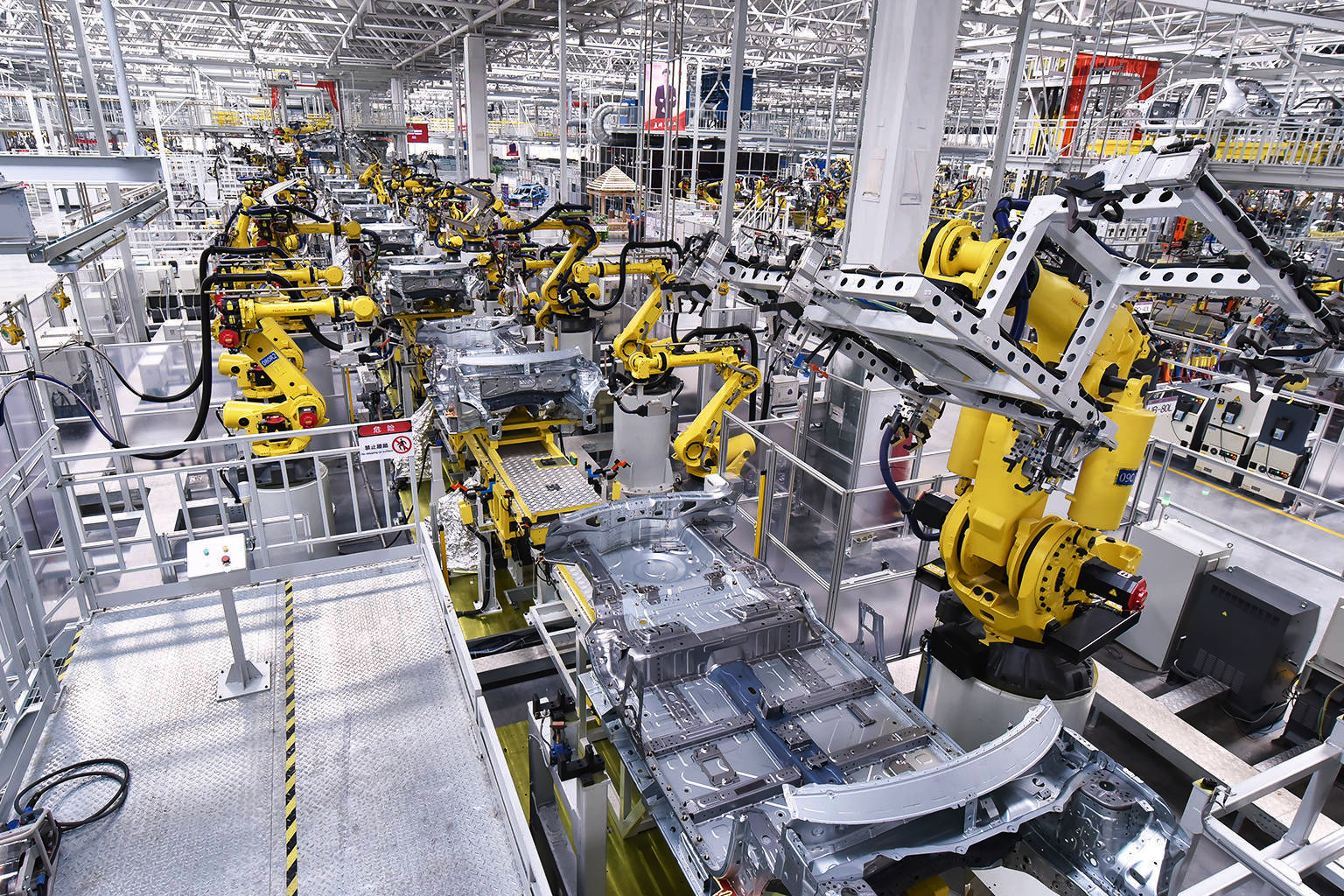
Industrial machines use springs to preload parts, return levers and valves, carry high loads in short spaces and hold components in place. Parts we make for general machinery include compression springs such as a load bracket spring and a compressor valve spring, carbon steel torsion springs, a stainless chain tensioner spiral spring, and circlips, retaining springs and clips. Our range also covers die, disc and wave springs and hot-coiled springs up to 80 mm wire.
Key Takeaways
- Parts we make with general-machinery use appear in our compression, torsion and wire-form case grids.
- Wire from 0.1 mm to 80 mm, including hot-coiled large springs.
- Engineering feedback or a quotation within 24 hours, with no fixed MOQ.
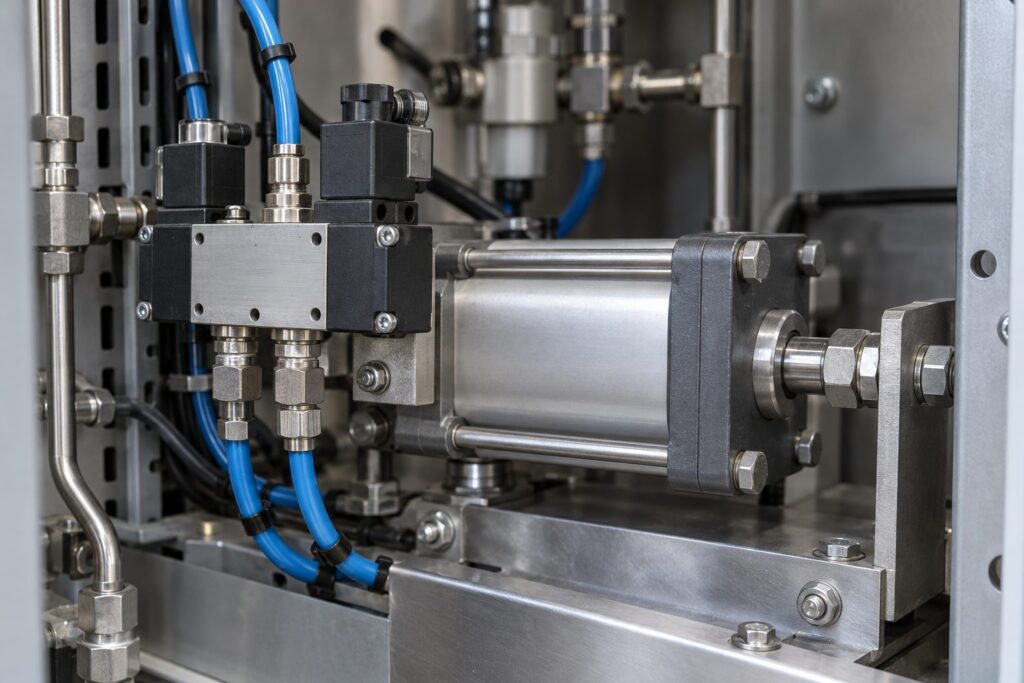
Which springs industrial equipment uses and why
Preload and return
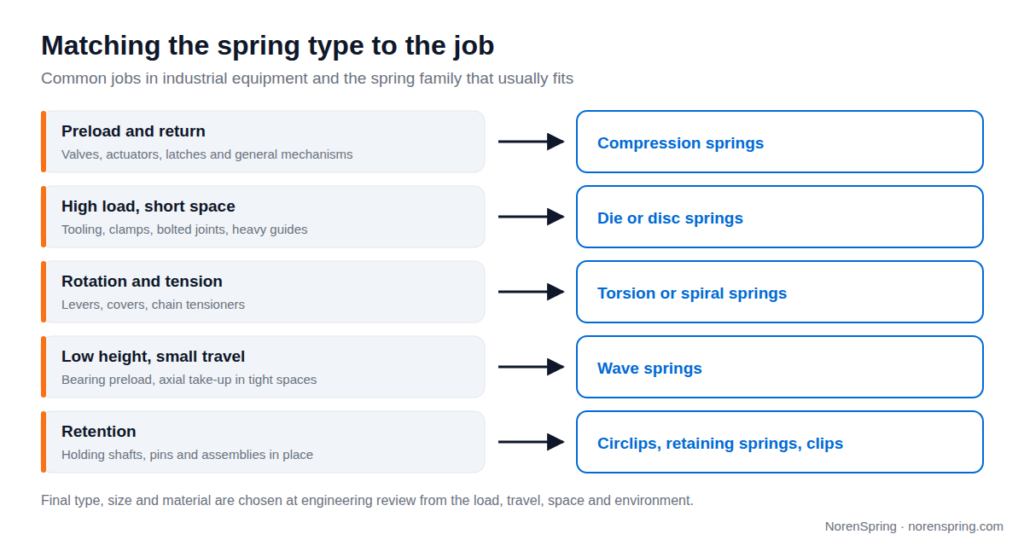
Compression springs return plungers, levers and valves and keep parts in contact. Our compression portfolio includes helical coiled springs, high carbon steel springs, a load bracket spring and a compressor valve spring. A valve spring cycles frequently over a short lift, so seat force and stress margin are the key design checks.
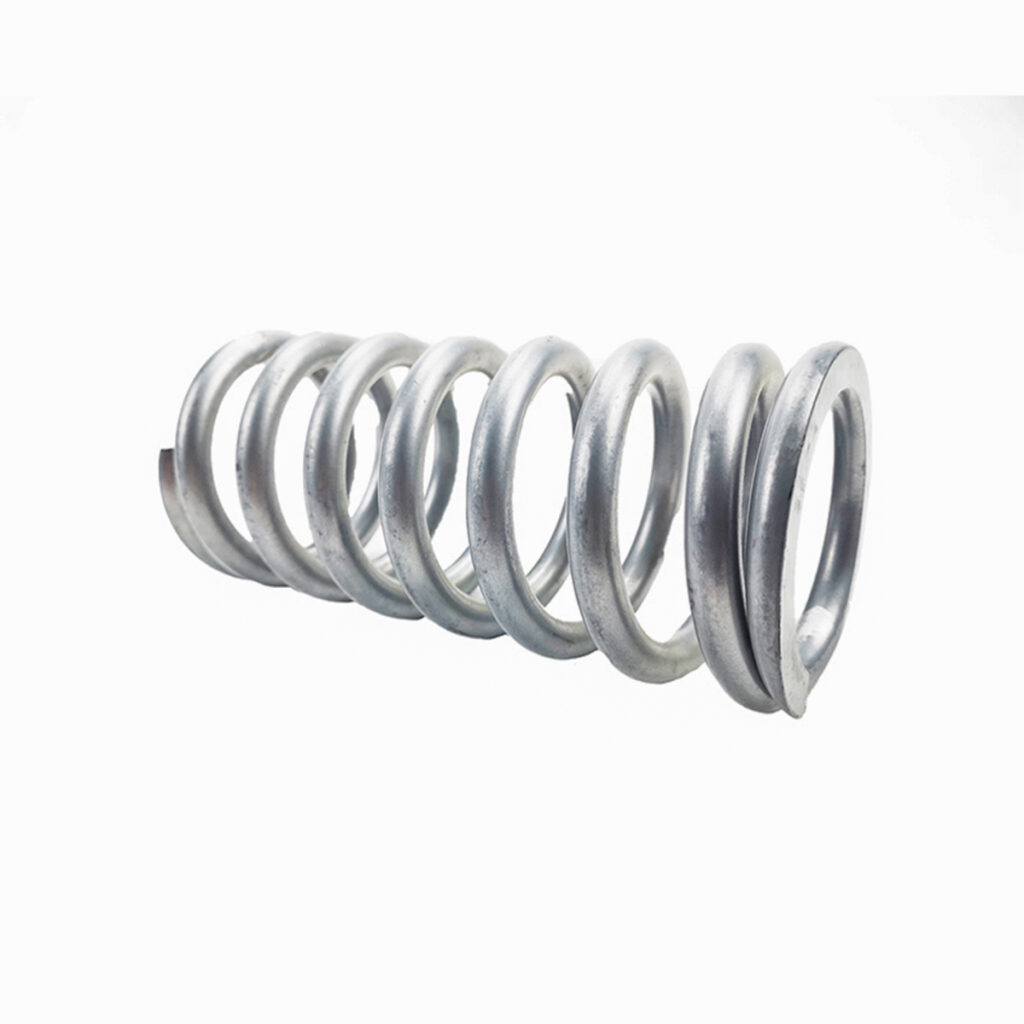
High load in short space
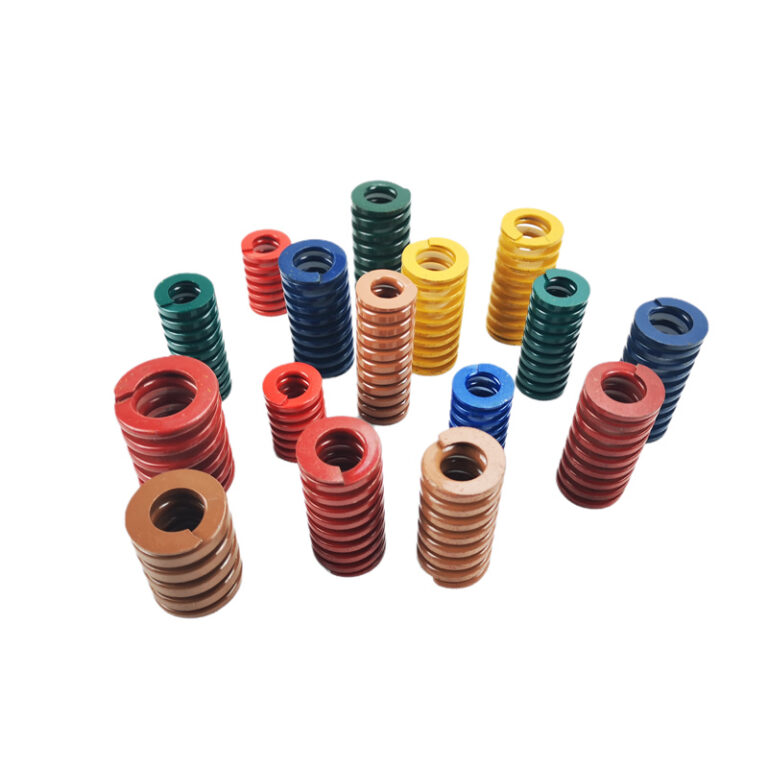
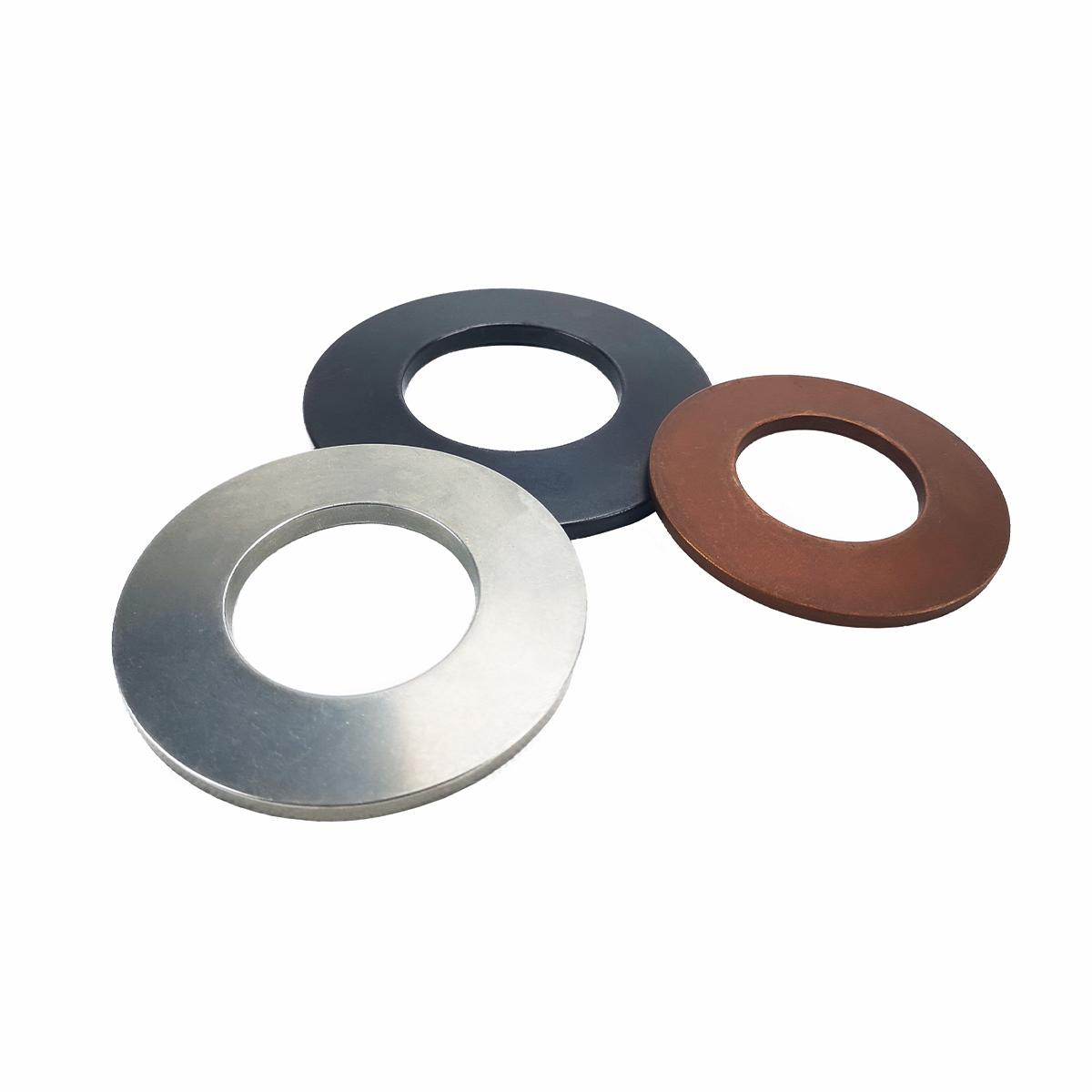
Die springs are usually made from rectangular-section wire and color coded by load class, so a tool or fixture can be set up with a known force. Disc springs give high force over small deflection and can be stacked to adjust force and travel. Wave springs can replace a coil spring where axial space is short, giving similar force at a lower working height. See also our hydraulics page.
Rotation, tension and retention
Carbon steel torsion springs return hinged parts and hold levers in position. The stainless chain tensioner spiral spring keeps a chain taut as it wears. Spring steel circlips, steel retaining springs and steel spring clips, shown in our wire-form portfolio, hold parts on shafts and in housings.
Choosing material and finish for plant and machinery environments
| Material | Where it fits | Consider |
|---|---|---|
| Carbon spring wire | General compression, torsion and clip parts in dry areas | Zinc or other coating for corrosion protection |
| Oil-tempered wire | Larger dynamic springs | Coating needed outside dry areas |
| Silicon-chrome or alloy spring steel | Die springs and high-stress parts; alloy steel for disc springs | Heat treatment and finish agreed at review |
| Stainless 304 / 316 | Wet, washdown or corrosive areas | Lower strength than alloy steel at the same size |
| Nickel alloy spring wire | High temperature or severe corrosion | Higher material cost |
Finishes visible in our product photos include bright zinc, yellow zinc, black coating, red and blue coating, and plain or oiled. Coating thickness matters for circlips and clips, which must still fit their grooves after finishing.
What to send for an engineering review
- Geometry: drawing with revision, or a physical sample.
- Load and movement: force at working heights, torque and angle for torsion springs, or stack arrangement for disc springs, plus travel.
- Space: bore, rod or shaft diameter, and groove dimensions for circlips and retaining springs.
- Environment: temperature, oil or coolant contact, washdown or outdoor exposure.
- Duty: how often the spring cycles and the service life you expect.
- Quantity and records: batch size, repeat orders and required documents.
If you have no drawing, wire diameter d, outside diameter D0 and free length L0 are enough to start. Samples typically take 7 to 15 working days and production 15 to 30 working days; the exact lead time is confirmed at quotation.
Frequently asked questions
Can you replace a spring from a machine without a drawing?
Yes. We can work from a physical sample and confirm manufacturability before quoting. Prototype samples are available for dimensional, load and application approval.
Do you make large heavy-duty springs?
Yes. Our wire range reaches 80 mm, including hot-coiled large springs. Feasibility for a specific size is confirmed at review.
What inspection records are available?
As agreed at project setup: inspection reports, material certificates, dimensional records and traceability. Our in-house laboratory includes spring tension and compression testers, hardness testers and a material analyzer, and we are certified to ISO 9001 and IATF 16949 (valid to Feb 4, 2028).
Send your drawing or sample through our contact page for engineering feedback within 24 hours.




 Upload a Drawing