










In this article
- Key takeaways
- Who buys agricultural springs at CIAME: distributors and machine builders
- Surface finish comes first
- “Have you made parts for the big brands?”
- Price: what drives it, and how to get a sharper quote
- Buyers judge the supplier, not only the part
- What to send for an agricultural spring quote
- Agricultural springs FAQ
- Sources
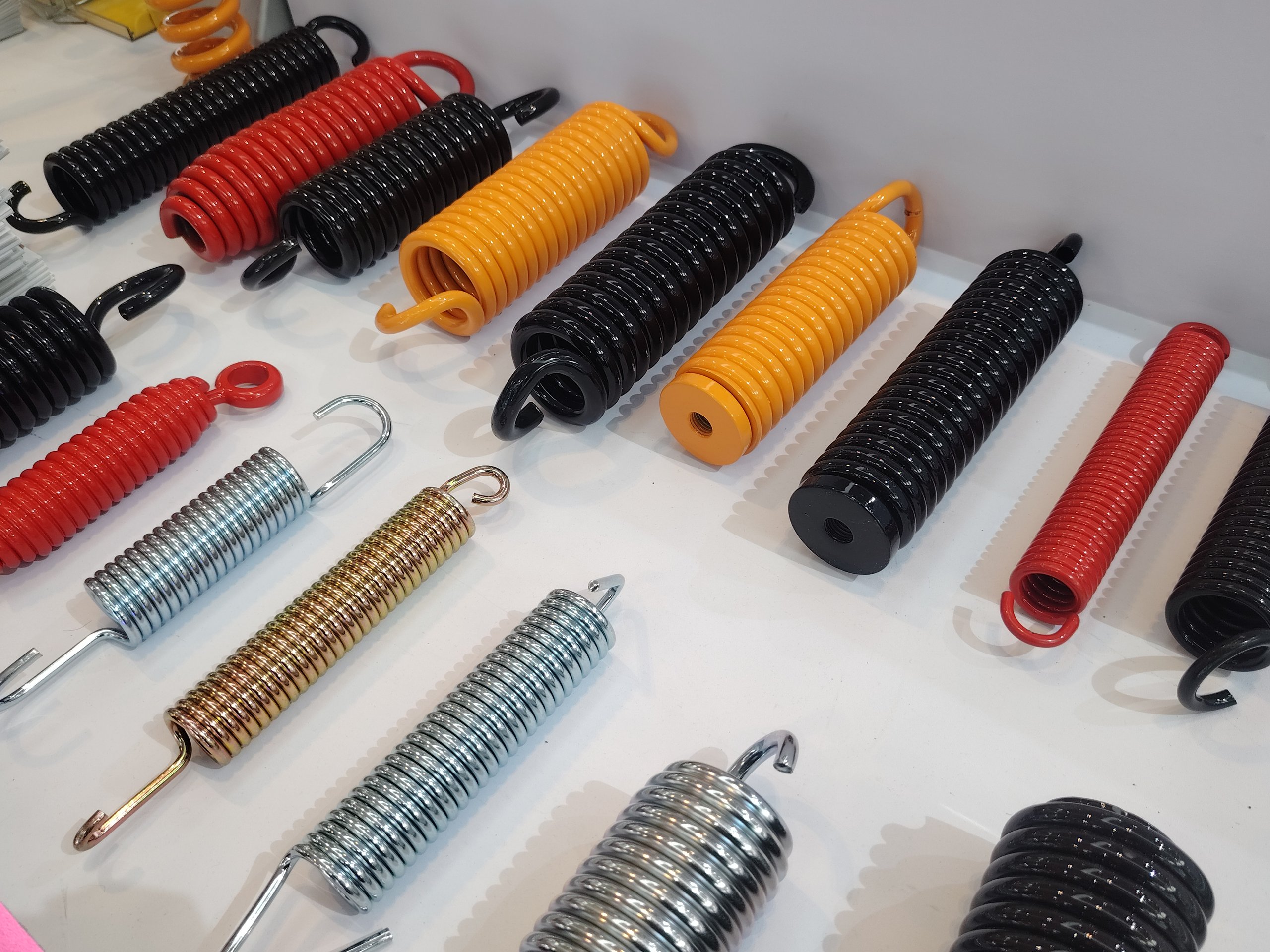
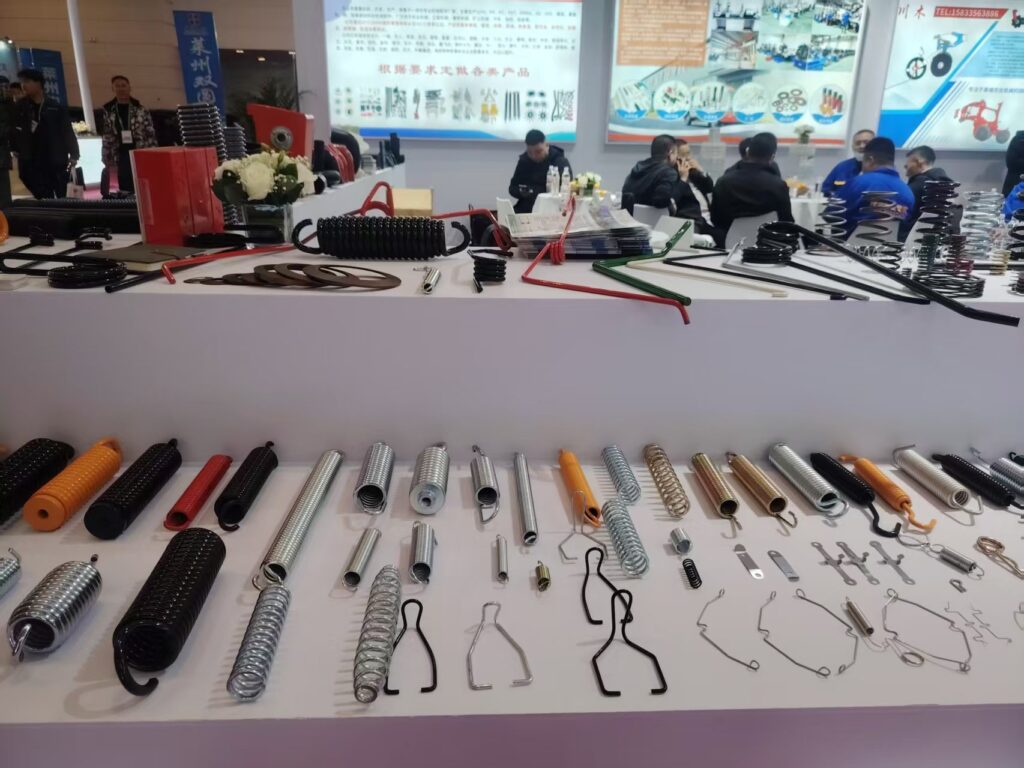
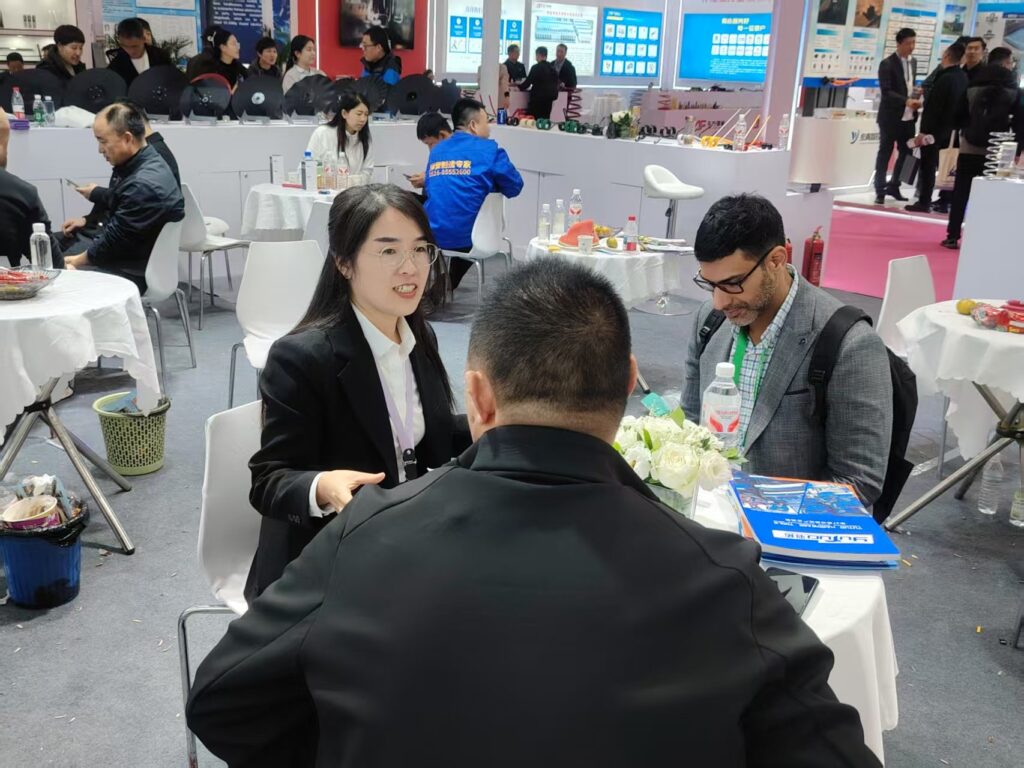
From 26 to 28 October 2026 our team stood behind a long white table of tines, extension springs and wire forms at Booth N19B03. The show was CIAME 2026, the China International Agricultural Machinery Exhibition, at the National Exhibition and Convention Center in Tianjin. Many of the visitors who sat down with us came from Russia, Belarus, Argentina and Brazil. Some ran spare-parts distribution businesses; others built machines and needed springs for their own production lines [5].
Each conversation was different, but the questions came back to the same three points again and again: how well the finish holds up, whether we had made springs for machines from the major brands, and the price. A fourth point came from the most experienced buyers: they judge the supplier, not only the part. This article sets down what we heard, why buyers ask those things, and how to put each point into a request for quotation so that the answer you get back is useful.
If you buy agricultural springs, from baler and rake tines to cultivator trip springs and tension springs for drives, you can use this article as a checklist. If you sell them, it is a fair picture of what a serious buyer will test you on.
Key takeaways
- Buyers set a high bar for surface finish. In our meetings, coating quality was usually the first topic. Fertiliser, manure, wet soil and outdoor storage make farm parts a harsh case for corrosion, and the coating is the first thing an end user sees.
- “Have you made parts for the big brands?” means “can you match my part?” Distributors want replacement springs that fit machines from the well-known makers. The real test is whether a supplier can reproduce a part from a sample or drawing and prove it with first-article samples.
- Buyers were price-sensitive. The way to a better price is not a weaker spec, but a clear one: annual volume, batch size, which dimensions are critical, and other part numbers that can ship together.
- Experienced buyers judge the supplier, not only the part. Some told us they would come to see the factory if the price worked.
- A complete RFQ covers part, finish, fit and commercial details. The checklist near the end of this article turns them into one list.
Who buys agricultural springs at CIAME: distributors and machine builders
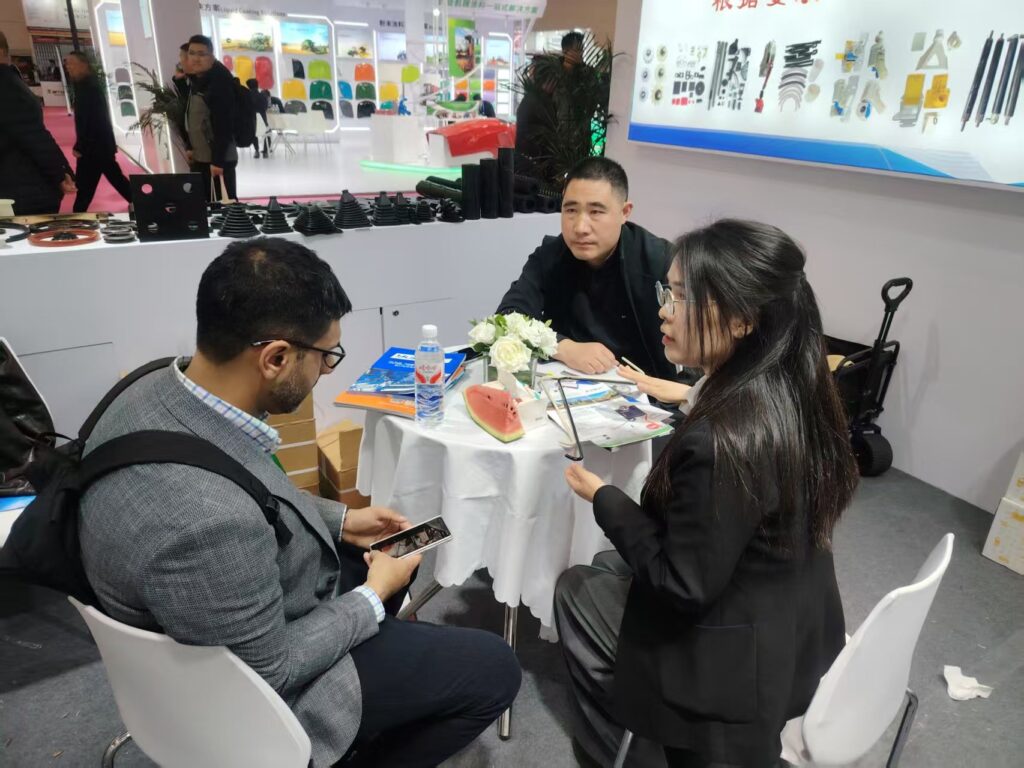
An agricultural spring is any spring or formed wire part on a farm machine. Typical examples are tines on balers, rakes and tedders, trip springs on cultivators, tension springs on drives and linkages, and pins and clips that hold parts in place. Over the 3 days of CIAME 2026 (26 to 28 October), the visitors who stopped for a real conversation about them came mainly from 4 countries (Russia, Belarus, Argentina and Brazil) and fell into 2 groups.
Parts distributors are companies that sell replacement springs and tines to farmers and dealers. What they need is an equivalent of a part on a machine their customers already own, and their volumes are spread across many part numbers.
Machine builders are the companies that design and assemble the equipment, and they buy springs for new machines. Their starting point is their own drawing, the load at the working position and the number of sets per year.
Many of these buyers are very experienced. Some told us they had started buying from Chinese suppliers about twenty years ago, and they were as comfortable talking business on WeChat as on email. Some said plainly that if the price was right they would come to see our factory.
Methodology. These notes come from the written summary our sales team made after the three show days, covering the buyer meetings at our stand. We did not run a survey or count answers, so this article reports which topics came up, not percentages.
Surface finish comes first
The agricultural machinery customers we met had high requirements for surface treatment. That makes sense: the coating is the first thing a farmer or dealer sees on a replacement part, and rust on a new spring is hard to explain to an end customer. On a spring, the places to look are the coil ends, the bends and the hooks, where a coating tends to be thinnest and where it is stretched each time the spring works.
Why agricultural springs are a hard case for corrosion
Farm machines work in conditions that attack bare steel quickly. Fertiliser is one of the worst. Mississippi State University Extension warns that fertilisers are corrosive and advises flushing spreaders thoroughly with water after use [6]. A 2024 article in World Fertilizer by corrosion-inhibitor maker Cortec names ammonium nitrate and ammonium sulfate among the most corrosive fertiliser blends and notes that moisture and acidic conditions make the attack worse [1]. Add manure, wet clay, crop sap, pressure washing and months parked outdoors between seasons, and it is easy to see why a buyer looks at the finish before anything else.
There is a second reason. Many agricultural springs flex hard: a rake tine bends every time it meets the ground, and a cultivator trip spring takes shock loads on stones. A coating that is fine on a static part can crack at the bends of a spring that moves. When it cracks, the steel underneath rusts, and a rust pit on a highly stressed spring can become the place where a fatigue crack starts.
Finishes we see on agricultural parts
On the agricultural parts we supply, the finishes in use are black oxide, phosphate, powder coating, paint, zinc plating and yellow (colour) zinc plating. Coated tines are often ordered in a specific colour to match the machine.
The table below lists real agricultural parts from our production records, with the material, wire diameter range, finish and main export markets for each. It shows how much the finish varies by part type even when the steel is the same.
| Part (agricultural) | Spring type | Material | Wire Ø (mm) | Finish | Main export markets |
|---|---|---|---|---|---|
| Harvester reel tine spring, powder-coated type | Torsion / tine | 50CrVA | 5–9 | Powder coating | Germany, USA |
| Harvester single tine spring | Torsion / tine | 50CrVA | 5–10 | Powder coating | Europe |
| Harvester reel tine spring, painted type | Torsion / tine | 50CrVA | 5–12 | Paint | Germany |
| Baler tooth spring | Torsion / tine | 50CrVA | 5–10 | Phosphate | Germany, USA |
| Harrow cultivator tine spring | Wire form / tine | 50CrVA | 6–12 | Phosphate | USA, Australia |
| Single torsion spring tines | Torsion / tine | 50CrVA, SWOSC-V | 5–12 | Phosphate, powder coating | USA, Germany, Australia |
| Cultivator coil spring | Compression | 50CrVA | 6–12 | Black oxide | India, Brazil |
| Forage harvester compression spring | Compression | 60Si2Mn, 50CrVA | 5–10 | Phosphate | Germany, USA |
| Agricultural extension spring | Extension | 65Mn, SWC | 2–8 | Zinc plating | USA, India |
| Tractor brake and accelerator pedal springs | Extension | SWC, 65Mn | 2–5 | Zinc plating | India, Brazil |
Source: NorenSpring part records, 2026. Wire ranges cover the sizes we have made for each part family. 50CrVA, 60Si2Mn and 65Mn are Chinese GB spring steel grades; SWC and SWOSC-V are Japanese JIS spring wire grades.
Every zinc-plated spring we make is baked after plating to relieve hydrogen, because plating can introduce hydrogen into high-strength spring steel and make it brittle. ISO 4042, the international standard for electroplated coatings on fasteners, also includes guidance for reducing that risk [2].
For a deeper comparison of each finish, see our spring finishes guide.
How to write the finish into your RFQ
“Good anti-rust” is not a specification. The buyers who got the clearest answers from us gave the following:
- Coating type, for example zinc plating with yellow passivation, or powder coating over phosphate.
- Colour as a RAL number if the part is coated. RAL is the European colour standard that gives each shade a fixed code, such as RAL 9005 for jet black. With a code, the black or red you get matches the last batch.
- The test you will accept. The neutral salt spray test in ISO 9227 is the most common choice [3]. Our in-house lab has a salt spray tester.
- Your hours and pass criteria. Set them yourself from your own experience in the field. ISO 9227 itself states that salt spray results are not a way to predict long-term corrosion resistance in service [3]; the test is a check that the coating is consistent from batch to batch.
- Adhesion after flexing for coated tines: work a sample through its stroke, then check the bends for cracking or flaking. Where the part has a flat enough surface, a cross-cut test to ISO 2409 can also be agreed [4].
“Have you made parts for the big brands?”
The second point buyers raised was experience: had we made custom springs for machines from the big agricultural brands? Behind that question is a practical need. A distributor selling a replacement tine needs it to fit and last like the original part on a branded machine. A machine builder wants a supplier that has already solved the problems of making high-stress agricultural springs.
What answers that question is not a logo on a banner, but evidence that the supplier can reproduce a part accurately. These are the things to ask for:
- Comparable parts the supplier has already made. Ask to see springs that fit the same class of machine.
- How they work from a sample. A good spring maker measures wire diameter, coil diameter, number of coils, leg lengths and angles, hook shape and free length, then confirms which sizes are critical.
- First-article samples, the first parts made on production tooling, that you can fit to a machine and run in the field before you approve the batch.
- Inspection against the drawing. For formed parts like torsion springs and tines, the leg angles and positions matter as much as the coil.
Two anonymised projects on our case pages show what this looks like in practice. For a customer in Germany we made reel tine springs compatible with CLAAS combine harvesters, reworking the leg angle, material and surface treatment for longer life under repeated impact. For a customer in the USA we made a deck belt extension spring compatible with John Deere mowing equipment, redesigning the hooks and initial tension after earlier replacements lost tension in service. How that kind of spring sets belt tension is worked through in our mower deck belt tension springs guide.
Brand names are used only to identify compatible equipment. NorenSpring is not affiliated with these manufacturers.
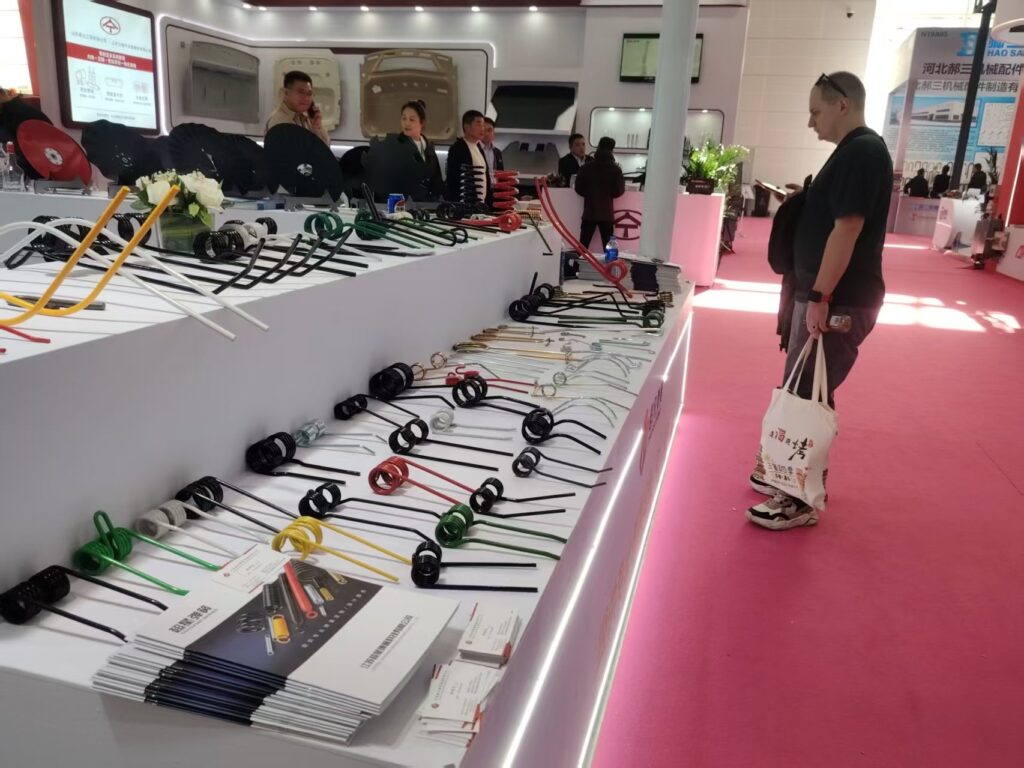
If tines are your main product, our spring tines guide covers how to measure baler, rake and tedder tines for replacement. The cultivator and harrow springs guide covers tines and trip springs for soil-working tools.
Price: what drives it, and how to get a sharper quote
Overall, the buyers we met were price-sensitive. That is normal at a parts show: distributors compete on price in their own markets, and a machine builder’s purchasing team has a target cost for each part.
Spring price is driven by a few factors that buyers can influence. Wire size is one of the largest. In the 10 parts in our table above, wire diameters run from 2 mm on tractor pedal springs to 12 mm on tines and cultivator springs. Steel weight scales with the square of the diameter, so a metre of 12 mm wire weighs 36 times as much as a metre of 2 mm wire. Even a small step matters: an 8 mm tine uses about 1.8 times the steel of a 6 mm tine of the same shape. The main factors:
| Cost driver | What raises cost | What you can do |
|---|---|---|
| Material | Higher-grade alloy wire, small orders of unusual wire sizes | Accept a standard spring steel when the duty allows; the grades we most often use for agricultural parts are 65Mn, 60Si2Mn and 50CrVA (see the table above) |
| Forming | Many bends, tight leg-angle tolerances, special hooks | Mark which sizes are critical and which are reference only |
| Finish | Special colours, multi-layer coatings, small coating batches | Use one colour across a family of parts where you can |
| Quantity | Small, irregular batches of many part numbers | Give the annual volume and the batch size per order |
| Logistics | Single part numbers shipped alone | Combine several part numbers in one shipment |
The table also explains why two suppliers’ quotes for “the same spring” can be far apart. One may have quoted a cheaper wire, a thinner coating or no inspection report. A complete RFQ makes quotes comparable, and comparable quotes are what let you negotiate on price without losing quality.
Buyers judge the supplier, not only the part
When you evaluate a spring supplier for agricultural parts, these are worth confirming, in person if you can:
- Inspection equipment that fits your part. For tines and torsion springs, look for torque testing and checking of leg angles against the drawing. For extension and compression springs, look for load testing at the working length.
- Documents you will receive: inspection reports, material certificates and batch traceability, agreed before the first order.
- How samples work: who pays, how long they take, and what approval looks like.
- Communication: a named contact who answers technical questions, on the channel you use.
For reference, this is the equipment in our own lab that applies to agricultural springs, and the basic facts buyers usually ask us for:
| What buyers check | Our equipment or figure |
|---|---|
| Torque and leg angle of tines and torsion springs | JISC PRO-T / PRO-TT torsion spring testers |
| Load at working length, rate and initial tension | JISC PRO and Aikoh 1311NR testers; ALGOL PRO-01 automatic tester for batch checks |
| Free and working height | Mitutoyo LH-600 height gauge |
| Wire form and tine geometry | Keyence IM-8000 and OGP SmartScope vision measuring systems |
| Hardness after heat treatment | Mitutoyo HR-530 Rockwell and HM-200 Vickers testers |
| Coating corrosion check | Q-Fog CCT1100 salt spray cabinet |
| Steel grade confirmation | Thermo Scientific Niton XL2 analyser |
| Fatigue behaviour | SAS CT series fatigue tester |
| Company basics | Founded 2001; 28+ engineers; 4,000,000+ springs per month; wire 0.1 to 80 mm; exports to 60+ countries |
| Lead times | Samples 7 to 15 working days; production 15 to 30 working days, confirmed with each quote |
What to send for an agricultural spring quote
The figure below turns these points into one list. You do not need every item to start. A sample, or a clear photo with a ruler next to the part, plus the machine make and model, is enough for us to begin, and we give quotation or engineering feedback within 24 hours.
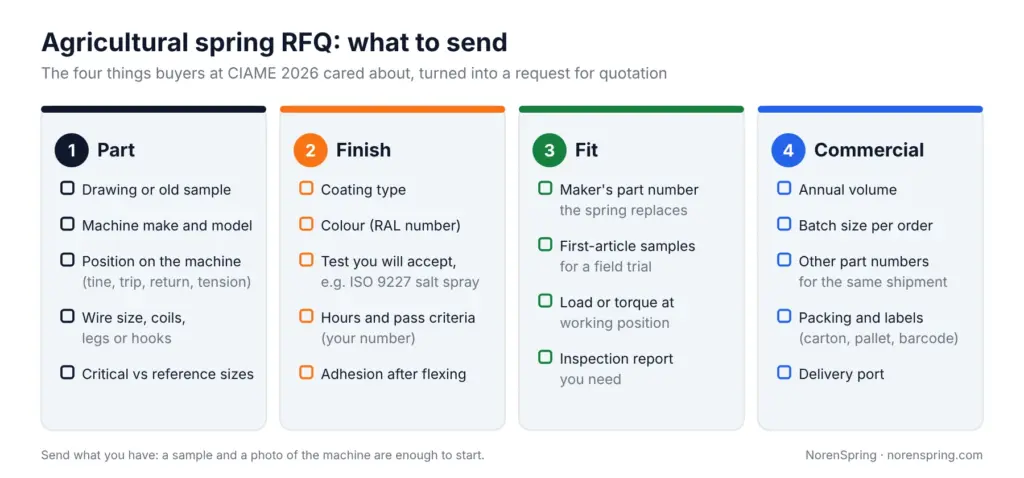
- Part: drawing or old sample. A photo with a ruler next to it also works. Add the machine make and model and where the spring sits (tine, trip, return or tension spring). Give wire size, coils, legs or hooks, and say which sizes are critical.
- Finish: coating type; colour as a RAL number; the test you will accept, for example ISO 9227 neutral salt spray; your own hours and pass criteria; adhesion after flexing for coated parts.
- Fit: the machine maker’s part number that the spring replaces; first-article samples for a field trial; load or torque at the working position; the inspection report you need.
- Commercial: annual volume; batch size per order; other part numbers for the same shipment; packing and labels (carton, pallet, barcode); delivery port.
We make custom extension springs, torsion springs and tines, and wire forms such as pins and clips for agricultural machinery, to drawing or sample. See our agricultural machinery springs page for the full range, or send us your drawing or sample for a quote. To learn more about the company behind these notes, see about NorenSpring.
Agricultural springs FAQ
What do buyers check first on agricultural springs?
In our conversations at CIAME 2026, surface finish came up first. Look at the coating at the bends, hooks and coil ends, and ask which coating it is and how it is tested. Agricultural springs face fertiliser, manure, wet soil and outdoor storage, so the finish has a direct effect on how long the part looks and works like new.
Which finish is best for agricultural springs?
There is no single best finish. Zinc plating (clear or yellow), black oxide, phosphate, paint and powder coating are all used on agricultural parts. In the 10 agricultural parts listed in our table above, 4 of the 6 tine types are painted or powder coated, 4 parts use phosphate, the 2 extension spring types are zinc plated and 1 compression spring is black oxide. The right choice depends on exposure, how much the spring flexes and the colour you need. Specify the coating type, colour, test method and pass criteria in your RFQ rather than asking for “good anti-rust”. If you use the neutral salt spray test, keep in mind that ISO 9227 treats it as a check on coating quality, not a prediction of service life in the field [3].
Can a supplier make a spring that fits a branded machine without the drawing?
Yes, in most cases. A spring maker can measure an original sample (wire diameter, coils, legs, angles, hooks and free length) and make first-article samples for you to fit and test. Our samples usually take 7 to 15 working days. The part should be described as compatible with the machine, not as an original part.
How long do agricultural spring samples and production take?
Samples usually take 7 to 15 working days, and production 15 to 30 working days, confirmed with each quote. Send a complete RFQ and we reply with a quotation or engineering feedback within 24 hours.
How can I get a lower price on agricultural springs without losing quality?
Give a complete RFQ: annual volume, batch size, which dimensions are critical, a standard spring steel where the duty allows, one coating colour across part families, and other part numbers that can ship together. That lets a supplier quote efficiently and makes quotes from different suppliers comparable.
Sources
- Cortec Corporation, “Mitigating the Reverse Midas Touch of Fertilizer Corrosion”, World Fertilizer, October 2024. PDF, retrieved 2026-10-28.
- ISO, “ISO 4042:2022 Fasteners — Electroplated coating systems”. iso.org, retrieved 2026-10-28.
- ISO, “ISO 9227:2022 Corrosion tests in artificial atmospheres — Salt spray tests”. iso.org, retrieved 2026-10-28.
- ISO, “ISO 2409:2020 Paints and varnishes — Cross-cut test”. iso.org, retrieved 2026-10-28.
- Visitor observations: NorenSpring team at Booth N19B03, CIAME 2026, National Exhibition and Convention Center (Tianjin), 26–28 October 2026.
- Mississippi State University Extension, “Applying fertilizer correctly improves turf appearance and health”, Turf Tips newsletter, 11 May 2009. extension.msstate.edu, retrieved 2026-10-28.



